




Top GPS Trackers with Long Battery Life for All Your Tracking Needs
Whether you're tracking a vehicle, protecting valuable assets, or ensuring personal safety, one thing's for sure: battery life matters. When your GPS tracker dies mid-way through a trip or job, it defeats the entire purpose of having one.
So what's the best GPS tracker with long battery life?
Let's break it down and help you find a tracker that delivers reliable tracking, accurate location updates, and extended battery life, all without the constant recharging.
In this guide, I'll share my top picks and insider tips based on 20+ years in the GPS tracking industry and hands-on testing here at BrickHouse Security.
Introduction to GPS Tracking
A GPS tracker with long battery life is a smart solution for anyone needing continuous tracking without the hassle of frequent recharges. From fleet managers to car owners and concerned parents, the goal is the same: accurate GPS tracking with minimal maintenance.
Why Battery Life is a Game Changer:
- Long battery life means less downtime and fewer interruptions
- Ideal for covert tracking or remote asset monitoring
- Supports passive monitoring when live updates aren't needed
- Reduces the cost and time of frequent recharging
Whether you need car tracking, asset protection, or personal safety, your GPS device should last weeks or months on a single charge.
Key Features and Benefits of Long-Battery-Life GPS Trackers
When selecting a GPS tracker with long battery life, it's not just about how long it lasts, it's about how well it works over time, how little maintenance it requires, and how accurately it keeps you informed. Whether you're tracking a car, an asset, or a person, these features make a big difference in reliability, convenience, and peace of mind.
1. Extended Battery Life for Long-Term Tracking
One of the biggest frustrations we hear from customers is the need to constantly recharge their GPS tracker, especially for devices placed in hard-to-reach areas or used in covert operations.
That's why extended battery life is a game changer. Many of the best GPS trackers today offer a wide range of power performance:
- Standard models last 10 to 15 or more days on a single charge
- High-performance trackers with extended batteries can run up to 6 months
- Some trackers in standby mode can remain operational for over a year
To get the most out of your tracker's battery:
- Use power saving mode to reduce the frequency of location updates
- Activate battery saver mode when live tracking isn't needed
- Switch to standby mode for passive monitoring or long-term deployments
2. Accurate Tracking with Real-Time Location Updates
Battery life is essential, but it means nothing without accurate tracking. Top-rated GPS trackers use cellular networks to deliver real-time updates you can trust.
Here's what you get with an accurate GPS tracker:
- Live tracking with location updates every 5-60 seconds
- Speed alerts to monitor driving behavior
- Geofence alerts to notify you when a tracker enters or leaves a designated area
- Historical tracking data to review past movements
3. Low Battery Alerts & Optional Extended Battery Packs
Even with excellent battery performance, it's essential to know when your device needs a recharge, especially in high-stakes situations.
Most GPS trackers today come equipped with:
- Low battery alerts via app, email, or SMS
- Battery strength indicators in the tracking dashboard
- Instant notifications when power dips below a safe threshold
To go the extra mile, many manufacturers offer optional extended battery packs (sold separately). These can double or triple the standard battery life, which is especially useful for:
- Covert tracking under a vehicle
- Remote asset monitoring where access is limited
- Long-term deployments where regular charging isn't practical
4. Designed for Everyday Use
Today's GPS trackers aren't just powerful, they're also compact, discreet, and durable, making them perfect for everyday applications.
Whether you need a tracker for a family member, vehicle, or equipment, here's what to look for:
- Small GPS trackers with a compact design that fit easily in a backpack, glove box, or jacket pocket
- Key ring and belt clip attachments for personal tracking
- Magnetic cases for under-vehicle placement
- Waterproof or weather-resistant enclosures to protect against rain, snow, or dust
- Tamper-resistant designs for added security in public or exposed environments
Types of GPS Trackers with Long Battery Life
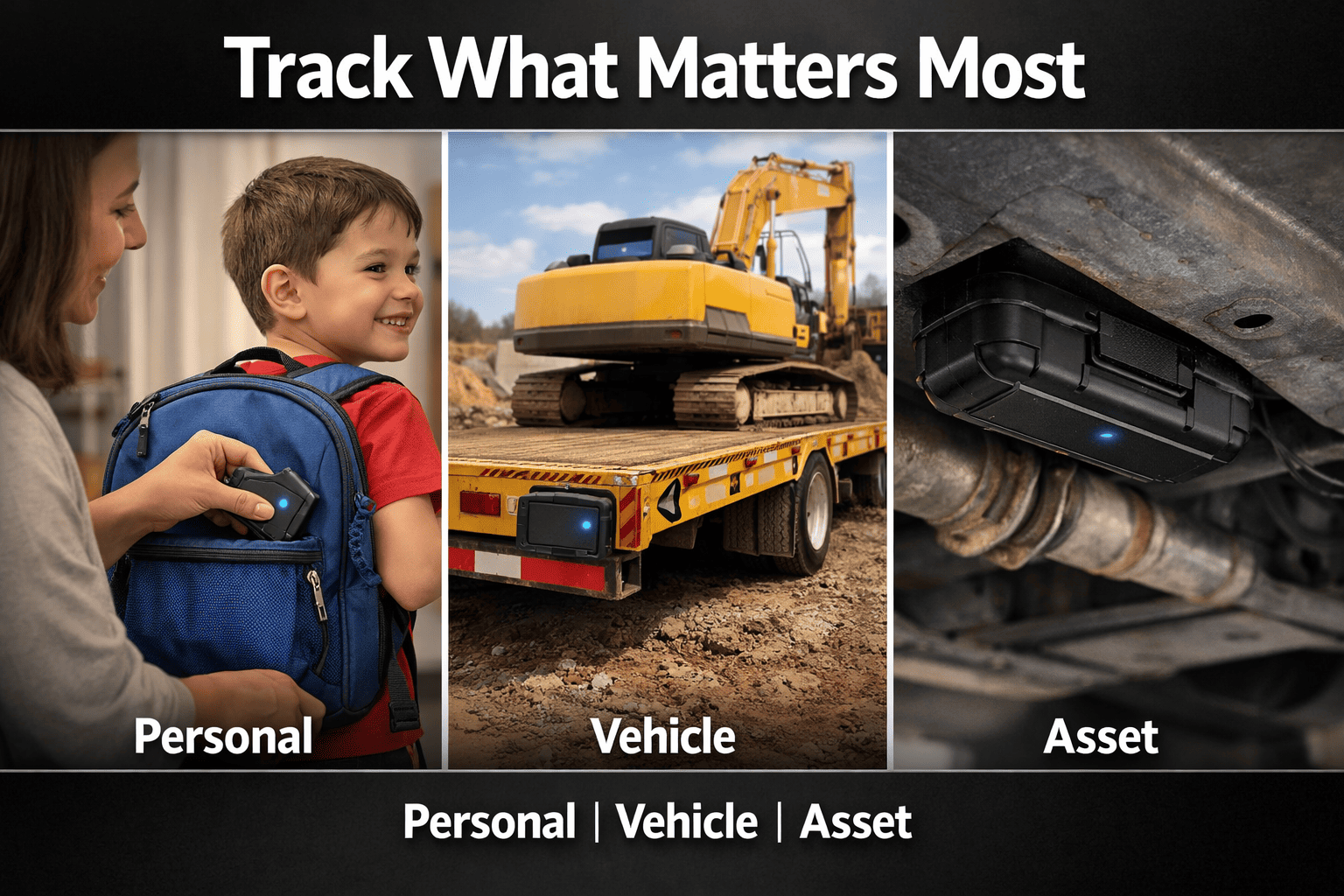
Not all GPS trackers are created equal, and neither are the ways we use them. Whether you're monitoring a vehicle, keeping a loved one safe, or protecting outdoor equipment, choosing the right GPS tracker with long battery life depends on your specific use case.
Below are four common types of GPS trackers designed with extended battery performance and real-world use in mind.
Personal GPS Trackers
Best For: Children, elderly family members, hikers, travelers, or solo workers
Key Features:
- Compact and lightweight design that fits in a pocket, backpack, or key ring
- Long-lasting batteries that support standby mode and power-saving mode
- Built-in SOS buttons and instant alerts for emergencies (varies by model)
- Low battery alerts and motion detection for added peace of mind
These trackers are ideal for passive monitoring and can run for days or weeks depending on update frequency. Their small size makes them discreet yet powerful, and many models include belt clips or lanyards for everyday wear.
Car GPS Trackers
Best For: Car owners, parents of teen drivers, and businesses monitoring company vehicles
Key Features:
- Designed for covert car tracking with a magnetic case for secure placement under the vehicle
- Provide real-time tracking, speed alerts, geofence notifications, and trip history
- Equipped with tamper alerts and low battery notifications
- Many support extended battery packs for long-term vehicle tracking without removal
With up to several weeks or even months of battery life, these devices are excellent for long-term deployments. Ideal for tracking stolen vehicles, monitoring employee routes, or checking in on new drivers.
Fleet & Equipment GPS Trackers
Best For: Fleet operators, logistics managers, construction companies, and heavy equipment tracking
Key Features:
- Built with industrial-grade durability and weatherproof casing
- Offer real-time tracking, customizable alerts, and geofencing
- Designed to require minimal maintenance and withstand tough environments
- Battery life can last months depending on tracking frequency and power settings
These trackers often feature motion-based tracking, which helps preserve battery life when equipment is idle. They're invaluable for preventing theft, verifying usage, and maintaining visibility across multiple job sites or vehicles.
Waterproof Trackers
Best For: Outdoor assets, boats, jet skis, motorcycles, and weather-exposed environments
Key Features:
- IP65 to IP68-rated waterproof enclosures to prevent water, dust, and debris damage
- Withstand extreme temperatures, rain, snow, and even full submersion (model dependent)
- Long battery life supported by standby mode or low-frequency reporting
- Durable enough for marine tracking, off-road gear, or outdoor storage units
These devices are built to perform in harsh environments without sacrificing battery strength or location accuracy. Some models come with magnetic cases for tool-free installation.
Battery Life and Performance: What You Should Know
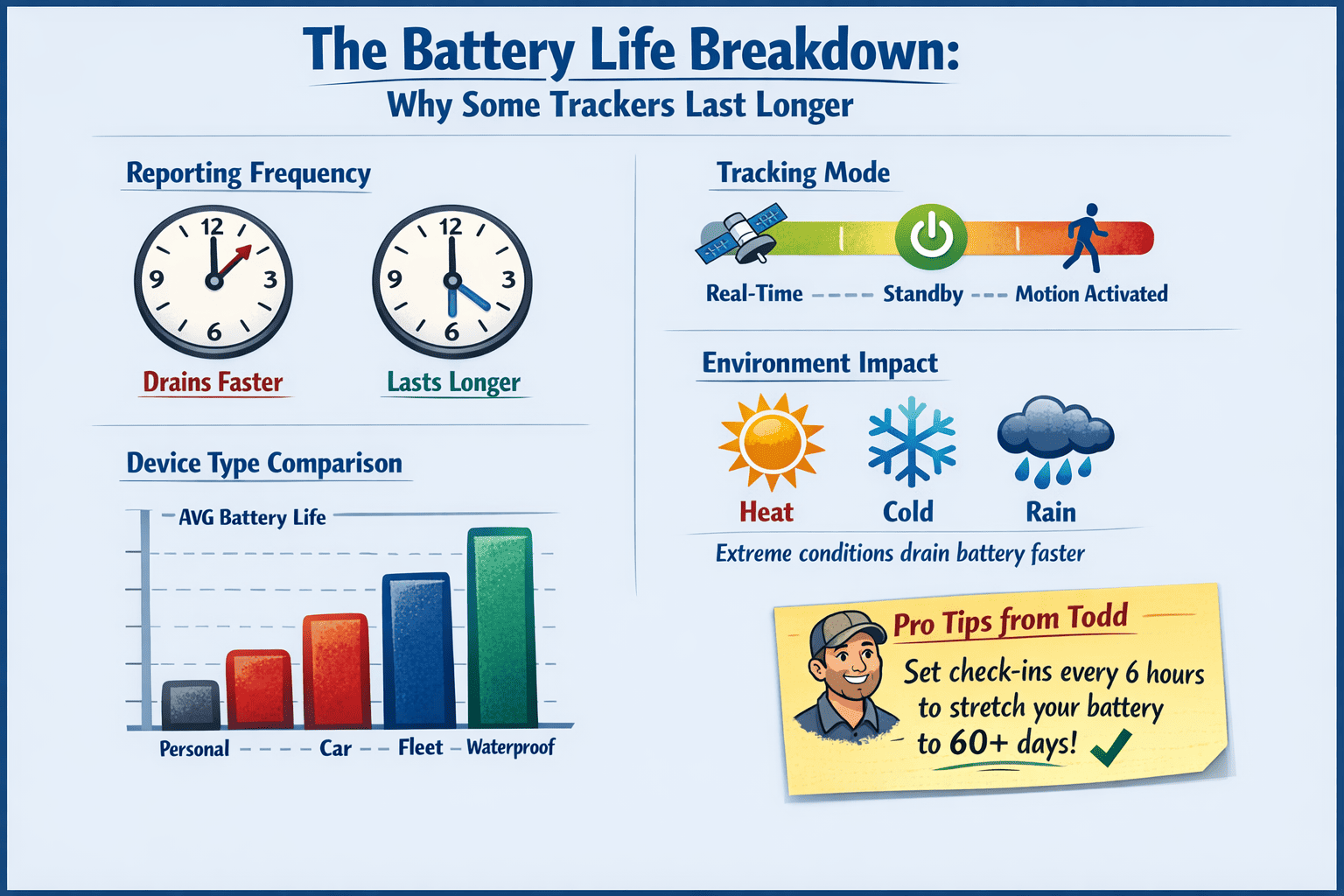
When it comes to choosing a GPS tracker with long battery life, it's important to understand what actually affects how long your device will last on a single charge. While many manufacturers advertise up to several weeks or months of battery life, real-world performance often depends on how the device is used.
Here are the top factors that influence your GPS tracker's actual battery life, and how to get the most out of it.
1. Reporting Frequency
The most important factor affecting battery life is how often the tracker reports its location.
- Frequent updates (every 5-10 seconds) = higher battery drain
- Less frequent updates (every 1-6 hours) = much longer battery life
- Some devices let you schedule reports for specific times of day, conserving power between check-ins
2. Tracking Mode (Active vs. Passive)
Most GPS trackers offer multiple tracking modes, each with different impacts on power usage.
- Active Tracking (Live/Real-Time Mode): Constant updates and location refreshes every few seconds. Great for vehicle or personal safety tracking, but drains battery quickly.
- Passive Monitoring (Standby Mode): Tracks in the background and sends occasional updates (or stores data to upload later). Ideal for long-term or low-movement tracking.
Many of the best GPS trackers also include a motion-activated mode, meaning the device "sleeps" until movement is detected, then wakes to report.
3. Environmental Conditions
Believe it or not, weather and temperature can significantly affect battery performance.
- Cold weather can reduce battery capacity, especially for lithium-ion batteries.
- Excessive heat can also degrade batteries faster over time.
- Water exposure (if the tracker isn't waterproof) can damage internal electronics and battery function.
That's why rugged, weatherproof GPS trackers are essential for outdoor tracking, construction equipment, boats, or trailers.
Pro Tip: Extend Battery Life with Smart Settings
You don't always need your tracker to operate in full power mode. Here's how to get weeks or even months, of extra battery life:
- Enable battery saver mode: Reduces the frequency of updates and limits unnecessary data use
- Use scheduled reporting: Set the device to check in a few times per day rather than every minute
- Turn off features you don't need: Like constant geofence alerts or movement detection if you're passively monitoring
- Choose the right battery pack: Many GPS trackers support optional extended batteries (sold separately) for long-term deployments
Top 5 GPS Trackers with Long Battery Life
If you're looking for a GPS tracker with long battery life, you're not alone. Whether it's for covert vehicle tracking, asset monitoring, or personal safety, having a long-lasting battery is one of the most important features you can ask for.
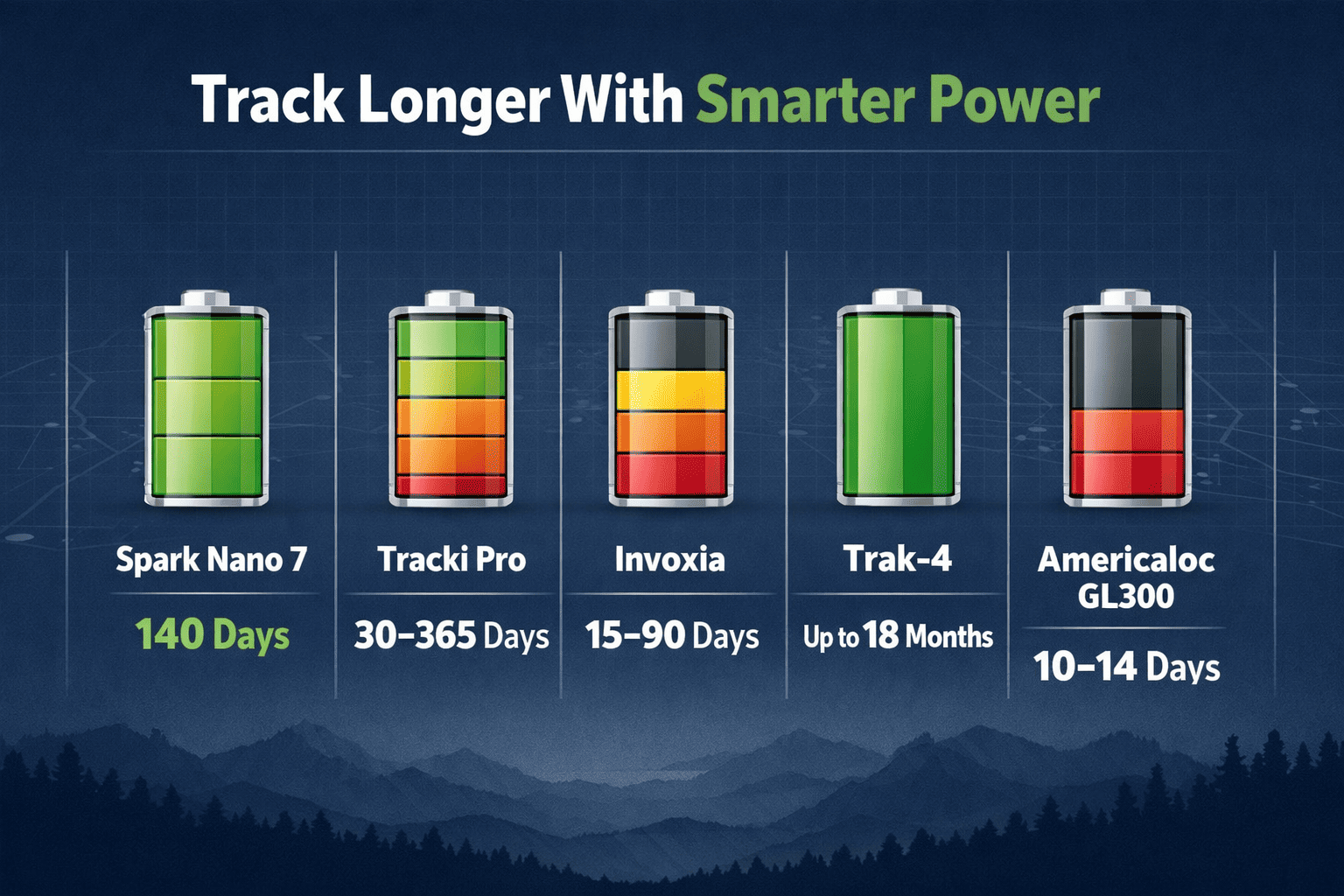
Here are five top-rated GPS tracking devices, personally tested and vetted, that offer a balance of performance, battery life, and reliable tracking.

1. Spark Nano 7 with Extended Battery
Longest Battery Life- Battery Life: Up to 140 days with optional extended battery pack
- Best For: Covert tracking, vehicle tracking, long-term deployments
- Key Features:
- Real-time tracking with updates as often as every 10 seconds
- Comes with a water-resistant magnetic case for discreet placement under vehicles
- Tamper alerts, speed alerts, and geofencing
- Flexible subscription plans with no long-term contracts
- Low battery alerts and standby mode to extend life further
Why It Stands Out: One of the longest-lasting GPS trackers on the market when paired with its optional extended battery. Ideal for users who need set-it-and-forget-it tracking with minimal maintenance.
View on Store Buy on Amazon2. Tracki Pro GPS Tracker
- Battery Life: Up to 30 days with default settings; up to 1 year in battery-saving mode
- Best For: Business fleets, high-value asset tracking, personal safety
- Key Features:
- Works worldwide on 4G LTE + 2G fallback, covering over 190 countries
- Comes with an optional battery extender (sold separately) for longer deployments
- Built-in motion sensor, tamper alert, and SOS button
- Compact size makes it ideal for placing inside bags, glove compartments, or equipment
Why It Stands Out: Tracki Pro balances high accuracy with customizable reporting frequency, allowing you to dial in your tracking needs and battery usage. Great for international users and on-the-go families or professionals.
Buy on Amazon3. Invoxia GPS Tracker
- Battery Life: 15 days to 3 months, depending on tracking frequency
- Best For: Car tracking, pet tracking, motorcycles, and outdoor assets
- Key Features:
- Uses low-power networks (LoRa or LTE-M) to optimize battery performance
- Built-in AI motion detection, geofencing, and anti-theft alerts
- No need for a traditional SIM card; comes with built-in connectivity
- Lightweight, discreet, and water-resistant
Why It Stands Out: Invoxia is ideal for passive monitoring scenarios where live tracking isn't needed 24/7. The unique network tech allows it to conserve energy far more efficiently than traditional cellular GPS trackers.
Buy on Amazon4. Trak-4 GPS Tracker
- Battery Life: Up to 18 months with daily reporting; 1-2 weeks for real-time tracking
- Best For: Equipment tracking, trailers, farm gear, and remote property
- Key Features:
- Simple to use with no app required (but app is available)
- Email and text alerts for motion, low battery, and location boundaries
- Weatherproof enclosure and mounting holes make it ideal for rugged conditions
- Operates on U.S. cellular networks with reliable nationwide coverage
Why It Stands Out: This is the tracker I recommend most often to contractors, construction crews, and small business owners who need dependable long-term tracking without frequent recharges. The standby mode is great for low-maintenance monitoring.
Buy on Amazon5. Americaloc GL300 MXW GPS Tracker
- Battery Life: 10-14 days with real-time tracking; up to weeks with motion-activated updates
- Best For: Car owners, teen drivers, business fleets, and elder care
- Key Features:
- Real-time tracking with location updates every 10, 30, or 60 seconds
- Supports multi-carrier SIM for more reliable U.S. and international tracking
- Includes 1-year tracking history, geofencing, and low battery notifications
- Can be used worldwide with no roaming fees on select plans
Why It Stands Out: A strong contender for users who need real-time tracking with flexibility. The multi-carrier support and long-lasting battery make it a favorite for international travelers and fleet managers.
Buy on AmazonChoosing the Best GPS Tracker for Your Needs
When choosing the right GPS tracker, here's what to consider:
- Battery performance: Does it offer long-term tracking or need constant recharging?
- Tracking accuracy: Does it offer reliable real-time updates on demand?
- Subscription model: Look for a monthly plan, pay-as-you-go, or no-contract options.
- Form factor: Do you need a small tracker, magnetic case, or waterproof shell?
Remember: The best GPS trackers are the ones that match your specific needs, whether that's tracking a car, securing a fleet, or protecting your family.
Final Thoughts: Choose the Right GPS Tracker with Long Battery Life
When it comes to choosing a GPS tracker with long battery life, it's not just about how long it lasts - it's about how well it works when you need it most. You want a device that offers:
- Long battery life up to 3 month
- Reliable tracking
- Accurate GPS data
- Minimal maintenance
- Flexible tracking modes
At BrickHouse Security, we test every device ourselves to make sure you're getting real-world performance, not just marketing promises.
FAQs: GPS Tracker Long Battery Life
Ready to Choose Your GPS Tracker?
Buy GPS Tracker
Posted by Todd Morris on Dec 30th 2025