




Best Real-Time GPS Trackers 2026
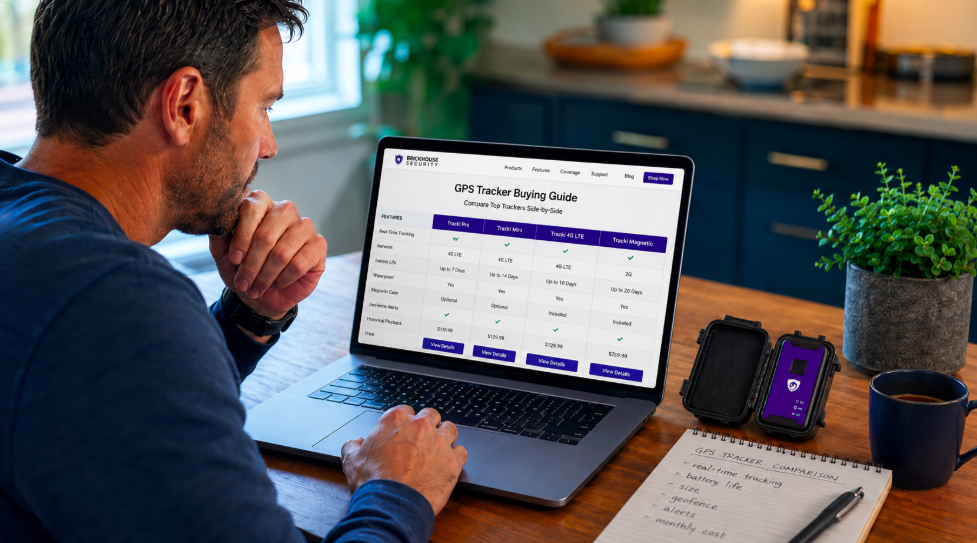
Choosing the wrong GPS tracker costs you twice once when you buy it, and again when it fails to do what you needed.
The market is packed with options that look similar but perform very differently. Update speeds, battery life, and subscription costs vary widely, and most buyers only discover the gaps after purchase.
This buying guide cuts through the noise. You will find honest comparisons of the best real-time GPS trackers of 2026, a breakdown of features that actually matter, and a clear framework to help you choose the right device for your exact situation.
What Is Real-Time GPS Tracking And How Does It Work?
Real-time GPS tracking means your device sends live location data to a platform or app at regular intervals, typically every 15 seconds to 5 minutes, depending on the tracker and plan. This is different from passive trackers, which store location data internally and require you to physically retrieve the device to download it.
How It Works
The tracker uses satellite signals from multiple GPS constellations to pinpoint location. It then transmits that data over a cellular network, usually 4G LTE, to a cloud platform you access through a web dashboard or smartphone app.
Next-generation trackers now use multi-constellation GNSS, pulling signals from GPS, GLONASS, Galileo, and BeiDou simultaneously. This gives you better accuracy, especially in areas where one constellation might have limited coverage.
Types of GPS Trackers
Not all GPS trackers are built the same. The three main types are:
- OBD-II plug-in: Plugs into your vehicle's diagnostic port. Easy to install, no wiring required, and draws continuous power from the vehicle.
- Hardwired: Connects directly to a vehicle's 12V electrical system. Tamper-resistant and ideal for permanent fleet installations.
- Battery-powered magnetic: Attaches to any metal surface using a built-in magnet. Portable, concealable, and requires periodic recharging based on usage.
Choosing the right type depends on what you are tracking, how long you need the device in place, and how much maintenance you are willing to manage.
Who Actually Needs a Real-Time GPS Tracker?
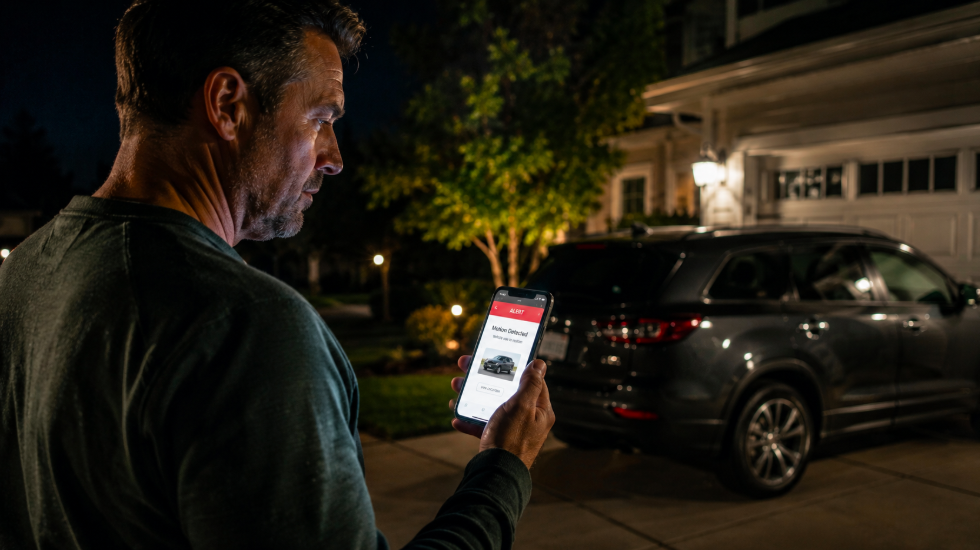
Real-time GPS trackers are no longer reserved for commercial fleets or high-tech operations. Today, they're used by parents, business owners, contractors, and everyday drivers who want greater visibility, security, and peace of mind.
Parents and Families
Teen drivers are among the highest-risk groups on the road. A GPS tracker with live location updates lets parents verify a teenager arrived safely, monitor speed, and get instant alerts, without a single phone call. It is not about distrust. It is about staying connected.
- Get notified when your teen exceeds a speed limit you set
- Receive geofence alerts when they leave an approved area
- Check route history to see exactly where they traveled
Not sure how to bring up GPS tracking with your teenager? Read our guide on talking about GPS tracking with your teen driver before you install anything.
Families also use trackers for elderly relatives who drive independently, and for children commuting to school on their own.
Vehicle Owners
If you own a vehicle, you already have a reason to track it. A motor vehicle was stolen every 37 seconds in the United States. Nearly 660,000 were reported stolen in the most recent reporting year, and recovery without a tracker is far from guaranteed.
A real-time GPS tracker changes that. The moment your vehicle moves without your knowledge, you get an alert and you can share precise live location data directly with law enforcement.
- Dramatically improve recovery odds after theft
- Get instant motion alerts when your parked vehicle moves
- Share real-time location with police for faster response
NICB recommends GPS tracking as one of the most effective anti-theft tools available. Some insurance providers also offer discounts for vehicles equipped with a tracking device.
Small Business Owners and Contractors
When your livelihood depends on vehicles or equipment, visibility is not optional. A single stolen trailer or missing piece of construction equipment can set a project back by days and cost thousands.
Real-time GPS tracking helps small business owners and contractors:
- Verify job site arrivals and departure times
- Protect high-value assets like light towers, trailers, and heavy equipment
- Optimize routes to reduce fuel costs and idle time
- Recover equipment quickly if it is stolen or moved without authorization
Fleet Managers
Fleet supervisors overseeing multiple vehicles need more than a dot on a map. Without real-time visibility, commercial fleets bleed revenue through inefficient routes, unauthorized stops, and rising fuel costs often without anyone noticing until it is too late.
The right GPS tracking device gives fleet managers:
- Geofence alerts for job sites and restricted zones
- Driver behavior monitoring including speed, hard braking, and rapid acceleration
- Route history and trip replay for every vehicle
- A web dashboard that shows all vehicles at once
How to Choose the Best Real-Time GPS Tracker
Picking the right GPS tracker comes down to these things: what you are tracking, how often you need updates, what you are willing to spend, and whether the device fits how you actually plan to use it.
What Are You Tracking?
This is the most important question and the right answer shapes every decision that follows. Different assets need different tracker types, and choosing the wrong one means paying for features you do not need or missing the ones you do.
- Vehicles (cars, trucks, vans): OBD-II plug-ins or hardwired trackers are the best fit. They draw continuous power from the vehicle, so battery life is never a concern.
- Construction equipment and unpowered assets: Battery-powered trackers with long sleep-mode battery life are ideal. Some devices last 1 to 2 years between charges when monitoring stationary assets.
- Personal use (bags, teens, personal items): Compact portable trackers with magnetic accessories work well. They are easy to conceal and simple to move between assets.
- Mixed fleets: Look for a platform that manages both wired and battery-powered devices under a single dashboard, so you are not juggling multiple apps or accounts.
Update Frequency
How often your tracker reports location directly impacts battery life, subscription cost, and how useful the data actually is. Consider how often you need location updates before choosing a plan or device.
- Every 15 seconds: Best for active route monitoring and high-accountability use cases like fleet management or teen driver tracking.
- Every 30 to 60 seconds: The sweet spot for most everyday users. Accurate enough for real-time awareness without draining the battery quickly.
- Every 1 to 5 minutes: A good fit for lower-cost plans and battery-powered trackers in active mode where pinpoint precision is not critical.
- Hourly or on-motion only: Ideal for parked assets or equipment that sits idle for long periods. Extends battery life significantly.
Most modern devices allow you to configure update frequency based on your needs, balancing precision against power and cost.
Total Cost of Ownership
Most buyers focus on the device price and overlook the subscription. That is where costs quietly add up. When choosing the best real-time GPS tracker, calculate what you will actually spend over three years, device cost, monthly fee, activation fees, and any charges for features like additional geofences or extra users.
To keep costs under control, look for:
- Transparent monthly pricing with no hidden fees
- Cancel-anytime plans with no long-term contracts
- All core features included in the base plan, not locked behind upgrades
- No activation fees or one-time setup charges
Network Coverage
A GPS tracker is only as good as the network it runs on. In the United States, most reputable devices run on major 4G LTE networks. For better battery efficiency without sacrificing reliability, look for trackers using LTE Cat-M1 or NB-IoT technology.
Before choosing a tracker, consider:
- Coverage in your region: Rural areas, remote job sites, and border zones can have gaps
- Multi-network connectivity: Devices that switch between carriers automatically offer more reliable coverage
- International support: If assets cross borders, confirm the device covers every country you operate in
Battery Life and Power Source
Battery life is one of the most important factors when evaluating GPS trackers. Your power source determines where you can deploy a device, how often you need to maintain it, and how discreet it can be.
- OBD-II plug-ins: Draw continuous power from the vehicle battery. No recharging needed as long as the vehicle is used regularly.
- Hardwired trackers: Connect directly to a vehicle's 12V power system. Continuous power, tamper-resistant, and ideal for commercial fleets.
- Battery-powered magnetic trackers: Require recharging based on usage. In active mode, most last 3 to 14 days. With extended battery packs, some devices reach up to 250 days of standby.
For assets that sit idle for long periods, look for trackers with a dedicated low-power or sleep mode. Devices optimized for low-frequency tracking can last anywhere from one to two years on a single charge.
The right power source is not about which lasts longest. It is about matching the device to how and where you actually use it.
Compliance Needs
If you operate in a regulated industry, compliance is not an afterthought it is a requirement. Employers in transportation, logistics, and construction may need trackers that support:
- FMCSA (Federal Motor Carrier Safety Administration) compliance for commercial vehicle regulations and driver safety standards
- HOS (Hours of Service) logging for tracking driver on-duty and driving time to prevent fatigue-related incidents
- IFTA (International Fuel Tax Agreement) reporting for accurate fuel tax calculations across state and provincial lines
- ERP (Enterprise Resource Planning) integration to connect tracking data with your existing business management systems
Before choosing a platform, confirm it supports the specific compliance standards your operation requires. The wrong system can create reporting gaps that lead to fines, failed audits, or operational delays.
Top Real-Time GPS Trackers in 2026
Knowing what to look for is only half the job. Here are five of the top real-time GPS trackers in 2026, evaluated on update frequency, battery life, coverage, subscription cost, and real-world usability, so you can compare options and choose with confidence.

Trackport Pro
Built specifically for fleet managers and business owners, BrickHouse Fleet Tracker plugs directly into any vehicle's OBD-II port, no wiring, no installation appointment, no downtime. Just plug it in and it starts transmitting immediately, drawing continuous power from the vehicle so battery life is never a concern.
It reports every 30 seconds in active mode and gives fleet supervisors a comprehensive web dashboard they can access from any device, anywhere. When you need to know where every vehicle is without making a single phone call, this is the tool that makes that possible.
- Geofence alerts for job sites and authorized zones
- Driver behavior monitoring including speed, hard braking, and rapid acceleration
- Full route history and trip replay for every vehicle
- Single dashboard for managing multiple devices and users
- Integrates seamlessly with existing fleet management workflows
Best for: Fleet operators, contractors, and small businesses with two or more vehicles that need reliable, continuous real-time tracking without complex installation.
View on Store Buy on Amazon
BrickHouse Spark Nano 7
BrickHouse Spark Nano 7 is our most versatile real-time GPS tracker. Compact enough to slip into a bag, attach magnetically beneath a vehicle, or hide discreetly inside any asset, it delivers full real-time tracking capability without a single wire.
It reports every 60 seconds by default, with intervals easily adjusted through the app or web dashboard. Three flexible subscription tiers mean you only pay for what you need:
- Basic ($17.99/month): 60-second updates, 5 geofences, North America coverage
- Plus ($27.99/month): 30-second updates, 60 geofences, North America and Europe coverage
- Premium ($34.99/month): Fastest updates, unlimited geofences, maximum features
No long-term contracts on any plan. Cancel anytime.
- Magnetic waterproof case for discreet placement on any vehicle
- Speed alerts, geofencing, and detailed travel reports
- Built-in panic button for personal safety situations
- Up to 250 days standby with extended battery pack
- Access via web browser or iOS and Android app
- Lifetime warranty included
Best for: Parents monitoring teen drivers, vehicle owners protecting against theft, and anyone who needs portable real-time tracking without hardwiring.
View on Store Buy on Amazon
LandAirSea 54
About the size of a matchbox, LandAirSea 54 tracker punches well above its weight. With update speeds as fast as every 3 seconds, it leads the portable tracker category in raw update frequency. The strong magnet and weatherproof build let it attach to nearly any vehicle surface without tools.
- Weatherproof and magnetic for discreet placement
- Motion-activated mode to extend battery life
- Coverage across 150 plus countries
Best for: Hidden vehicle tracking, theft recovery, and covert monitoring of vehicles you own.
Buy on Amazon
Bouncie
Plug it into your vehicle's OBD-II port and it begins transmitting immediately, no wiring, no setup complexity. It reports location every 15 seconds while driving, making it one of the fastest-updating OBD-II trackers available. At around $8 per month, it is also one of the most affordable options for everyday vehicle use.
- Vehicle diagnostics and trip history included
- Instant alerts for hard braking, rapid acceleration, and speeding
- Simple plug-and-play installation
Best for: Families tracking teen drivers and everyday vehicle owners who want simplicity at the lowest monthly cost.
Buy on Amazon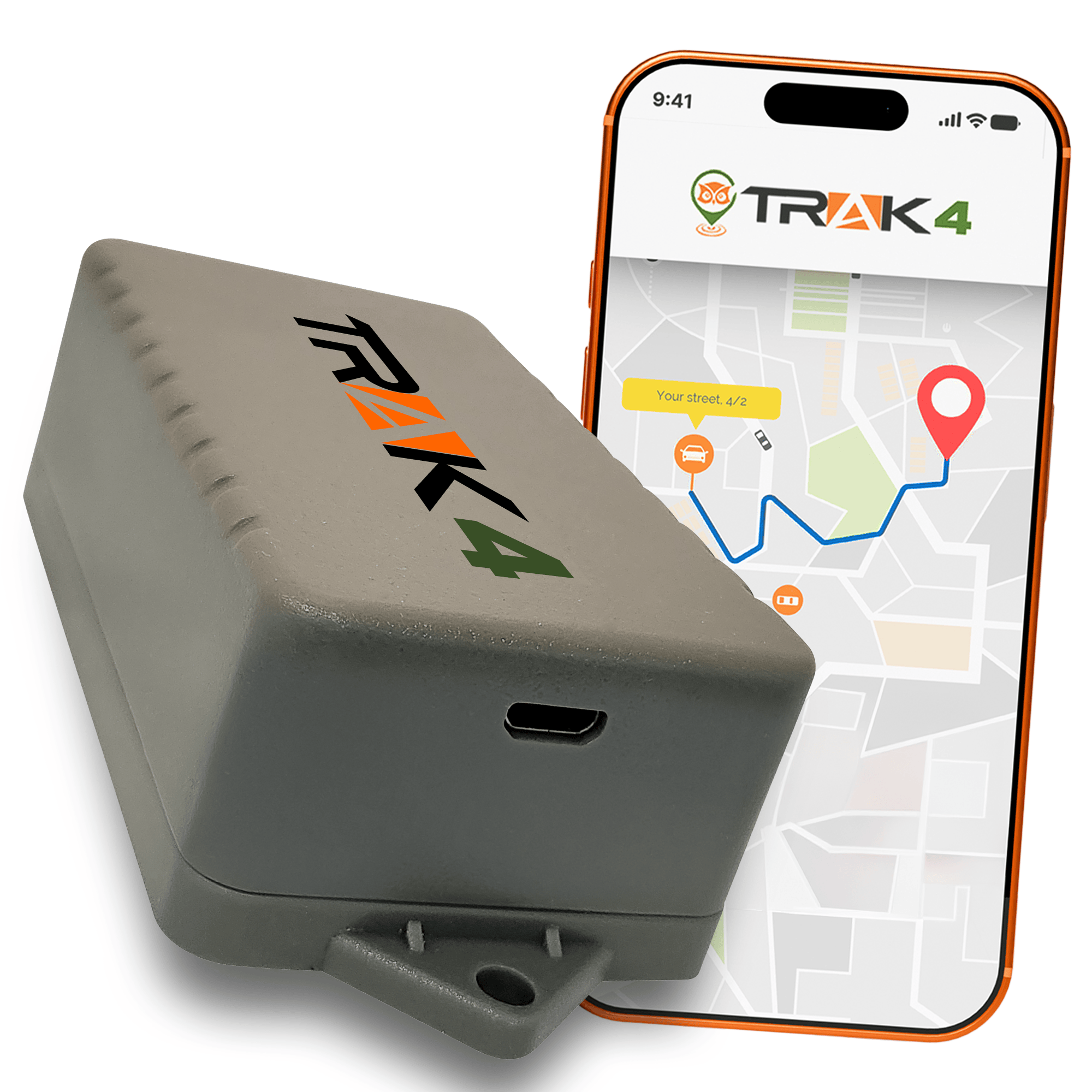
Trak-4
For buyers who want genuine real-time GPS tracking without a high monthly bill, Trak-4 delivers where it counts. It runs on 4G LTE, reports live location over cellular networks, and starts at just $6.99 per month, the lowest subscription cost on this list.
It is a waterproof, battery-powered tracker built for vehicles, equipment, and assets that need monitoring without a permanent power source. Update frequency is configurable based on your needs, and battery life extends considerably when set to low-frequency or motion-activated mode.
- Waterproof and durable for outdoor and equipment use
- Configurable update frequency to balance battery and precision
- Geofence alerts and motion notifications included
- Location data shareable directly with law enforcement for theft recovery
Best for: Budget-conscious buyers, equipment tracking, and anyone who wants reliable real-time GPS capability at the lowest possible monthly cost.
Buy on AmazonQuick Comparison Table
| Device | Type | Battery | Best For | From/Mo |
|---|---|---|---|---|
| BrickHouse Fleet Tracker | OBD-II | Continuous | Fleets, businesses | $17.99 |
| BrickHouse Spark Nano 7 | Portable magnetic | Up to 250 days | Vehicles, teens, assets | $17.99 |
| LandAirSea 54 | Portable magnetic | 3-14 days | Hidden covert tracking | ~$25 |
| Bouncie | OBD-II plug-in | Continuous | Families, teen drivers | ~$8 |
| Trak-4 | Battery-powered | Months | Budget, equipment | $6.99 |
Key Features to Look for in a Real-Time GPS Tracker
Not every GPS tracker is built the same. The right device should do more than show a dot on a map, it should give you actionable information the moment something happens. Here are the key features to prioritize in any real-time GPS tracker buying guide.
Geofencing and Instant Alerts
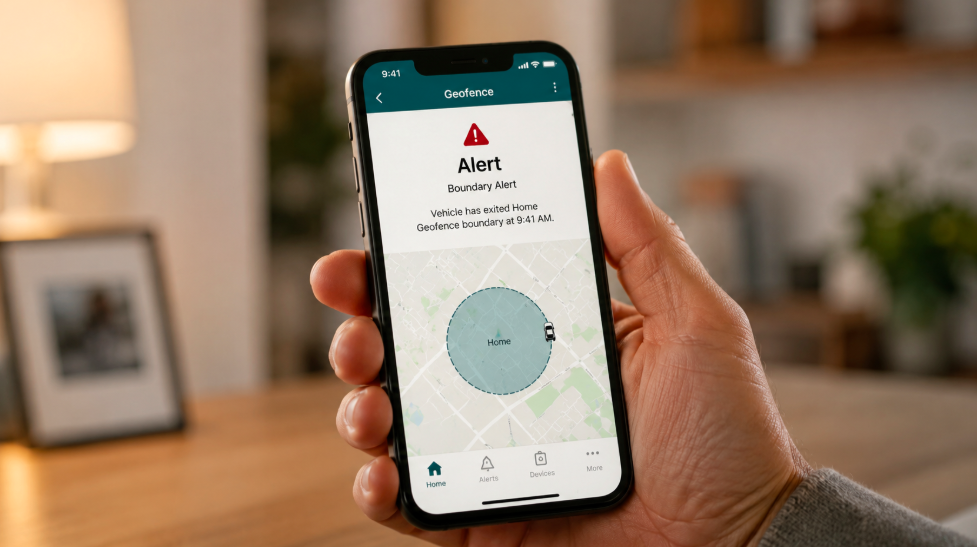
Geofencing lets you draw virtual boundaries on a map and get notified the moment a tracker crosses them. It is one of the most useful features in any live tracking device, turning passive location data into immediate, actionable alerts.
- Set boundaries around home, school, job sites, or any location that matters
- Get instant notifications when a vehicle enters or leaves a designated zone
- Use multiple geofences to monitor different locations simultaneously
- Essential for theft prevention, alerts you before a stolen vehicle gets too far
Look for a tracker that supports multiple geofences across its plans. Some entry-level plans limit you to five zones, while premium tiers unlock unlimited boundaries.
Speed Alerts
Speed alerts notify you the moment a driver exceeds a threshold you set. You define the limit, the tracker does the monitoring.
Particularly valuable for parents keeping tabs on teen drivers and fleet managers focused on driver monitoring across multiple commercial vehicles.
Tamper Alerts
Tamper detection alerts you if someone removes or interferes with the tracker. If a device is disconnected, moved, or physically disturbed, you get an immediate notification.
More critical for theft prevention and fleet vehicles than for routine family use, but worth having regardless.
Motion Alerts
Motion alerts trigger the moment a parked vehicle or asset starts moving unexpectedly.
If your vehicle moves at 2 AM without your knowledge, a motion alert catches it immediately giving you time to contact law enforcement with live location data while the theft is still in progress.
Route History and Route Optimization
Route history gives you a full replay of every trip a tracked device has taken. But the best commercial GPS trackers go further, they use that data to support route optimization, helping fleet managers identify inefficient paths, reduce fuel consumption, and cut unnecessary mileage across all fleet vehicles.
- Replay any trip with turn-by-turn detail
- Identify patterns of unauthorized stops or detours
- Use historical data to optimize routes and reduce fuel consumption
- Provide evidence for insurance claims or driver disputes
Fleet Dashboard and Multi-Device Management
For businesses running commercial fleets, a fleet dashboard is not optional. It is the command center that brings everything together live tracking across all vehicles, driver monitoring, geofence alerts, and route data, in a single view that fleet supervisors can access from anywhere.
- Monitor all fleet vehicles from one login
- Track driver behavior across the entire operation in real time
- Integrate with existing systems for seamless fleet efficiency
- Eliminate the need for multiple platforms or manual check-ins
If you are tracking more than one vehicle, confirm the platform integrates with your existing systems before committing. Switching platforms mid-operation is costly and disruptive.
Battery Life and Low Power Mode
Strong battery life is non-negotiable for any hidden GPS tracker or portable device deployed on unpowered assets. Look for devices that offer a dedicated low power mode for assets that sit idle, this can extend battery life from days to months without sacrificing the ability to track when it matters.
- Active mode for real-time updates during movement
- Low power mode for stationary assets to preserve battery
- Strong battery life reduces maintenance and recharging frequency
- Affordable hardware with long standby is the best value over time
Mobile App Quality
A user-friendly interface is crucial for fast, easy access to your location data. Before you buy, check reviews specifically for the app, not just the hardware. An excellent tracker paired with a poorly designed app creates a frustrating experience that undermines everything else the device does well. Also watch for platforms that charge extra for app access or lock key features behind a multi-year lock-in contract.
Conclusion
Choosing the best real-time GPS tracker is not about picking the most popular device or the lowest price. It is about finding the right tool for your exact situation.
If you are a parent, you need reliable live tracking with instant alerts and simple app access. If you own a vehicle, a hidden GPS tracker with motion alerts could be the difference between recovering your car and losing it for good. If you run a business or manage a fleet, you need driver monitoring, route optimization, and a fleet dashboard that gives you full visibility across every vehicle.
This buying guide has covered everything you need to decide with confidence how real-time GPS tracking works, which features matter most, how to calculate your true cost of ownership, and which devices lead the market in 2026. The right tracker is out there. Now you know exactly how to find it.
FAQ
Find Your Real-Time GPS Tracker
Browse GPS Trackers
Posted by Todd Morris on Jun 29th 2026