




GPS Tracker for Car Theft Prevention: The Complete 2026 Guide
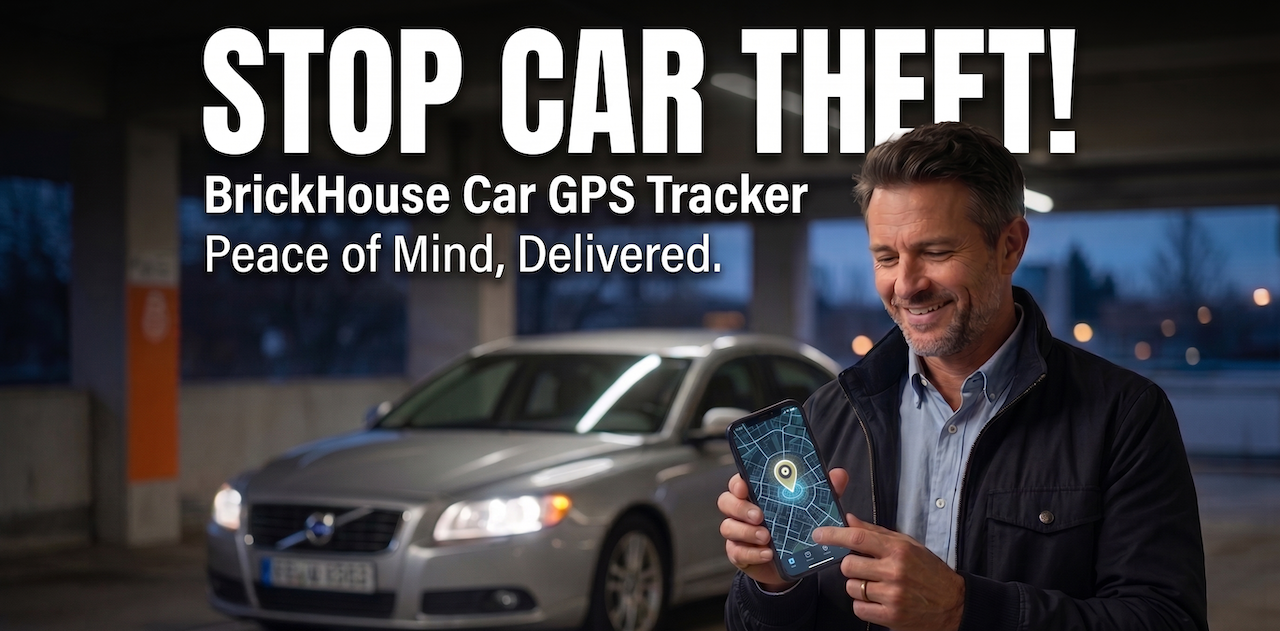
If your car disappeared tonight would you know where it was in 60 seconds? For most owners, the answer is no. That's the gap a GPS tracker helps close to better prevent theft and recover stolen vehicles faster.
In 2026, one car is still stolen every 48 seconds in the U.S., 659,880 vehicles lost in 2025 alone despite a record 23% drop. The thieves who remain are smarter and faster than ever. A car alarm won't tell you where your car went. A GPS tracker will, live, in real time, straight to your phone.
Vehicles with active GPS tracking are recovered more than 90% of the time. Without one, recovery rates drop to around 60%. That gap comes from NICB data, not a sales pitch. Whether you're protecting a family car, a work van, or an entire fleet, this guide covers everything you need to choose, install, and use the right GPS tracker in 2026.
What Is a GPS Tracker for Car Theft Prevention?
A GPS tracker for car theft prevention is a compact electronic device installed inside or on a vehicle that uses GPS satellite technology and cellular networks to continuously report the vehicle's real-time location through a mobile app or web dashboard. If a vehicle is stolen, the tracker allows the owner and law enforcement to pinpoint its exact location instantly, significantly improving recovery speed and increasing the chances of getting the stolen vehicle back safely.
How GPS Vehicle Tracking Works
A GPS tracker uses three core technologies working together to monitor your vehicle in real time.
- A GPS receiver that picks up satellite signals to calculate the vehicle's location within a few feet
- A cellular modem that transmits location data over 4G LTE networks to a secure cloud server
- A mobile app or web dashboard where you monitor the car's location, review trip history, and configure alerts
Most modern GPS devices update a vehicle's location every 5 to 60 seconds depending on the subscription plan. Premium real-time tracking can push location updates every 3 seconds, which matters enormously when someone is driving your car away right now.
How a GPS Tracker for Cars Prevents and Recovers Theft
A GPS tracker can't stop a thief from taking your car, but it ensures they can't keep it. The moment your car moves without permission, you get an instant alert with a live location, giving law enforcement everything they need to recover it before it's gone for good.
Real-Time Tracking: Know Where Your Car Is at Every Moment
Real-time tracking is the foundation of any effective theft prevention strategy. The moment you receive a movement alert, you open your app and see exactly where your vehicle is live, with location updates refreshing continuously. This is the data law enforcement needs to intercept a vehicle before it reaches a chop shop or crosses state lines.
Some owners have recovered their cars within minutes of receiving their first real-time update after a theft alert. Speed is everything, and live tracking delivers it.
Geofencing: Set a Boundary, Get Instant Alerts
Geofencing lets you set a boundary on a map, around your driveway, a job site, a school parking lot, or any area you define. If the vehicle leaves that boundary unexpectedly, you get a push notification to your phone instantly.
This is especially valuable for parents monitoring teen drivers, fleet managers tracking vehicles after hours, and business owners who need to know the moment a work vehicle goes somewhere it shouldn't.
Movement Alerts and Tamper Detection
Beyond geofencing, the best GPS trackers send movement alerts the instant the vehicle starts or shifts, even if it hasn't crossed a defined boundary. Tamper alerts fire when someone physically handles the device, giving you an extra layer of warning before a thief even drives away.
Tow alerts are equally critical: they activate when the vehicle moves without the ignition on, catching one of the most common professional theft methods before you'd otherwise notice anything wrong.
Impact Detection and Hard Braking Alerts
Advanced GPS trackers include impact detection notifying you if your vehicle is struck or bumped while parked. Hard braking alerts help fleet managers identify risky driving behavior that often precedes accidents or unauthorized vehicle use. Both give you visibility into what's happening to your vehicle even when you're not watching.
Remote Engine Immobilization
Some GPS units include a starter interrupt relay, allowing you to remotely cut the vehicle's ignition from your mobile app. Even if a thief drives away, you can prevent the engine from restarting the next time they stop, giving law enforcement a critical window to respond.
This remote control capability is particularly valuable for fleet operators, automotive dealerships, and anyone managing high-value vehicles.
Types of GPS Trackers for Car Theft Prevention
GPS trackers come in three main types: OBD-II plug-in trackers, hardwired trackers, and magnetic portable trackers. Each offers different levels of installation, concealment, and real-time theft protection.


Best Placement Locations for Hidden GPS Trackers
Choosing the right hiding spot improves both tracking performance and theft protection.
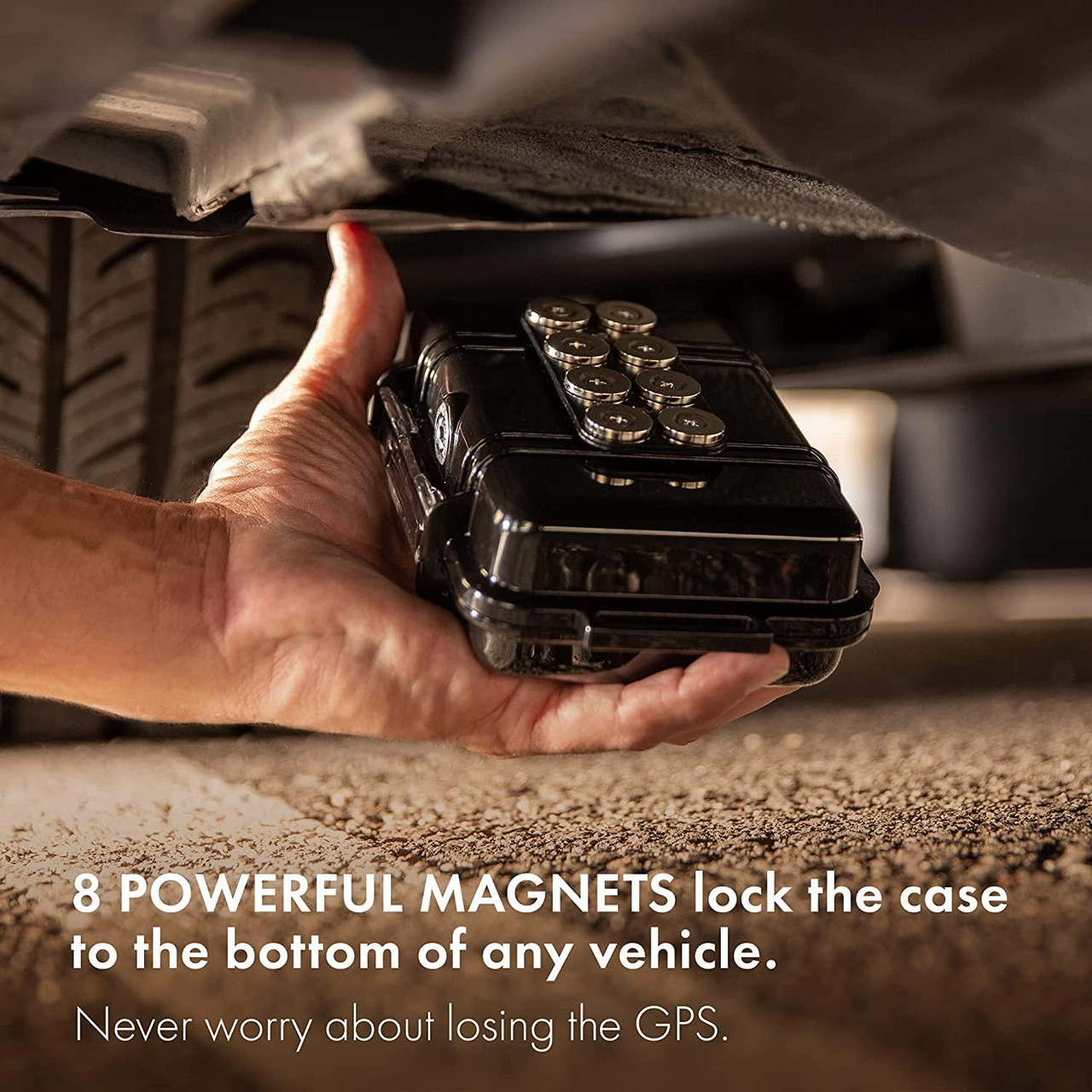
- Behind the rear bumper or undercarriage for magnetic trackers
- Inside the trunk lining or spare tire compartment
- Behind dashboard panels or inside the engine bay
- Under seats or inside door panels for concealed hardwired units
GPS Tracker for Car Theft Prevention: Who Needs It?
If you own a vehicle, depend on one for work, or manage more than one, you need it. From parents tracking teen drivers to fleet managers overseeing dozens of assets, a GPS tracker gives anyone with something to lose the real-time visibility and instant alerts to protect it.
Individual Car Owners and Families
For personal vehicles, a car GPS tracker gives you something no alarm can: the confidence that your vehicle's location is always known, and that theft doesn't have to mean a permanent loss. For parents of teen drivers, live tracking adds peace of mind well beyond theft, knowing they arrived safely, getting notified if they went somewhere unexpected, and being able to locate them instantly in an emergency.
That added peace of mind, whether it's a daily commute or a first solo road trip, is what families consistently describe as the most valuable part of owning a tracker.
Small Business Owners
A service van loaded with tools isn't just a vehicle, it's a revenue-generating asset. One theft can mean days of lost work, insurance claims, and replacement costs in the thousands. For small businesses, that kind of disruption is serious.
GPS tracking reduces unauthorized vehicle use by up to 25% for small businesses. Beyond theft, owners use live tracking to monitor idle time, verify arrival at job sites, track fuel levels, and keep tabs on vehicle usage, all through one easy-to-use app.
Fleet Managers and Logistics Companies
At scale, the ROI becomes impossible to ignore. A fleet of 20 vehicles without a reliable fleet tracking device is 20 blind spots. Fleet operators who implement GPS tracking consistently report:
- 10-15% increase in fleet productivity
- 13% reduction in idle time within the first year
- 25% reduction in unauthorized vehicle use
- 5-15% insurance premium reductions from insurers who recognize GPS-tracked fleets as lower risk
With real-time updates across every vehicle, fleet managers can respond to a theft the moment it happens, not after a driver reports a missing van the next morning.
Automotive Dealerships
Dealership lots carry hundreds of vehicles with minimal overnight supervision. GPS trackers on every vehicle in inventory let dealerships detect unauthorized movement instantly, coordinate with law enforcement, and immobilize vehicles remotely if taken during a fraudulent test drive.
Key Features to Look for in a Car GPS Tracker
Not all trackers are built the same. The features that matter most are real-time tracking, instant push notifications, geofence alerts, long battery life, and a clean easy-to-use app. Get those right, and everything else is a bonus.
Real-Time Tracking vs. Passive Data Logging
Real-time trackers push location updates continuously every few seconds to once a minute depending on the plan. Passive trackers store data locally and sync when you connect. For theft prevention, real-time tracking is the only meaningful choice.
Battery Life, Power Saving Mode, and Hardwire Options
Battery life varies widely. Most battery-powered GPS trackers last 1-3 months on a single charge with standard daily location updates. Real-time mode drains power faster. Look for devices with a power saving mode that reduces update frequency on long deployments, and reliable low-battery alerts so you're never caught unaware.
Hardwired trackers tap the car battery directly, they have effectively unlimited runtime and never need recharging.
Push Notifications, Instant Alerts, and Alert Customization
The best GPS trackers let you set as many alerts as your situation requires: movement alerts when the car starts, geofence breach notifications when it leaves a defined area, impact detection if it's struck while parked, hard braking notifications for fleet safety, and tamper alerts if someone handles the device.
All of these should arrive as instant alerts via push notifications to your phone, not delayed emails. When a theft is happening, every second matters.
Easy-to-Use App and User Interface
An easy-to-use app with a clean interface is crucial, especially during a theft. Look for apps with:
- Clear map view
- One-tap location sharing
- Simple geofence setup
- Quick access to trip history
The app should work well on any phone and allow sharing the vehicle's location with multiple people, ideal for families or business teams.
Monthly Subscription Cost, Subscription Tiers, and Annual Plans
GPS tracking requires a cellular data subscription to relay location data. Monthly subscription costs typically range from $8 to $30 per vehicle depending on features and update frequency.
Most providers offer both a monthly subscription and an annual plan. Annual subscriptions typically save 15-25% compared to month-to-month fees. Watch for providers with limited features at entry-level subscription tiers that push you toward more expensive plans just to get real-time updates.
The best providers offer transparent pricing, clear feature breakdowns across all subscription tiers, and no surprise monthly fees hidden in the fine print.
Waterproof Casing and Build Durability
For any externally mounted tracker, waterproof casing is essential. Vehicles encounter rain, mud, road salt, and temperature extremes daily. Look for IP67 or IP68 waterproof ratings. A quality weatherproof case also protects the device's battery and electronics from vibration and road shock on rough terrain.
Wi-Fi, Cellular Network, and Coverage Reliability
4G LTE is the current standard for reliable GPS tracker communication. Some newer GPS devices supplement cellular with Wi-Fi positioning for more accurate location data in dense urban environments where satellite signals may be partially blocked. Multi-carrier fallback, automatically switching to the strongest available network, is especially important for fleet vehicles that travel across varied terrain and coverage zones.
How to Install a GPS Tracker for Car Theft Prevention
Three tracker types. Three install methods. All straightforward, pick the one that fits your situation.
OBD-II Installation: Plug-and-Play
The easiest install available. No tools, no wiring, no experience needed.
- Locate the OBD-II port, typically under the steering column, above the foot well on the driver's side
- Plug the tracker firmly into the port until it clicks into place
- Download the companion app and complete the activation steps
- Wait 2-5 minutes for the device to acquire GPS signal and connect to the cellular network
- Set up your first geofence and configure movement alerts and push notifications
Hardwired Installation
Best handled by a professional installer or an experienced DIYer comfortable with automotive wiring. The result is a completely concealed tracker that runs 24/7, invisible to anyone, including a thief.
- Choose a concealed location, inside the dashboard, trunk lining, or engine bay
- Connect the power wire to a constant 12V source for always-on tracking
- Connect the ground wire to a solid chassis ground point
- (Optional) Connect the ignition sense wire to detect engine on/off status and close idle time monitoring gaps
- Secure the unit with zip ties or a mounting bracket; seal all connections with electrical tape
- Activate via the mobile app and confirm GPS signal and real-time updates are live
Professional installation typically runs $50-$150 and often includes a workmanship warranty.
Magnetic Tracker Placement
No wiring. No installation. Attach it, activate it, and it's live in minutes.
- Select a steel surface with good sky exposure, the undercarriage behind the rear bumper is the most reliable spot
- Clean the surface of dirt, grease, and rust for maximum magnetic hold
- Press the weatherproof case firmly against the surface and test pull-resistance before finalizing
- Power on the unit and verify GPS signal and real-time tracking in your app
- Take a short test drive to confirm signal stability across different speeds and road types
Check battery status monthly. Most devices send a push notification when the battery runs low, configure this alert during initial setup so you're never left without coverage.
Will a GPS Tracker Lower Your Car Insurance Premium?
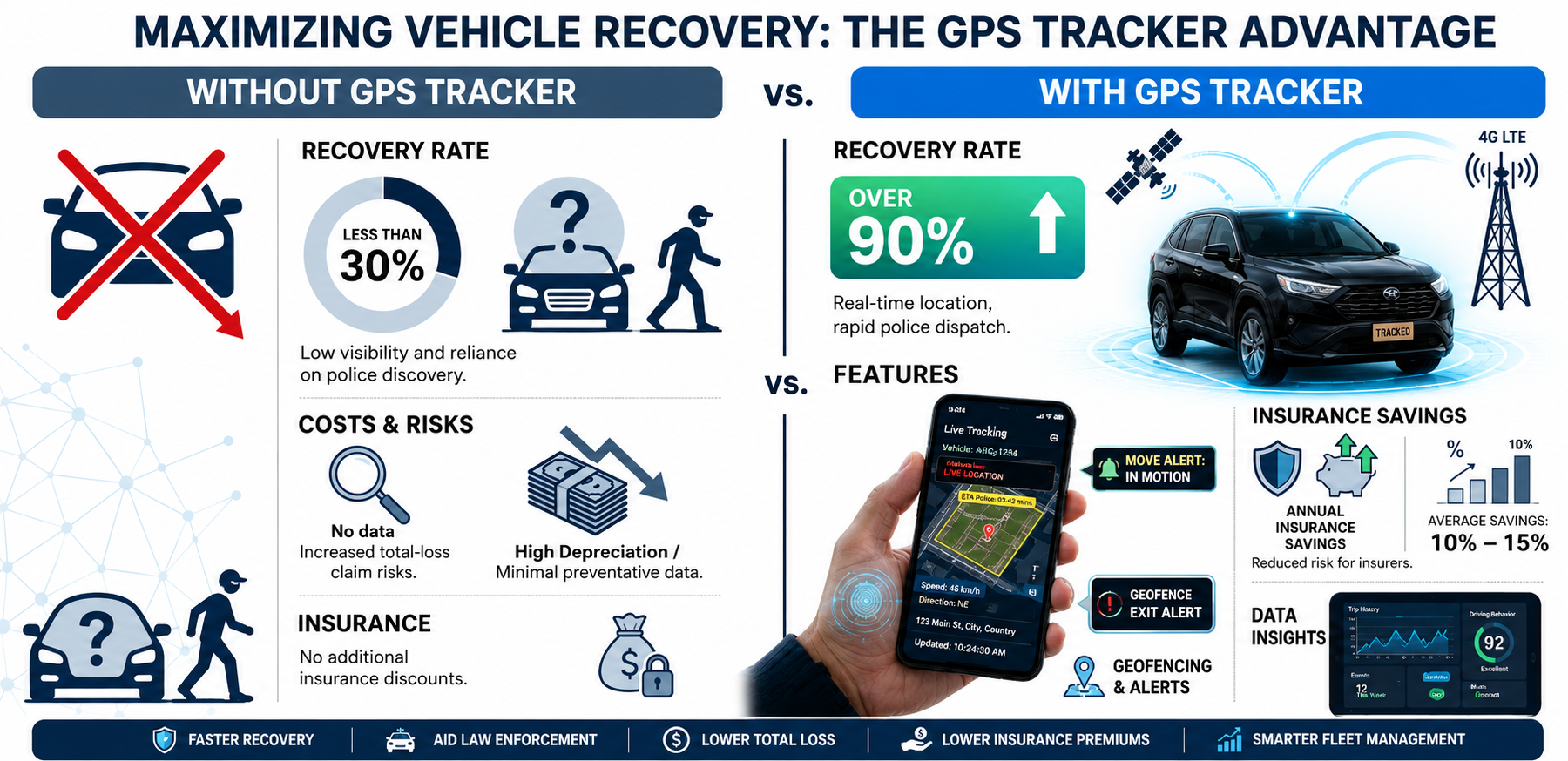
Yes, in many cases. Insurers recognize that GPS-tracked vehicles have dramatically higher recovery rates, which reduces their total claims exposure. Many providers offer meaningful discounts for vehicles equipped with active tracking and anti-theft devices.
Typical premium reduction ranges:
- Personal vehicles: 5-10% reduction
- Commercial / fleet vehicles: 5-15% reduction
- High-risk vehicle models (Hyundai, Kia, Honda with known vulnerabilities): some insurers offer higher discounts
Ask your insurer specifically about "GPS anti-theft tracking discounts." Some insurers require the device to be actively reporting data, a reliable email confirmation or app notification history can serve as proof of active service.
Fleet managers consistently report that GPS tracking pays for itself within 12-18 months through insurance savings alone, before factoring in recovered idle time, lower fuel costs, and theft prevention.
Why BrickHouse Security GPS Trackers Lead in Theft Prevention
Protecting your vehicle shouldn't be complicated. At BrickHouse Security, we built our GPS trackers around one idea: you should always know where your car is, and getting there should take minutes.
- Real-time protection, always on: 4G LTE tracking with nationwide coverage, instant movement alerts, geofence notifications, and tamper detection all delivered straight to your phone the moment something changes.
- An app you'll actually enjoy using: Clean, simple, and built for real situations. Live location, full trip history, and one-tap location sharing with law enforcement, no learning curve required.
- A tracker for every situation: OBD-II plug-in, hardwired, or magnetic, whichever fits your vehicle and lifestyle. All built with long battery life, power saving mode, and weatherproof cases that handle whatever the road throws at them.
Conclusion
In the U.S., 659,880 vehicles were stolen, one every 48 seconds, even at a decades-long low. The risk hasn't gone away. It's just shifted to smarter, faster thieves who can bypass a traditional alarm before the sound even registers.
A GPS tracker for car theft prevention changes the equation entirely. It won't stop every theft, but it ensures that a stolen vehicle doesn't stay stolen. Real-time location. Instant alerts. Live coordinates for law enforcement. A 90% recovery rate backed by NICB data.
For individuals, it's peace of mind. For small business owners, it's protecting the asset your livelihood depends on. For fleet managers, it's full visibility across every vehicle all the time.
Frequently Asked Questions
Does a GPS tracker prevent car theft?
Where is the best place to hide a GPS tracker on a car?
Can a GPS tracker be detected or jammed?
Do GPS trackers lower car insurance?
What's the difference between a GPS tracker and a car alarm?
Posted by Todd Morris on May 26th 2026