




GPS Tracker for Farm Equipment: Protect Every Piece of Machinery You Own
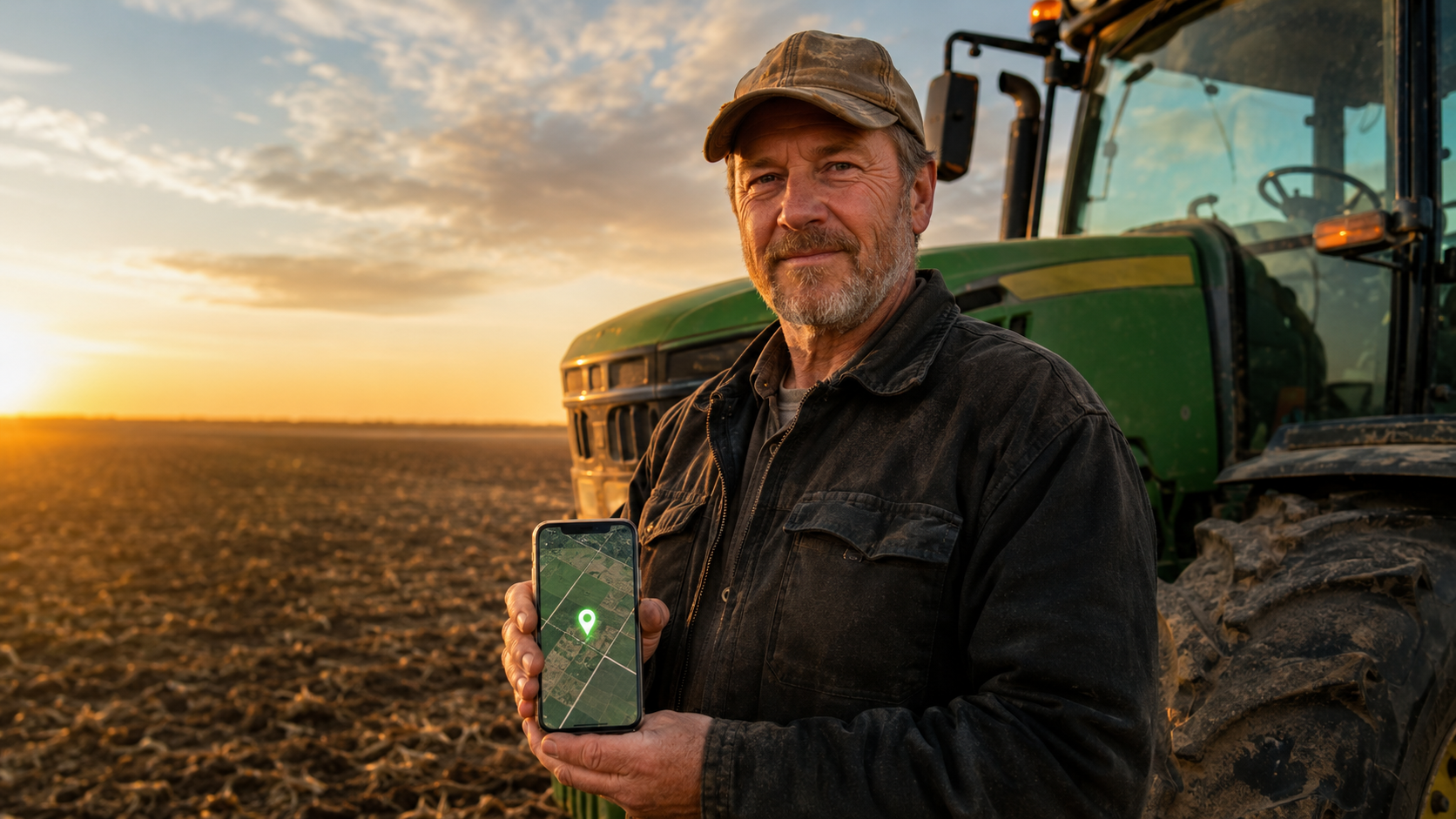
Farm equipment theft can happen overnight. One morning, your tractor, trailer, or ATV is simply gone, along with valuable time, money, and productivity. By the time you realize it, the equipment may already be miles away.
Every year, farm and construction equipment theft costs U.S. owners hundreds of millions of dollars, while theft recovery rates without GPS tracking remain extremely low.
A GPS tracker for farm equipment helps you protect tractors, trailers, and machinery with real-time location tracking, instant theft alerts, and faster recovery. In this guide, you'll learn how farm equipment GPS trackers work, the best tracker types for different machinery, key features to look for, and how to protect your equipment more effectively.
Why Farm Equipment Theft Is a Bigger Problem Than Most Farmers Realise
Farm equipment theft has shifted from small-scale opportunism to organized, coordinated operations, costing U.S. farmers up to $1 billion annually, with recovery rates below 15% when no GPS tracker is in place.
The Numbers Behind Agricultural Equipment Theft
Farm equipment theft has evolved from opportunistic grab-and-run crimes into organized operations. Opportunistic thieves have largely been replaced by coordinated crews who scout rural properties, plan their exits, and have buyers ready before they even arrive at your farm.
The statistics tell a clear story:
- The National Equipment Registry (NER) estimates annual U.S. farm and construction equipment theft losses between $300 million and $1 billion
- In Fresno County, California alone, agricultural theft losses exceeded $30 million between 2022 and 2024
- Recovery rates for stolen equipment without GPS tracking hover below 15%
- The global agricultural GPS tracking market was valued at $4.2 billion and is projected to grow at 12.3% annually, a direct signal that the agricultural sector is acting on this threat
Why Farms Are Easy Targets
Rural farms have three common weaknesses that make them easy targets for equipment thieves:
- Remote locations: Police response times in rural areas can exceed 30 minutes, more than enough time for a trailer to be miles down a highway before anyone reacts.
- High-value assets left unattended: A mid-size tractor runs $80,000 to $150,000. A combine harvester can top $400,000. These machines sit in open fields overnight, far from any camera or lighting.
- Low visibility: Equipment spread across large farms can be hard to monitor, and thieves know missing machinery may go unnoticed for days. A GPS tracker helps prevent theft by alerting you the moment equipment moves.
What It Really Costs When Equipment Goes Missing
The sticker price of the stolen machine is just the beginning. When a key piece of farm equipment disappears during planting or harvest, the real damage is operational.
- Lost planting or harvest windows: In agriculture, timing is everything. Missing even five days during peak season can reduce crop yields meaningfully.
- Rental cost: Emergency rental of replacement equipment during peak season is expensive and often unavailable.
- Rising insurance premiums: A theft claim increases your future rates, sometimes for years.
- Worker downtime: Hired labor standing idle while you source replacement equipment.
How a GPS Tracker for Farm Equipment Actually Works
A GPS tracker for farm equipment uses satellite technology to monitor the real-time location of tractors, trailers, and other machinery. The device sends location updates through cellular networks to a mobile app or online dashboard, allowing farmers to track equipment, receive theft alerts, and monitor movement anytime.
Technology Behind Real-Time Tracking
A GPS tracker for farm equipment is a small, rugged tracking device, usually the size of a deck of cards or smaller, that combines two technologies working together:
- GPS (Global Positioning System): Uses signals from satellites orbiting Earth to calculate the device's precise location, typically within 3-10 meters of accuracy. This satellite technology makes it ideal for tracking large agricultural equipment over long distances outdoors, across vast fields, and between remote job sites.
- Cellular data transmission: A GPS tracker sends your equipment's location to your phone or computer using 4G LTE networks, so you can monitor it in real time. It uses satellites to track movement and can send updates every few seconds or minutes based on your settings. GPS is the most common tracking solution for farm equipment because it works well across large outdoor areas.
Cellular vs. Satellite GPS
Most GPS trackers for farm equipment use 4G LTE cellular networks, the same networks used by smartphones. They work well for most farms and provide reliable real-time tracking at an affordable monthly cost. For better coverage in rural areas, choose a tracker with multi-network support like LTE Cat M1, which automatically connects to the strongest available signal.
- Farms with nearby 4G LTE coverage
- Equipment moving between fields, barns, and service locations
- Budget-friendly tracking plans, usually around $5-$25 per month
- Extremely remote areas with little or no cellular coverage
- Large or international farming operations
- Long-range tracking without coverage gaps, but at a higher monthly cost
For most farms, a 4G LTE GPS tracker is the best balance of coverage, performance, and cost.
How Geofencing Creates Virtual Boundaries Around Your Operation
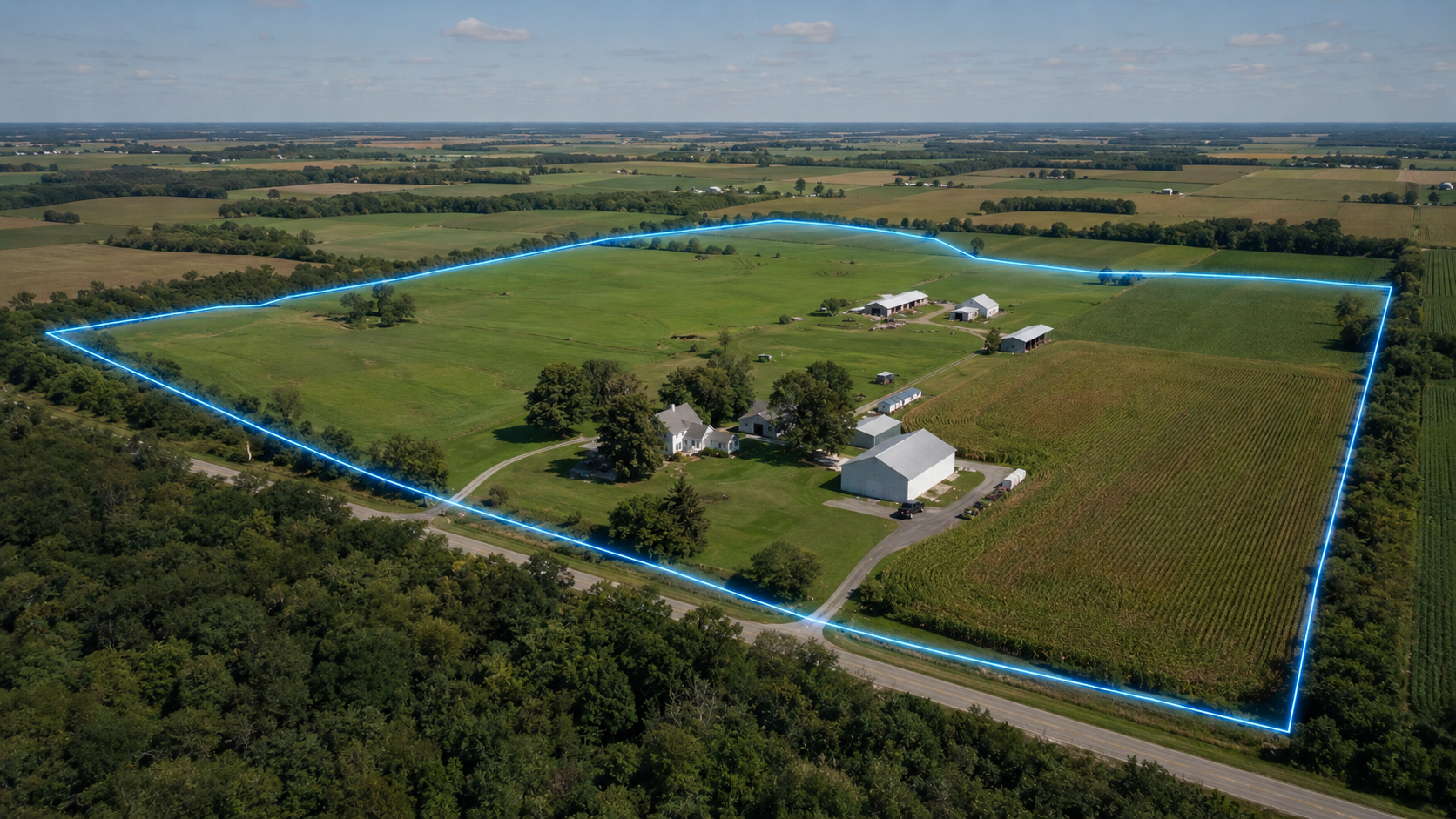
Geofencing is one of the most powerful key features in any farm equipment GPS tracker. Here's how it works:
You draw a virtual boundary, a virtual perimeter, around your farm, storage barn, or field using the tracker app. When a tracked piece of equipment crosses that virtual boundary, your phone gets an instant alert.
This matters because theft doesn't always look dramatic. Equipment moves quietly in the middle of the night. With a geofence active, you receive instant alerts the moment that tractor crosses your virtual perimeter, not the next morning when you walk out and find it gone.
You can set:
- Multiple geofences for different fields, storage areas, and operational zones
- Time-based alerts that notify if equipment moves after 9 PM or before 6 AM
- Speed alerts: if a slow implement is suddenly moving at highway speeds, something is wrong
Problems a GPS Tracker for Farm Equipment Solves Beyond Theft
Most farmers buy a GPS tracker for theft prevention and then discover it solves five other operational headaches at the same time.
Knowing Where Equipment Is Across Large Properties
On a 500-acre or larger operation with dozens of implements, trailers, and utility vehicles, "where's the sprayer?" is a real question that eats up real time. GPS tracking enables centralized oversight of all assets on large farms, critical for optimizing resource use and enhancing productivity. A single dashboard gives you a live map view of every tagged piece of equipment across multiple machines, no driving around the property required.
Tracking Maintenance Hours to Prevent Breakdowns
GPS trackers don't just track location, many log engine hours and equipment movement patterns too. Automated alerts can track engine hours to ensure timely routine maintenance, helping extend equipment longevity and prevent costly failures. You set an alert when a tractor reaches a specific hour threshold, prompting scheduled oil changes, filter replacements, or other service tasks before a breakdown happens.
Preventing a $5,000 engine repair because you caught the service interval in time is a return on investment that compounds every single season.
Monitoring Unauthorized Use by Employees or Contractors
Not every threat to your equipment is external. GPS tracking creates accountability for everyone who uses your agricultural machinery. Digital logs from GPS trackers verify operator hours and improve labor accountability, if a hired operator uses equipment outside of agreed hours, in unauthorized locations, or at excessive speeds, you'll have the real time location data to address it directly.
Reducing Insurance Premiums
This is the benefit most guides skip entirely and it's significant. Many agricultural insurers offer premium discounts to policyholders who use GPS tracking devices on high-value equipment. The logic is simple: tracked assets are more likely to be recovered, which reduces the insurer's payout exposure. The NICB specifically recommends GPS tracking as a top anti-theft technology for this reason. Before you buy, call your farm insurance provider and ask whether GPS tracking qualifies you for a discount. The savings can offset the tracker's monthly fees within the first year.
How to Choose the Right GPS Tracker for Your Farm Equipment
Different assets need different tracking approaches. Here's a practical framework organized by equipment type:
Key Features to Look For
- Long Battery Life: For battery-powered trackers, look for a long battery life at minimum 2-4 weeks at standard update intervals, with premium models offering months or even up to 18 months. The longer the battery life, the less maintenance required for equipment left unmonitored in remote locations.
- Durability Rating (IP67 and Above): Farm equipment operates in dust, mud, rain, and extreme temperatures. GPS tracking devices for farm equipment should have rugged, weather-resistant enclosures rated IP67 (dust-tight and waterproof to 1 meter) at minimum. IP68 is better for equipment that regularly encounters standing water or heavy spray.
- Update Frequency: Real-time tracking with updates every 30-60 seconds is ideal for active theft scenarios. For storage monitoring, updates every 5-15 minutes extend battery life without sacrificing meaningful oversight.
- Cellular Coverage and Network Support: Not all tracking devices use the same carrier. Look for a device with multi-network support that switches automatically to the strongest available signal, essential for maintaining stable coverage in rural areas with patchy cellular networks.
Subscription Cost and Monthly Fees: Monthly fees typically range from $5 to $25 per device. Look for:
- No long-term contracts
- No activation fees
- Unlimited cellular data included
- Volume pricing for tracking multiple machines
Comparison Table: GPS Tracker Types for Farm Equipment
| Tracker Type | Best For | Power Source | Battery Life | Monthly Cost | Installation |
|---|---|---|---|---|---|
| Wired 12V | Tractors, combines, farm trucks | Vehicle power | Unlimited | $10-$20 | 15-30 min wiring |
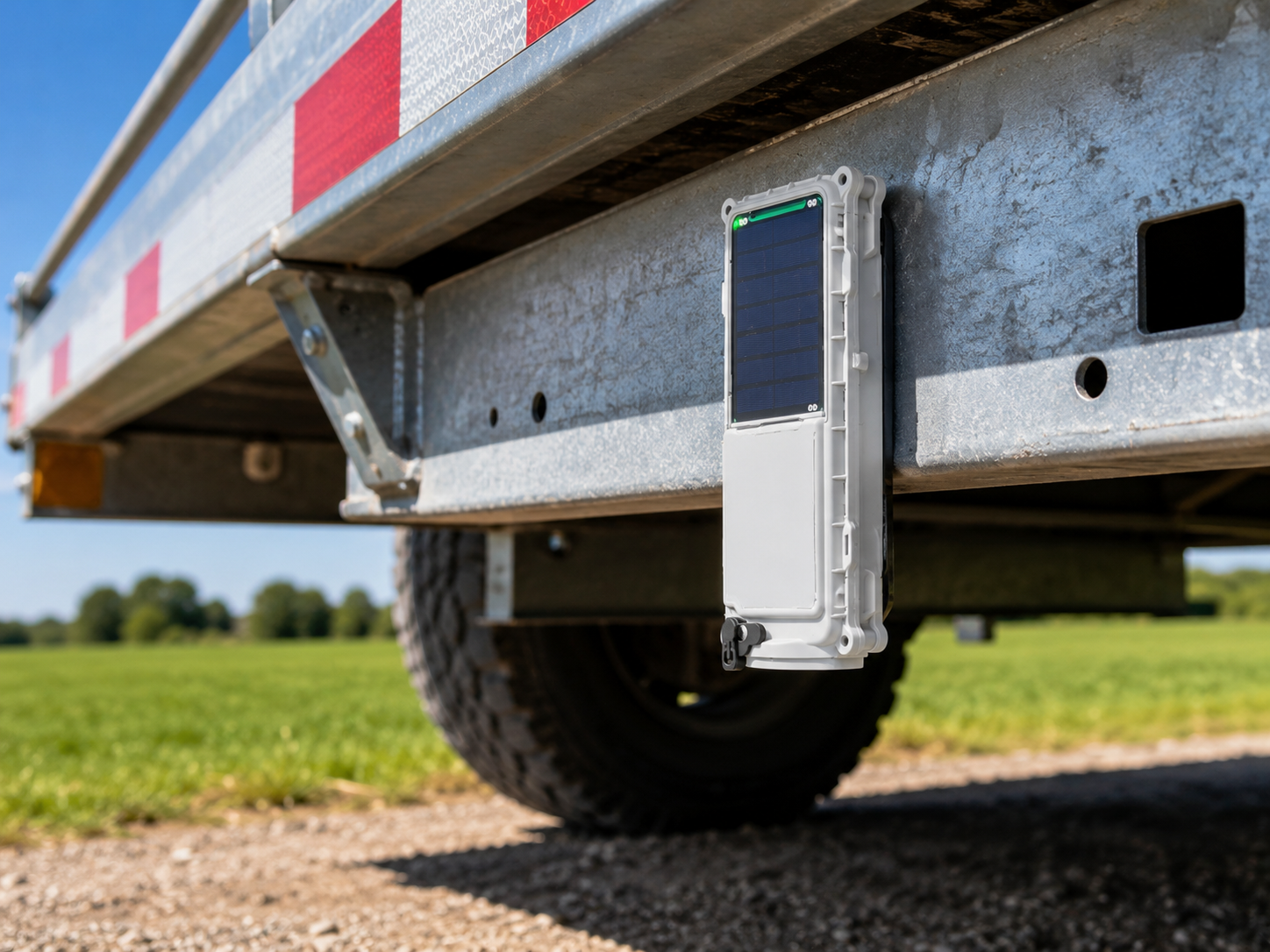
| Solar | Trailers, implements, unpowered equipment | Solar + internal battery | Indefinite (with sun) | $10-$20 | Magnetic mount, no wiring |
| Portable Battery | Any asset, flexible use | Rechargeable battery | 2 weeks-18 months | $5-$25 | Magnetic mount |
| Hardwired Asset | Fixed or high-value machinery | Vehicle or external 12V | Unlimited | $15-$30 | Professional install recommended |
Step-by-Step: Installing a GPS Tracker on Your Farm Equipment
Installing a GPS tracker on farm equipment is usually quick and simple. Most trackers can be wired directly to the vehicle's power system or attached with a magnetic mount, allowing you to start monitoring equipment in real time within minutes.
Installing a Wired Tracker on a Tractor
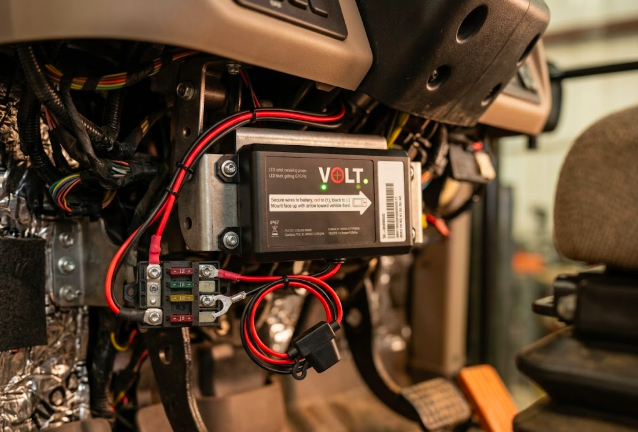
Most wired GPS trackers for tractors, including John Deere and other major brands, connect to the 12-volt power system, the same circuit that powers your cab lights or radio.
What you'll need: The tracking device, a wiring harness (usually included), basic hand tools, 15-20 minutes.
- Locate the fuse box: Typically found in the cab or engine compartment
- Connect the power wire: Attach the tracker's red wire to a switched 12V fuse slot that powers on with the ignition
- Connect the ground wire: Attach the black wire to a secure metal ground point
- Mount the device: Place it in a concealed location away from heat sources, under the dash or behind a panel. A GPS tracker inside a hidden spot is harder to find and remove
- Activate on the app: Power on, open the tracker app, add the device ID, and confirm a live location ping
Installing a Solar or Magnetic Tracker on a Trailer
- Choose a concealed mounting spot: Under the trailer deck or inside a covered frame rail. The solar panel needs clear sky access for charging
- Clean the surface: Remove dirt and debris for a secure bond
- Mount the tracker: Press firmly against a metal surface (magnetic models grip automatically) or use the included adhesive bracket
- Activate on the app: Add the device to your account and confirm the first location update
- Set your geofence: Draw a virtual boundary around your storage area and enable instant alerts immediately
Installing a Portable Battery GPS Tracker
- Charge the Tracker: Fully charge the GPS tracker before installation to ensure maximum battery life.
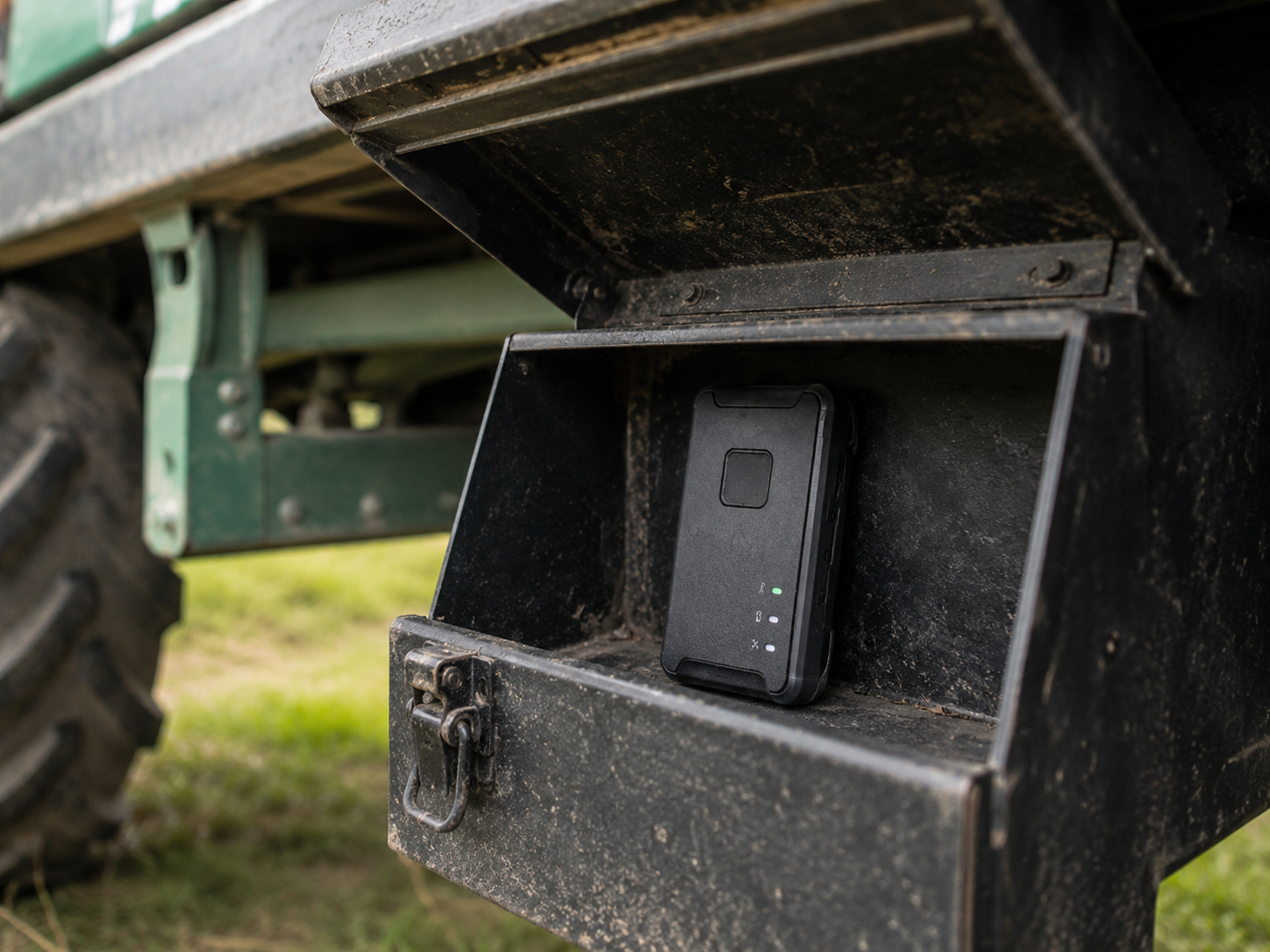
- Choose a Hidden Location: Place the tracker in a concealed spot on the equipment, such as under the seat, inside a toolbox, or beneath the frame.
- Secure the Device: Attach the tracker using its built-in magnet, adhesive mount, or protective case so it stays firmly in place during use.
- Activate the Tracker: Turn on the device and connect it to the mobile app or tracking platform using the provided device ID.
- Test the Signal: Check the app to confirm the tracker is sending accurate real-time location updates.
What to Do When Your GPS Tracker Fires a Theft Alert
Your phone buzzes at 2 AM. The tractor just crossed your virtual perimeter. Here's exactly what to do:
Open your tracker app and confirm the unauthorized movement. Check: Is the location consistent with theft, moving away from the property at speed? Could a family member or employee have taken the equipment legitimately?
Call 911 or your local sheriff immediately. Provide the live GPS coordinates, direction of travel, current speed, last known location, equipment description (make, model, color, serial number), and a live tracking link if the officer can access it.
Even if the equipment is recovered, file a report. The GPS movement record from your tracking device is timestamped evidence that supports your claim and speeds up the process.
Law enforcement with a real-time GPS feed can intercept stolen equipment in transit. This is precisely why real-time tracking, not 10-minute or hourly location updates, makes the difference between recovery and loss. When asset moves are visible the moment they happen, there's still time to act.
The Real ROI of a GPS Tracker for Farm Equipment
Skeptical about the monthly fees? Here's a concrete cost-benefit breakdown for a typical mid-size farm.
Annual Cost vs. Annual Benefit
| Annual Cost | Amount |
|---|---|
| GPS tracker hardware (1 wired + 2 solar, amortized over 5 years) | ~$24/year |
| Subscription, 3 devices x $15/month | $540/year |
| Total annual cost | ~$564/year |
| Annual Benefit | Estimated Value |
|---|---|
| Theft risk exposure reduced (tractor at $100K, under 15% recovery without GPS) | Avoided loss: $85,000+ per incident |
| Insurance premium reduction (5-15% on farm equipment policy) | $200-$800/year saved |
| Maintenance cost avoidance, one prevented breakdown per year | $1,000-$5,000/year |
| Fuel savings from reduced overlapping passes and optimized routing | $300-$1,000+/year |
| Time saved locating equipment across large properties | 2-5 hours/week x operational value |
| Total potential annual benefit | $2,000-$6,000+ (excluding theft scenario) |
Why BrickHouse Is Trusted by Farmers Across the U.S.
At BrickHouse Security, we've spent years helping individuals, families, and businesses protect the things that matter most, vehicles, property, and the people who depend on them. That same commitment extends directly to the farms and agricultural operations that feed our communities.
Here's what sets BrickHouse apart:
- Real human support: When something goes wrong at 2 AM and your equipment is moving down a county road, you need answers, not a chatbot. BrickHouse support shows up when it matters.
- Straightforward setup: Our tracking devices are designed for real people, not engineers. Easy installation means if you can charge a phone and download an app, you can have a BrickHouse tracker active and protecting your equipment today.
- No long-term contracts: Farm economics fluctuate. You should never be locked into a tracking subscription you no longer need. BrickHouse operates on flexible, month-to-month plans with no activation fees.
- Built for the outdoors: Our devices are rugged, weather-resistant, and rated for the dust, mud, rain, and temperature extremes of real agricultural operations.
- Transparent pricing: No hidden fees. No surprises. No fine print.
Conclusion
Farm equipment doesn't just represent money, it represents your livelihood, your season, and years of hard work. A stolen tractor isn't just a $100,000 loss. It's a delayed harvest, a missed planting window, and a crisis you have to manage while the rest of the farm still needs running.
A GPS tracker for farm equipment tracking changes that equation entirely. For less than the cost of a single tank of fuel each month, you get real-time visibility over every tractor, trailer, and implement you own, instant alerts the moment something moves without permission, and the kind of documented location data that helps law enforcement act fast and insurers settle quickly.
The farms that lose equipment and never recover it are the ones that had no tracking in place. The farms that get their machinery back within hours are the ones that knew the moment it left the property.
Frequently Asked Questions
How does a GPS tracker work on farm equipment?
What is the best type of GPS tracker for a tractor?
How do I recover stolen farm equipment with a GPS tracker?
How many GPS trackers do I need for my farm?
Do GPS trackers require professional installation?
Posted by Todd Morris on Jun 1st 2026