




GPS Tracker for Kids Without Phone: Complete Parent Guide
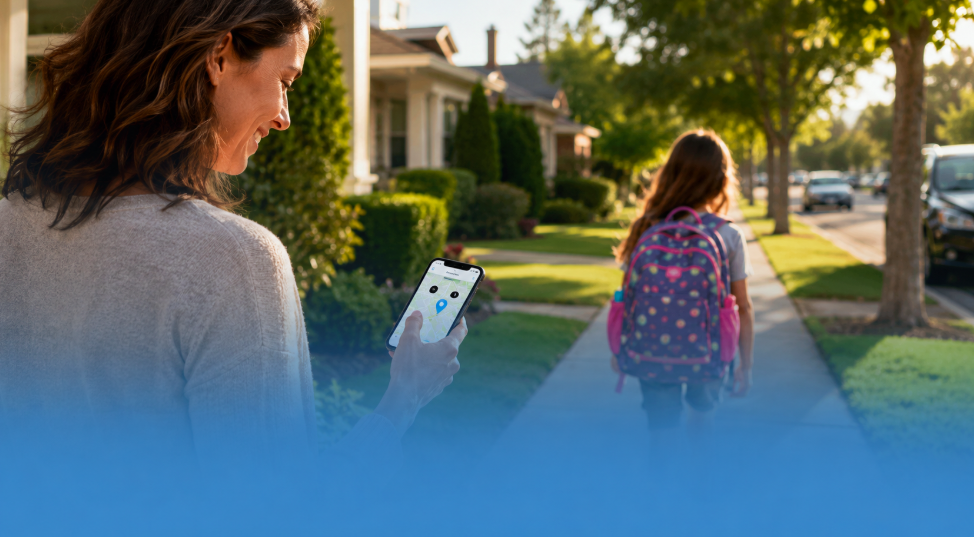
Your child doesn't need a smartphone for you to know they're safe. This guide is for parents who want to keep their children safe without giving them a smartphone. Here's your guide to the best GPS tracker for kids without phone, offering real-time location, safe zone alerts, long battery life, and true peace of mind delivered straight to your device.
According to the FBI's Child Victimization report, law enforcement reported more than 410,000 juveniles as victims of violent crimes over a five-year period, a sobering reminder that child safety is not something any parent can afford to leave to chance.
A dedicated GPS tracker for kids without phone provides precise location updates, instant alerts when leaving safe zones, and an SOS button, all sent to your phone. Your child carries a small, simple device; you get peace of mind that changes your day.
This guide covers all types of kids GPS trackers, from compact standalone devices to smartwatches, helping you choose confidently.
Why Choose a GPS Tracker Over a Kids' Phone?
Many parents hit this crossroads: their child isn't ready for a smartphone, but they still need a reliable way to know the child's location at any moment. Many parents, in fact two-thirds of parents believe their oldest child wouldn't mind being tracked, are simply looking for a low-drama solution that works without the screen-time battles.
Smartphones come with social media, endless apps, and monthly costs that dwarf a simple GPS tracking device. A standalone kids GPS tracker does one job with precision: it tells you exactly where your child is, right now, from wherever you are, without your child needing to do anything at all.
| Feature | GPS Tracker (No Phone) | Kids' Smartphone | GPS Smartwatch |
|---|---|---|---|
| Real-time location / live tracking | Yes | Yes | Yes |
| No social media or apps for child | Yes | No | Usually |
| Child doesn't need to manage device | Yes | No | Partial |
| Discreet - fits in backpack / belt clip | Yes | No | No |
| Long battery life (2-5+ days) | Yes | Daily charge | Often daily |
| Safe zone alerts / geofencing | Yes | App dependent | Yes |
| SOS button for emergencies | Many models | App dependent | Yes |
| Phone calls / two-way communication | Location only | Yes | Yes |
| Monthly subscription cost | From $18/mo | $30-$60/mo | $10-$20/mo |
How a GPS Tracker for Kids Works Without a Phone
GPS trackers designed for kids operate independently of a mobile phone. GPS trackers combine satellite geolocation and cellular transmission technologies. Satellite geolocation uses a built-in GPS receiver to calculate exact coordinates, while cellular transmission sends location coordinates to a server via cell towers.
Understanding the technology helps you evaluate what you're actually buying. A real-time kids GPS tracker combines two distinct technologies into one compact, simple device:
- GPS (Global Positioning System): A network of 30+ satellites continuously broadcast signals. The tracker's GPS chip picks up signals from at least four satellites and triangulates the child's exact location accurate to within 3-5 meters. This works independently of Wi-Fi or cellular signal.
- Built-in SIM card + 4G LTE: The device uses its own built-in SIM card to transmit that location over the cellular network to a cloud server. The server then delivers it to the parent's phone through a dedicated app, typically updated every 60 seconds for live tracking.
Your child needs nothing. They don't open an app. They don't touch a screen. They simply carry the little device in a backpack, on a belt clip, attached to a key ring, and you see their location update continuously on your phone, in real time.
What Happens With No Cellular Signal?
In areas with poor coverage, the GPS chip still calculates location accurately, it just can't transmit immediately. Quality kids GPS devices store location history on-device and sync automatically when connectivity returns. You won't lose the data; you'll see the full movement trail once the device reconnects.
Some premium trackers provide location history for up to 365 days, a full year of detailed movement records accessible from the app at any time.
Types of Kids GPS Trackers: Which Fits Your Child?
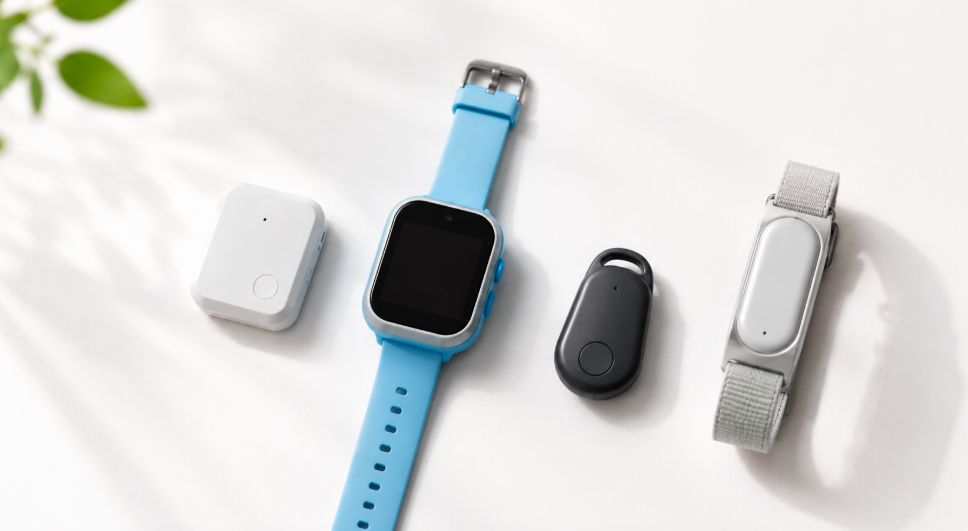
The market for kids GPS devices has expanded significantly. There are now four distinct categories, each suited to different ages and lifestyles.
1. Compact Standalone GPS Trackers: Most Versatile
Small, lightweight devices roughly the size of a matchbox. They slip into a backpack pocket, attach via belt clip, or clip onto a key ring. Because they're discreet, kids rarely think about them, which means they're almost always on them.
- Best for ages 4-16
- Long battery life typically 2-7 days depending on tracking frequency
- Reports to parent's app every 60 seconds; adjustable intervals
- Includes safe zone alerts, SOS button, speed alerts, and location history
- Works in most countries with cellular coverage
Looking for a reliable GPS tracker you can slip into your child's backpack today?
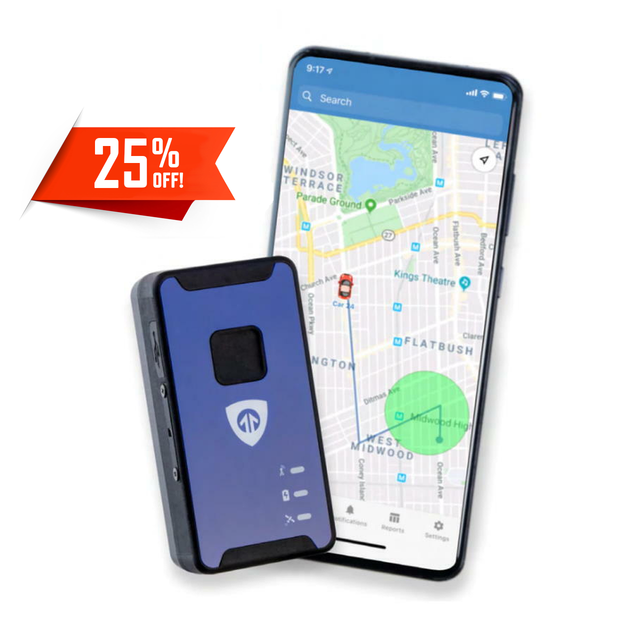
BrickHouse Security provides a compact, parent-monitored tracker with a pre-installed SIM card, no phone needed on your child's end. It delivers up to 60-second real-time location updates, safe zone alerts, an SOS panic button, speed alerts, and detailed location history, all visible from the parent's app on any smartphone or computer.
2. GPS Smartwatches for Kids
Wearable devices that combine GPS tracking with two-way phone calls and messaging. The child wears it on their wrist; parents manage approved contacts from a companion app. Popular among parents of younger kids who want a "first phone" experience without the internet risks.
- Best for ages 5-12
- Battery life: typically 1-2 days (daily charging needed)
- Adds communication layer, approved phone calls, preset messages, SOS
- Blocks open internet and social media
- Kids smartwatches like TickTalk 5, Gabb Watch, and Garmin Bounce are popular options
3. Two-Way Talk Trackers
A newer category that bridges standalone trackers and smartwatches. BoT Talk offers two-way talk without a screen, giving younger kids the ability to hear and send voice messages without the distraction of a display. It's one of the most focused options for small children who need to stay connected but aren't ready for a watch or phone.
4. Wearable Clip-Ons and Specialist Trackers
Ultra-compact trackers designed for small children, children with special needs, or situations requiring continuous monitoring. The AngelSense GPS tracker is the most recognized in this category, purpose-built for children with autism or developmental disabilities, with features like continuous monitoring, a "discreetly listen" function so parents can hear what's happening around the child, and smart alerts for unexpected location changes.
- Best for: children with autism, sensory differences, or special needs
- The AngelSense tracker (also called Kids AngelSense) includes a premium plan with features not found on standard trackers
- Ability to discreetly listen to the environment around the child
- Specialized alert logic designed around predictable school and therapy routines
Key Features Every Parent Needs to Know
Not all GPS trackers deliver the same experience. Here's a breakdown of the features that genuinely matter for kids tracker use cases and what to look for in each.
Real-Time Location / Live Tracking
The GPS tracker should update the child's location at least every 60 seconds in standard mode. For accurate location in active situations like a child walking to school or riding a bus, faster update intervals matter. Rapid Track mode (available on the Spark Nano 7) lets you switch to faster real-time tracking on demand.
Safe Zone Alerts / Geofencing
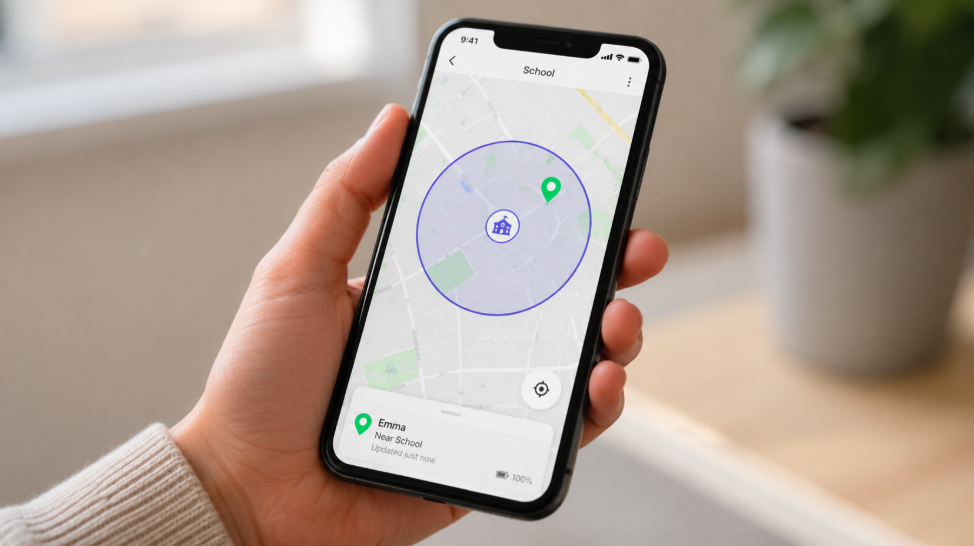
You draw a virtual boundary on the map, school, home, a friend's house, and receive instant alerts the moment the child leaves or enters that zone. You'll know the second your child leaves school, arrives home, or goes somewhere unexpected. This single feature is what most parents describe as providing "such peace of mind" in daily life.
Learn how to set geofences and smart notifications.
SOS Button
A dedicated button your child can press to trigger an immediate alert to the parent's phone. The best implementations send the child's exact location with the alert simultaneously. For younger kids, this is the most important safety feature after live tracking itself.
Battery Life
A GPS tracking device that dies at 2pm on a school day isn't protecting anyone. Because GPS trackers require a larger battery than standard fitness trackers running both GPS and cellular continuously, look for at least 2-3 days of realistic battery life. Devices with adjustable update intervals let you extend battery life significantly when real-time location precision is less critical.
Location History
Beyond knowing where your child is right now, being able to review the day's complete movement trail, routes taken, stops made, time stamps, gives you a fuller picture and is invaluable if questions arise. Premium devices store detailed location history for up to 365 days. Standard plans typically cover 7-30 days.
Smart Alerts and Continuous Monitoring
Advanced kids GPS trackers don't just respond to geofences, they use smart alerts to flag unusual patterns: a child who hasn't arrived at school during expected hours, a device that stops moving in an unexpected location, or a route that deviates from normal. These continuous monitoring features are especially valuable for older kids with more complex schedules.
Voice Messages
Some advanced kids GPS devices, particularly smartwatch-style trackers, allow children to send and receive messages, including pre-recorded voice messages that require no typing. Ideal for children who aren't yet comfortable with reading or writing.
Location Accuracy
Top-tier trackers combine GPS satellite data with Wi-Fi positioning and cellular triangulation for location accuracy of 3-10 meters in most conditions. Indoor accuracy improves significantly when Wi-Fi triangulation is enabled, useful in situations like a school building where GPS signal weakens.
GPS Tracker for Kids by Age Matching

Toddlers and Preschoolers (Ages 2-5)
At this age, small children need a tracker that works entirely without their input. A compact clip-on attached to their shoe, belt, or inside their bag is ideal. Waterproofing and durability are essential. Continuous monitoring and instant alerts are the only features that truly matter here.
Elementary School Age (Ages 6-10): Most Common
This is the sweet spot for standalone kids GPS trackers. The child is old enough to walk home from school, attend after-school activities, or spend time at a friend's house, but not ready for a smartphone. A compact tracker for kids in their backpack gives you real-time location data all day. Geofencing and the SOS button are used regularly at this age.
Tweens (Ages 11-13)
At this age, kids want more independence and have stronger opinions about carrying devices. Kids smartwatches become more appealing because they give tweens a way to make phone calls to family members and receive messages without full smartphone access. A discreet standalone tracker in a backpack or jacket remains highly effective if you prefer location without the device management overhead.
Older Kids and Teens (Ages 14-17)
For older kids who drive, a compact GPS tracker placed in their vehicle delivers location data, speed alerts, and trip history that inform real conversations about responsibility without requiring constant phone check-ins. The Spark Nano 7's adjustable tracking intervals work well here: standard mode keeps battery lasting the week; Rapid Track mode activates instantly if you need more detail.
How to Set Up a Kids GPS Tracker Step-by-Step
Setting up a kids GPS tracker is quick and easy, taking about 10-15 minutes with no technical skills needed. Here's how to get started with devices like the Spark Nano 7:
- Charge the device fully (2-3 hours) before first use to ensure maximum battery life.
- Download the parent app on your iOS or Android phone.
- Activate a subscription plan to enable the built-in SIM card. New users often get a 30-day free trial.
- Power on the tracker and wait 2-3 minutes for GPS signal lock, ideally outdoors.
- Set safe zones in the app for places like home and school and enable instant alerts.
- Configure the SOS button to send alerts with location to your phone and email.
- Attach the device securely to your child's backpack, belt, or jacket pocket.
- Test the setup by walking around and confirming live tracking and alerts work.
For older kids, a simple explanation about the tracker builds trust and encourages them to keep it on.
Real-World Use Cases: When a GPS Tracker for Kids Delivers
A third-grader walks home three blocks each afternoon. A tracker in their backpack means the parent gets an automatic safe zone alert when the child arrives, no text needed, no call interrupted by class. The parent sees the route taken and exact arrival time in the app.
A working parent can't be at pickup every day. Soccer practice, drama club, an afternoon at a friend's house, safe zone alerts mean you're notified automatically when your child arrives and leaves each location, without them needing to remember to call or text.
Some parents set location-based rules: the child is allowed at the park, but only during certain hours. Smart geofencing alerts can notify parents if the child is still outside a safe zone past a set time, adding a time-awareness layer to simple location monitoring.
Busy public venues are among the highest-anxiety environments for parents of young children. A compact tracker means that if you get separated, you navigate directly to the child's exact location within seconds.
For children with autism or developmental differences who may wander, a GPS tracking device is not a convenience, it can be life-saving. The AngelSense GPS tracker was specifically built for this use case, combining continuous monitoring, smart alerts based on school schedules, and the ability to discreetly listen to the child's environment. Many parents of children with autism describe it as one of the most important tools in their daily routine.
A teenage driver is statistically among the highest-risk groups on the road. A compact GPS tracker in their vehicle delivers speed alerts, location history with detailed trip reports, and geofence notifications, giving parents safety visibility without requiring constant phone check-ins.
Privacy, Consent, and Legal Considerations
Is It Legal to Track Your Own Child?
Yes. In the United States, parents and legal guardians have the legal right to monitor their minor children. There are no federal laws prohibiting a parent from using a GPS tracking device on a child or placing a tracker in a vehicle driven by their minor child. Most state laws fully affirm parental rights to monitor minors for safety purposes. For a full breakdown, see our guide: GPS Tracking Laws: What's Legal in Your State.
Teens and Consent
As children approach 16-18, open communication about GPS tracking becomes important, not legally, but relationally. Research shows that two-thirds of parents believe their oldest child wouldn't mind being tracked, and transparency consistently produces better cooperation than hidden surveillance.
Building trust matters. Explore our guide to talking about GPS tracking with your teen driver.
Data Privacy
When evaluating any kids GPS tracker, review the provider's privacy policy for how location data is stored, who accesses it, and how long it's retained.
External resource: The National Center for Missing and Exploited Children (NCMEC) recommends that parents take proactive steps including technology use to establish communication plans and keep children safe. NCMEC assisted with 29,568 missing children reports, with 91% resolved safely.
Conclusion
Knowing where your child is shouldn't require them to have a phone, remember to charge it, or even think about it. A dedicated GPS tracker for kids without phone solves this precisely, real-time location, safe zone alerts, instant alerts, and an SOS button, all delivered to the parent's phone from a simple device small enough to disappear in a backpack.
The technology is affordable, reliable, and genuinely easy to use. More importantly, it gives both you and your child something that changes the texture of daily life: the freedom to move independently, with the quiet confidence that comes from knowing help is one alert away. That's not surveillance. That's such peace of mind, it becomes part of how your family operates.
FAQ
Can you track a child's location without them having a phone?
How does a GPS tracker for kids work without a phone?
Can kids GPS trackers make phone calls?
What is the difference between GPS trackers and Apple AirTag for kids?
What makes the AngelSense GPS tracker different from other GPS trackers?
Posted by Todd Morris on Jun 10th 2026