




GPS Tracker for Lone Workers: The Complete 2026 Safety Guide
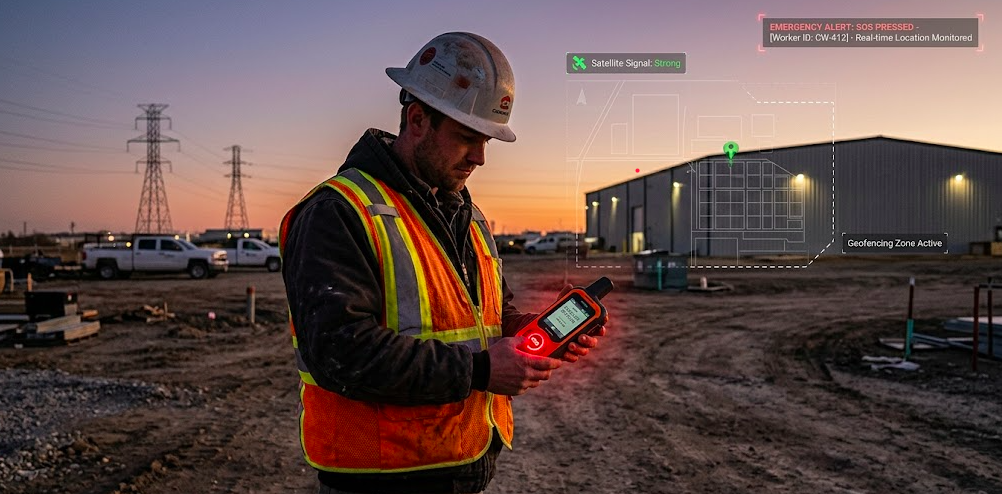
Every year, thousands of workers face emergencies with no one nearby to help. A construction technician collapses in a confined space. A field service engineer has a medical episode at a remote site. A social worker is threatened during a home visit. Without a GPS tracker for lone workers, these situations become tragedies that were entirely preventable.
If you employ a team where any employees work alone, whether in a warehouse, on the road, or at a remote utility site, this guide will show you exactly what device you need, what the law requires, and how to choose the right GPS safety device for lone workers before the next serious incident happens.
Why Lone Workers Need More Than a Phone
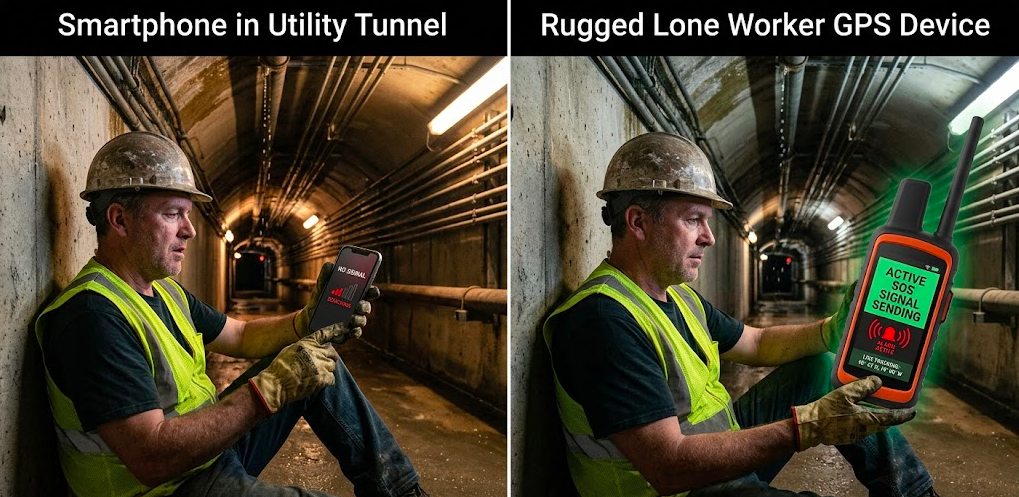
A smartphone has GPS. It has a camera, a mic, and LTE. So why isn't a phone enough to protect a lone worker? Because when a worker falls unconscious, they can't dial emergency services. When they enter a basement or a rural site with no satellite signal, their phone is useless. And when someone threatens them, reaching into a pocket for a phone is the last thing they can safely do.
Lone worker safety requires dedicated GPS technology designed for exactly these failure points, not consumer apps, not standard devices, but purpose-built lone worker solutions that keep workers safe even when they can't help themselves.
The Scale of the Problem
The numbers demand attention:
- The National Safety Council (NSC) estimates there are 53 million lone workers in the U.S., Canada, and Europe
- The U.S. Bureau of Labor Statistics recorded 5,070 fatal work injuries in 2024, a rate of 3.3 fatalities per 100,000 full-time equivalent workers
- Research shows 64% of lone workers face a higher risk of accidents, while 44% experience stress and anxiety linked to their working conditions
- Half of lone workers have avoided tasks or locations due to safety concerns, a finding from the 2026 Lone Worker Survey with a direct hit on productivity, not just safety
What Makes Lone Work Uniquely Dangerous
Lone workers face a compounding set of risks that grouped employees simply don't:
- No immediate witness if something goes wrong
- Delayed emergency response because no one knows the worker's location
- Environmental hazards, confined spaces, heights, electrical systems, remote areas, and remote locations
- Mental health strain from isolation and the psychological weight of workers working without backup
What Is a GPS Tracker for Lone Workers?
GPS tracker for lone workers is a dedicated device or app that combines real-time location monitoring with emergency features, panic alarms, fall detection, timed check-ins, and two-way communication, designed specifically for employees working alone or in isolation.
This is fundamentally different from a standard fleet GPS tracker or a consumer tracking app. Lone worker GPS devices are built around one core question: If this person can't call for help, how does help find them?
GPS, or the Global Positioning System, uses satellites to provide location, speed, and time information. This system is essential for tracking lone workers in real time. Today's GPS devices go beyond just satellites, they also use Wi-Fi signals and indoor Bluetooth beacons. This combination, called Multi-Layered Location Intelligence, helps employers find workers even inside big buildings where regular GPS might not work well.
GPS Tracker vs. Lone Worker Safety Device: What's the Difference?
| Feature | Standard GPS Tracker | Lone Worker GPS Safety Device |
|---|---|---|
| Real-time location | Yes | Yes |
| Panic / SOS button | No | Yes |
| Man-down / fall detection | No | Yes |
| Timed welfare check-ins | No | Yes |
| Two-way communication | No | Yes |
| Satellite / no-signal coverage | No | Yes |
| 24/7 monitoring center | No | Yes |
| OSHA compliance support | No | Yes |
| Geofencing safety zones | No | Yes |
A standard GPS tracker tells you where someone is. A lone worker safety device tells you where they are, if they're okay, and gets help to them if they're not.
Lone Worker GPS Tracker Features That Actually Save Lives
Not all GPS devices for lone workers are equal. These six features separate life-saving equipment from a false sense of security.
Real-Time Location Monitoring
This is the foundation of any serious lone worker solution. Real-time location monitoring provides employers with a live location dashboard updated at regular intervals so supervisors always know where employees are operating.
Real-time location tracking is crucial in emergency situations, as it allows supervisors to quickly locate lone workers and provide timely assistance which can be vital in life-threatening scenarios. Look for GPS devices that update every 30-60 seconds in high-risk environments, not every 10-15 minutes. In an emergency, every minute matters.
SOS Alarm and Panic Button
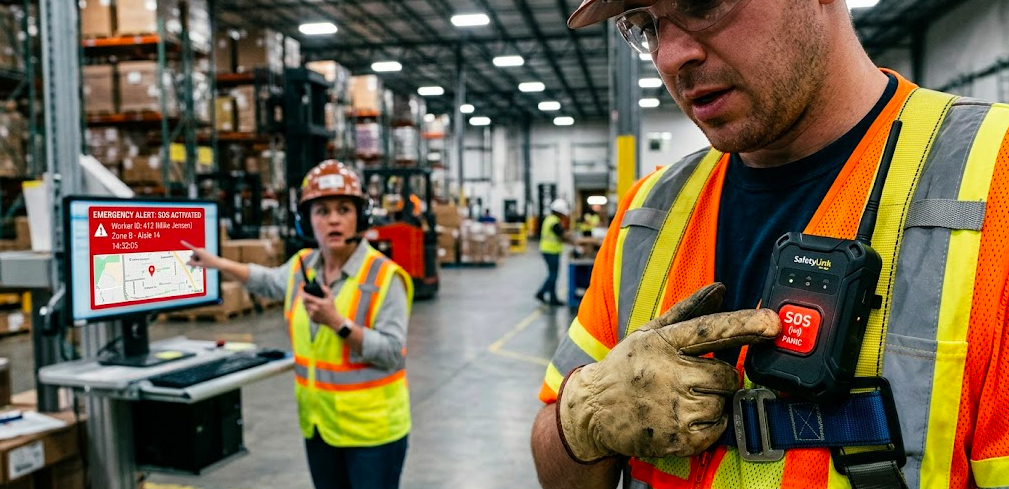
An SOS alarm or panic button is a manual button on the device that a worker can press to immediately send a distress signal and their location to supervisors or emergency services.
Emergency response features in GPS trackers, such as panic buttons and SOS alerts, provide immediate assistance to lone workers in distress, enhancing their safety and security. The SOS alarm feature allows employees to send alerts to monitoring centers, enabling swift responses from employers or emergency services during critical situations.
The best panic alarms are:
- Large and accessible: operable with gloves or in low visibility
- Hard to accidentally trigger: typically requiring a 3-second press
- Connected to multiple alert channels: SMS, email, and app notification simultaneously
Up to 2 million American workers face violent situations in the workplace each year, most going unreported. Nearly one-fifth of workplace fatalities are the result of violence, many preventable with a GPS device equipped with a panic button.
Man-Down and Fall Detection
This is the feature that saves lives when a worker cannot save themselves. Advanced devices feature 'man down' or fall detection algorithms that trigger alerts following a sudden impact or prolonged inactivity. These algorithms work through built-in accelerometers and gyroscopes that sense:
- Sudden impact (a fall)
- Sustained lack of movement (collapse or unconsciousness)
- Abnormal body angle (lying flat for an extended period)
When triggered automatically, without the worker doing anything, the device sends an alert with the exact location to designated contacts or a 24/7 monitoring center. This is the single most important differentiator between a consumer GPS tracker and a true lone worker device.
Fall detection is especially critical for truck drivers, field technicians, and construction crews, workers whose roles carry a high risk of physical injury with no colleague nearby to witness the incident.
Timed Check-Ins and Welfare Monitoring
Timed check-ins allow workers to confirm their safety at regular intervals throughout their shifts. Miss a check-in, and an automatic escalation chain begins: first a notification to a supervisor, then escalation to emergency services if no response is received.
This protects against:
- Gradual medical emergencies (a slow-onset cardiac event)
- Situations where a worker is conscious but restrained
- Low-battery device failures where tracking has dropped
The best systems allow workers to set their own check-in frequency based on risk level, every 15 minutes in a high-hazard environment, every hour in moderate-risk situations. Keeping track of check-in status across your entire workforce is centralized in a real-time location monitoring dashboard that employers can access from any device.
Geofencing and Safe Zone Alerts
Geofencing is the creation of virtual geographic boundaries that trigger alerts when a user enters or leaves designated areas, enhancing safety for lone workers. When a lone worker crosses a geofence boundary, supervisors receive an immediate alert.
Geofencing can be used to automatically adjust the level of protection for lone workers based on their location, switching between different safety modes as they enter or exit predefined zones. This means a worker who moves from a moderate-risk parking lot into a high-risk confined space automatically triggers a higher-protection mode without any manual input.
The geofencing feature allows employers to receive notifications when lone workers enter high-risk areas, enabling timely interventions and enhancing overall safety. This is especially valuable for:
- Construction sites alerting when a worker enters a hazardous zone alone
- Home visits flagging when a healthcare worker has been at a high-risk address beyond their scheduled window
- Delivery drivers detecting route deviations that might indicate a problem
Satellite Signal Coverage for Remote Locations
This is where many GPS trackers fail lone workers. Cell coverage often disappears in remote construction sites, underground tunnels, forests, and mountain areas. If a device only depends on 4G LTE, tracking can stop the moment the worker loses signal.
Satellite-enabled GPS devices solve that problem. They stay connected through satellites, even in places where cell networks don't work. Many advanced systems also use Wi-Fi positioning to help locate workers inside large buildings, warehouses, or underground facilities.
For teams working in remote or isolated areas, satellite GPS coverage isn't optional. It's one of the most important safety features a lone worker device can have.
How Modern GPS Devices Actually Work
Most people think GPS tracking is simple, a satellite finds your worker, puts a dot on a map, done. It's not that simple. And for lone worker safety, that gap matters.
Modern GPS monitoring doesn't rely on a single signal source. A worker inside a warehouse, a basement, or a multi-floor facility can disappear from standard GPS entirely. That's why the best lone worker solutions use what's called Multi-Layered Location Intelligence, combining multiple signal sources to always know where a worker is, no matter where the job takes them.
Here's How Each Layer Works
| Layer | Where It Works | Best Used For |
|---|---|---|
| GPS Satellites | Outdoors, open sky | Fields, highways, rural and remote areas |
| Wi-Fi Positioning | Indoors, urban areas | Offices, warehouses, large buildings |
| Bluetooth Beacons | Deep indoors | Basements, underground sites, multi-floor facilities |
| Cell Tower Triangulation | Urban and suburban | General fallback when other signals drop |
Why This Matters for Lone Workers
If GPS satellites lose signal indoors, Wi-Fi positioning takes over. If Wi-Fi isn't available underground, Bluetooth beacons step in. If all else fails, cell tower triangulation keeps location visible. The result: employers always have accurate, reliable location information whether a worker is driving on an open highway, inspecting equipment in a warehouse, or working deep inside a large building.
No dead zones. No blind spots. No moment where a lone worker simply disappears from the screen.
Industries That Depend on Lone Worker GPS Tracking
Lone worker risks don't look the same in every industry, but the need for real-time GPS protection does. Here's where it matters most.
Construction and Utilities
Construction workers face some of the highest injury rates of any industry. Fall protection remains the most frequently cited OSHA (Occupational Safety and Health Administration) violation, and most of these serious incidents involve workers who were completely alone, with no one nearby to help.
For utilities crews inspecting substations, pipelines, or remote infrastructure, the risk is even greater. A technician who collapses 40 miles from the nearest town has no way to call for help. With a GPS safety device for lone workers, their exact location is already known. An automatic alert fires instantly. Emergency services are dispatched within minutes, not hours.
Healthcare and Social Work
Home healthcare nurses, social workers, and community health workers regularly conduct home visits, often in unpredictable environments with no colleagues nearby. Violence, verbal abuse, and harassment are increasing across healthcare settings. A discreet panic button that silently alerts a monitoring center without escalating a threat is the critical safety layer.
GPS monitoring combined with scheduled check-ins by location gives supervisors a complete picture of every worker's status across home visits throughout the day and allowing workers to signal distress without making an obvious move.
Security Guards
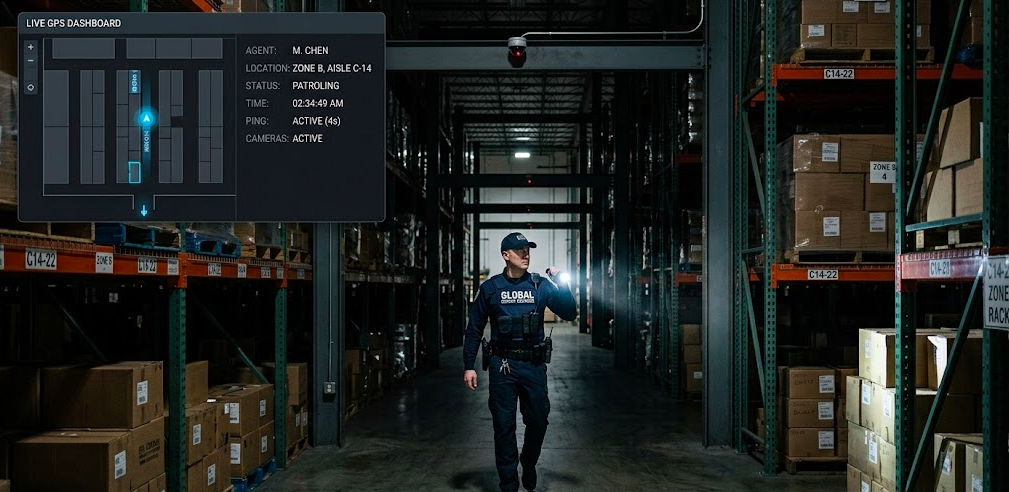
Security guard personnel patrolling large facilities alone are among the most consistently at-risk workers in any industry. They face physical threats, environmental hazards, and the constant reality that no one else is on-site to help.
Real-time location monitoring gives security operations full visibility of where each security guard is at all times and ensures that a missed patrol check-in triggers an immediate response. For security guard roles, lone worker protection is an operational necessity, not an optional add-on.
Delivery Drivers and Transportation
Delivery drivers and field service technicians often visit unfamiliar addresses, sometimes in high-crime areas or at odd hours. Their GPS trackers serve two important purposes: managing routes efficiently and ensuring personal safety.
If a delivery driver faces a threat, has an accident in a remote area, or experiences a medical emergency while on the road, they need a device that works even if they can't call for help. Lone worker solutions for delivery drivers combine cellular GPS with SOS alarms and location tracking so supervisors can monitor routes and respond quickly to any issues.
OSHA, Legal Duty of Care, and GPS Compliance
GPS tracking for lone workers isn't just smart, in many industries it's legally required. Here's what the law says and what it means for your business.
What OSHA Requires
The United States lacks a specific lone worker safety law, but OSHA's General Duty Clause (29 USC 654) applies. Employers must provide a hazard-free workplace, which includes:
- Regular contact and location tracking of lone workers
- A documented emergency response plan
- Risk assessments for lone worker scenarios
OSHA also restricts lone workers in high-risk tasks like confined spaces, requiring regular checks per Regulation 1915.84.
Data Privacy and GPS Compliance
Data privacy concerns are paramount in GPS tracking solutions for lone workers, as continuous location tracking can lead to potential misuse of personal data. Responsible GPS monitoring systems address this through:
- Data Protection Impact Assessments (DPIA): Conducted to ensure that the rights and freedoms of lone workers are not infringed upon by GPS tracking systems
- Strict data protection protocols: Ensuring that only essential data for safety is collected and stored securely
- Off-shift privacy: GPS tracking stops the moment a worker clocks out; employees are never monitored off shift
- Transparent communication: Workers are informed exactly what data is collected, when, and why
State-Level Laws You Should Know
Federal OSHA sets the floor. Some states are now raising it significantly:
- New York: The amended Retail Worker Safety Act requires retail establishments with 500+ employees to provide workers with panic alarms
- Illinois: Requires hotels and casinos to provide lone workers with safety solutions when working in guest rooms or on casino floors
- UK: The Health and Safety at Work Act requires documented lone worker risk assessments and active safety monitoring systems
How to Choose the Right GPS Tracker for Your Lone Workers
Not every GPS tracker for lone workers is built the same. The right device for a construction crew looks very different from one used by a home health nurse. Here's what to think through before you decide.
Start With Where Your Workers Operate
Location determines everything. Workers in remote areas, underground sites, or low-signal environments need a device with satellite signal capability. A tracker that only runs on 4G LTE offers zero protection the moment coverage drops. For urban or low-risk field workers, an app-based lone worker solution may be sufficient. For isolated environments, dedicated GPS devices with satellite coverage are the only responsible choice.
Match the Device to the Risk
Every workforce carries a different risk. Choose a device that addresses yours first:
- Physical threats: Discreet panic button and silent SOS alarm
- Fall or collapse risk: Man-down and fall detection
- Medical emergencies: Fall detection and two-way voice communication
- Remote or rural work: Long battery life and reliable satellite signal
Make Sure Compliance Is Built In
Your GPS tracking system should automatically generate incident reports, check-in logs, and emergency response records. This data is your legal protection in any OSHA audit or workplace injury claim.
Know Who Responds When an Alert Fires
Some GPS devices alert supervisors directly. Others connect to a 24/7 safety monitoring center that immediately dispatches emergency services. For high-risk or remote locations, a monitoring center is always worth the additional cost.
Your supervisors have shifts. A monitoring center never sleeps.
BrickHouse Security: GPS Safety Solutions for Lone Workers
At BrickHouse Security, we protect what matters most, your people, your family, your work.
Our lone worker GPS devices are built for the realities of field work: rugged hardware, real-time location monitoring, SOS alarm capability, and geofencing you can configure in minutes. Whether you're managing a construction crew, a healthcare field team, security guard operations, or delivery drivers across remote locations, our GPS technology gives you the visibility and emergency assistance capability you need to fulfill your duty of care and to know your workers are safe.
What sets BrickHouse apart:
- Real-time location monitoring that updates every 30-60 seconds
- SOS alarm with immediate notification to designated contacts and emergency services
- Geofencing with instant boundary alerts for hazardous locations
- Robust battery life built for 12-24 hours of active tracking without recharging
- Multi-Layered Location Intelligence, GPS satellites, Wi-Fi, and cellular combined
- Fully compatible with Android devices and iOS
- Data protection protocols ensuring lone workers' privacy is respected at all times
Common Lone Worker GPS Scenarios
Every lone worker faces a different situation. Here's how GPS tracking protects them across the most common real-world scenarios.
| Scenario | Risk Type | Key Feature Needed | Device Type |
|---|---|---|---|
| Utility technician in remote area | Fall, no satellite signal | Satellite GPS + man-down | Dedicated hardware |
| Home health nurse at home visit | Violence, alone | Discreet SOS alarm, check-in | Wearable or app |
| Security guard on overnight patrol | Violence, fatigue | Panic button, location breadcrumbs | Dedicated hardware |
| Delivery driver in unfamiliar area | Violence, accident | SOS alarm + cellular GPS | App or compact device |
| Construction worker in confined space | Fall, toxic atmosphere | Fall detection, geofence exit alert | Dedicated rugged hardware |
| Lone retail employee (closing shift) | Violence | Silent panic button | Wearable or app |
| Truck driver on long-haul route | Medical, accident, remote | Man-down, satellite signal | Dedicated hardware |
Final Thoughts
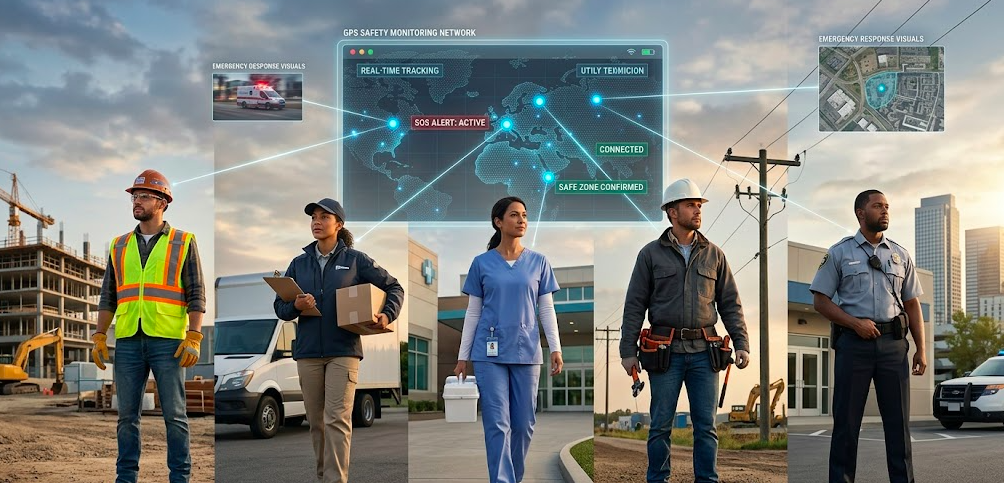
Lone workers are the backbone of construction, healthcare, utilities, security guard operations, and logistics in America. They do difficult, essential work, often in remote locations where a single serious incident can turn fatal without warning.
A GPS tracker for lone workers isn't surveillance. It's the digital equivalent of having a colleague standing watch. It means that when a worker falls, collapses, or faces a threat, emergency help doesn't wait until someone notices they haven't checked in. It arrives in minutes, not hours.
Real-time location monitoring exists. The legal framework is tightening. The GPS technology is proven. The cost-effective devices are available right now.
The only question left is: are your lone workers protected?
FAQ
What is the best GPS tracker for lone workers?
Do lone workers legally need a GPS tracker?
How does GPS tracking help lone worker safety?
Is it legal for employers to GPS track employees?
How do GPS trackers work in large buildings without signal?
Posted by Todd Morris on May 20th 2026