




GPS Tracking Guide
How Do I Track My Car With a Tracker? Your Complete Guide to Real-Time GPS Car Tracking
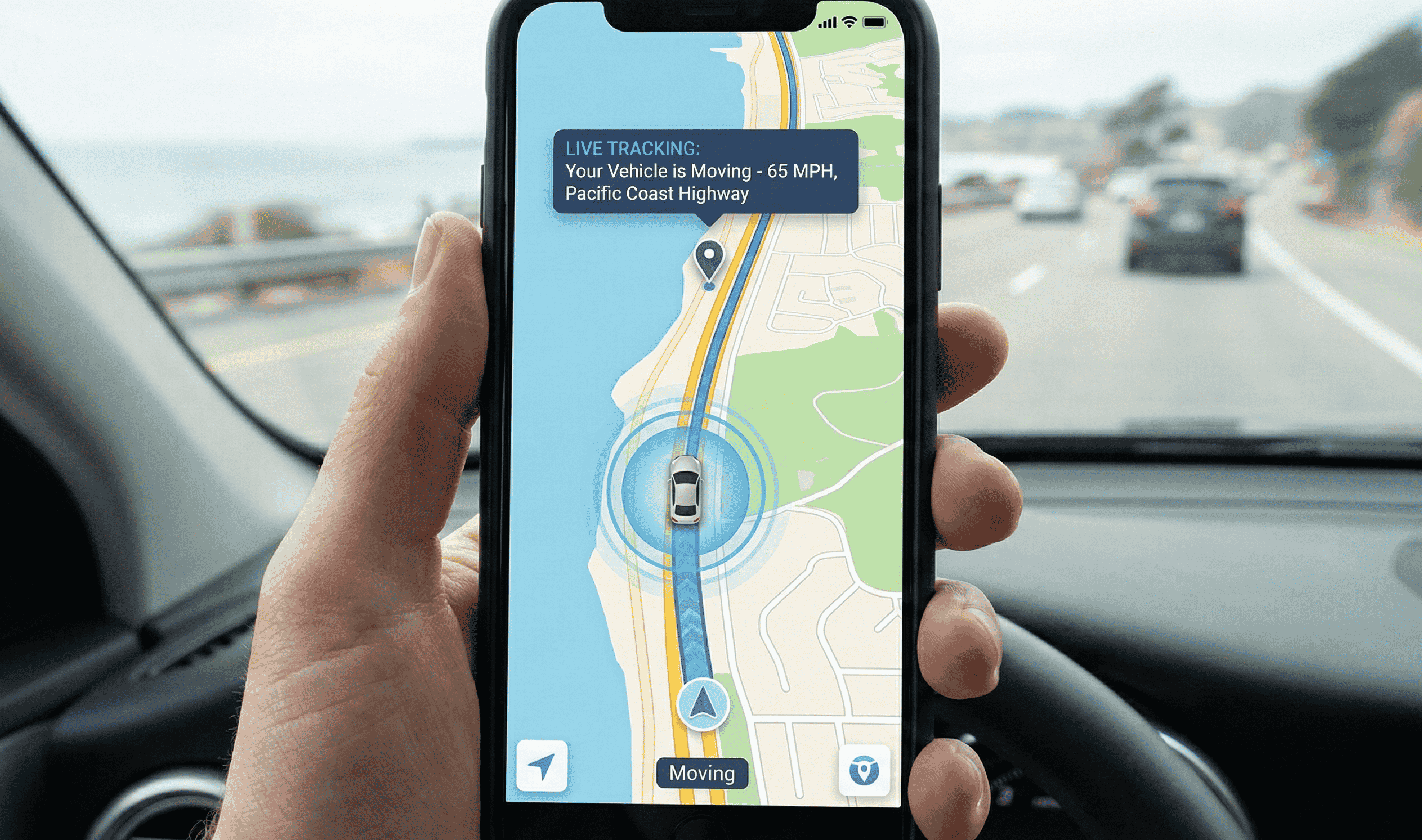
If you're searching "how to track my car with a tracker," chances are you're looking for peace of mind - whether it's to protect against car theft, keep an eye on teen drivers, or efficiently manage your fleet vehicles. With today's GPS tracking devices, tracking your vehicle's location in real time is easier, more reliable, and more affordable than ever.
Whether you want to see your car's exact location, get instant alerts about unauthorized use, or review trip history, the right GPS car tracker gives you full control from your smartphone or computer.
To track your car with a tracker, choose a GPS tracking device that fits your needs (portable, hardwired, or Bluetooth-enabled). Install it in your vehicle - like the glove box, OBD port, or undercarriage - activate the service plan, and monitor the car's location and movements in real time via a mobile app or web dashboard.
Why Should You Track Your Car?
GPS tracking has become a must-have tool for car owners, parents, and businesses. Here's why people are investing in car GPS trackers in 2026:
Prevent Car Theft
Over 1 million cars were stolen in the U.S. in 2022. A GPS tracker helps recover your vehicle faster by providing its real-time location to police.
Monitor Teen Drivers
Stay informed about your teen's driving habits with alerts for speeding, hard braking, or entering restricted zones.
Manage Company Vehicles
Business owners use GPS tracking devices to track fleet vehicles, improve routes, reduce fuel costs, and monitor employee behavior.
Peace of Mind While Traveling
Track your car when parked at airports, unfamiliar neighborhoods, or valet services.
Key Motivations:
✓ Find your car's current location
✓ Get real-time updates and instant alerts
✓ Access location data anytime via an easy-to-use app
✓ Share your car's location with family members or employees
✓ Keep records of trip history and driving behavior
How Do I Track My Car With a Tracker? (Step-by-Step)
Setting up a GPS car tracker is easier today than most people expect. Modern GPS tracking devices are designed for everyday drivers, not just tech experts or fleet managers. Below is a detailed breakdown to help you choose the right GPS tracker and understand how each option works in real-world use.
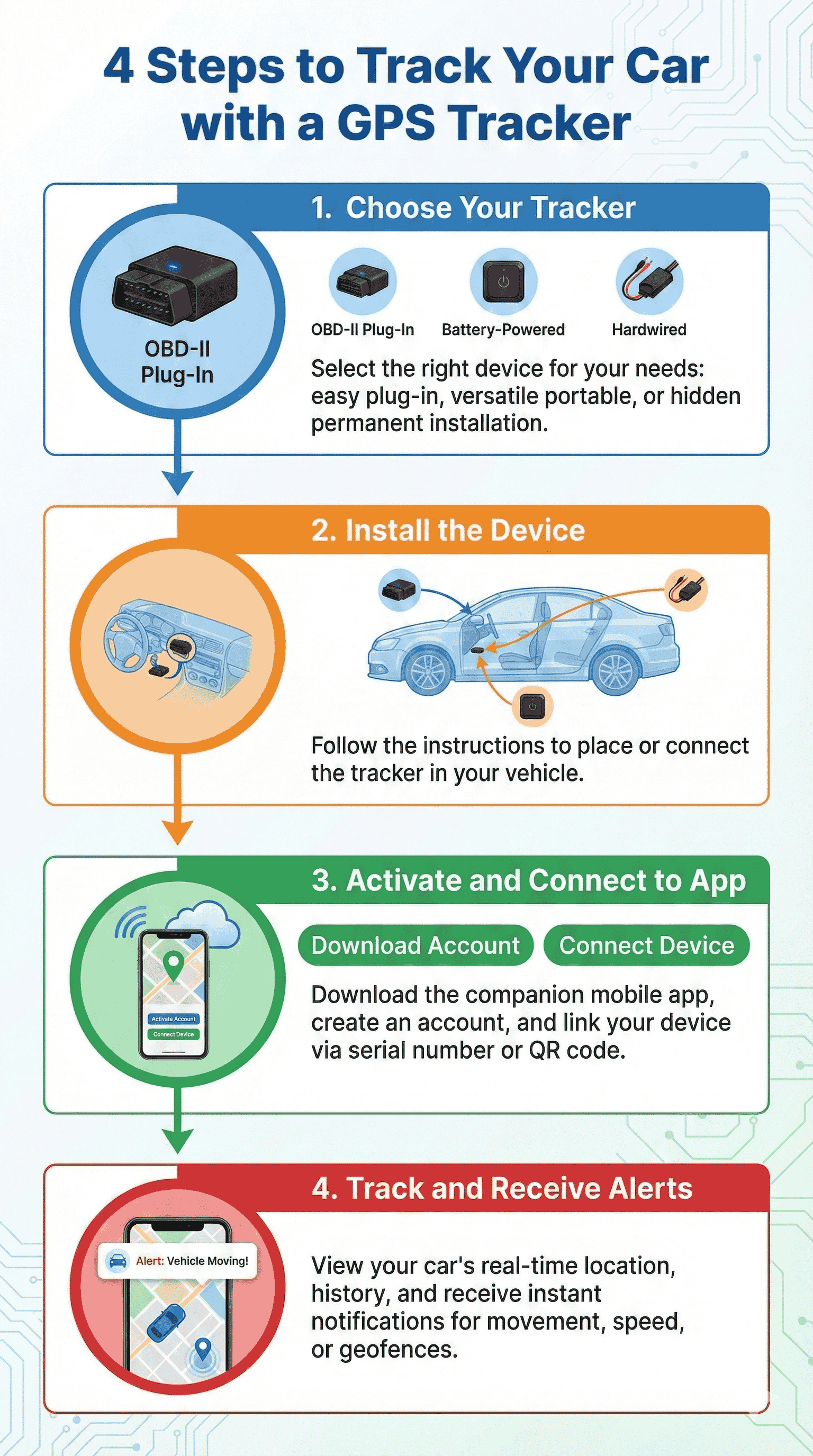
Step 1: Choose the Right GPS Tracker
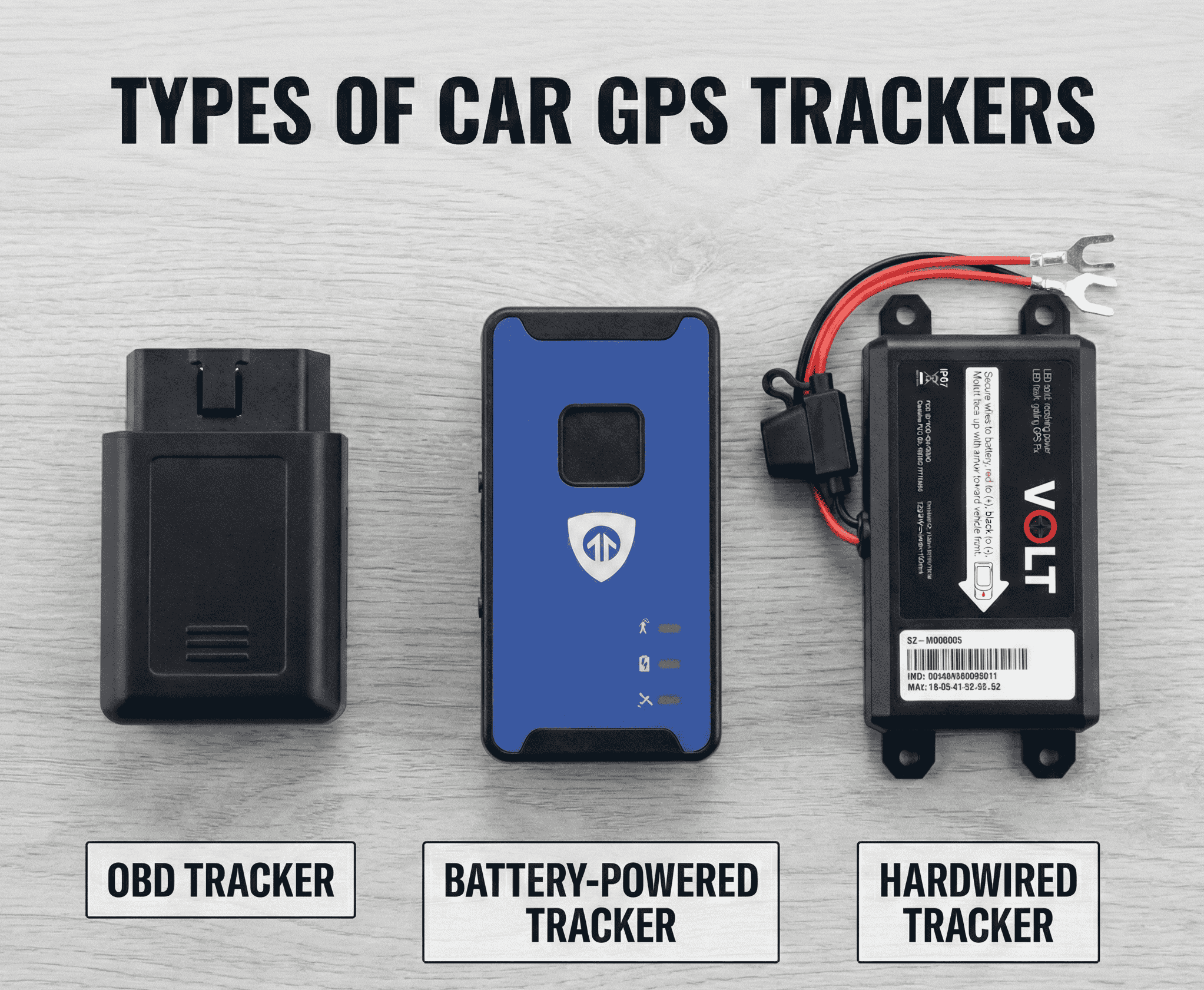
Not all car tracking devices work the same way. The best option depends on how often you want location updates, where you plan to install the device, and whether you need short-term or long-term vehicle tracking.



Step 2: Install the Device
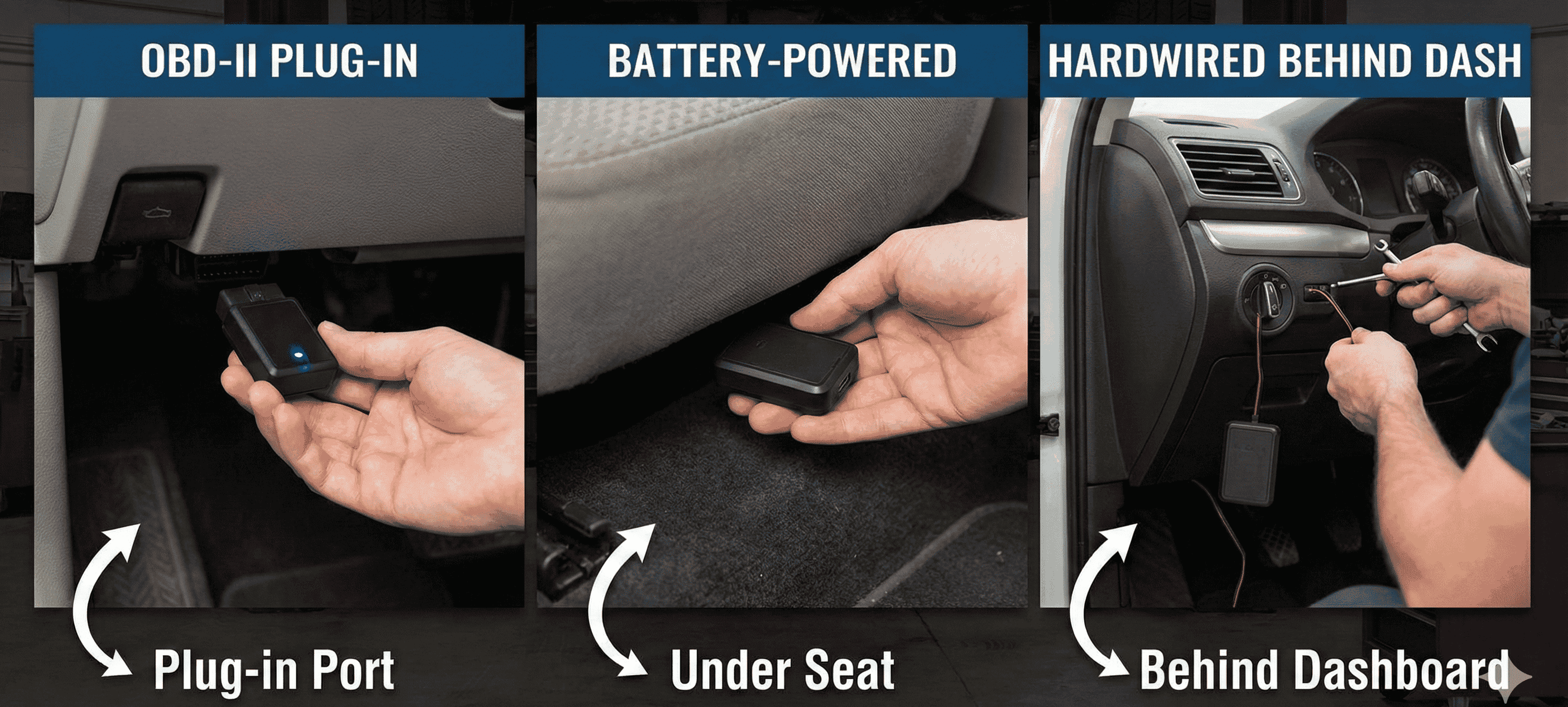
Once you've chosen the right GPS tracker, installation is the next step. It's usually fast and straightforward - no advanced tools required unless you're using a hardwired device.
Plug-In GPS Trackers (OBD-II)
✓ Plug directly into your car's OBD-II port, usually under the dashboard
✓ Installs in seconds and draws power from your car's battery
✓ Great for daily drivers or monitoring teen drivers
Learn how to Install an OBD-II Port GPS TrackerBattery-Powered Trackers
✓ Place securely inside the glove box, trunk, under a seat, or attach under the vehicle with a magnetic case
✓ No wiring needed - fully portable and covert
✓ Recharge periodically or choose a model with a long-life backup battery
Complete Guide: How to Place a Battery-Powered GPS TrackerHardwired Trackers
✓ Connects directly to your vehicle's fuse box or ignition system
✓ Offers a hidden, tamper-resistant solution with continuous power
✓ Recommended for fleet vehicles or long-term tracking
May require professional help for installation
Complete Guide: How to Install a Hardwired GPS Tracker| Tracker Type | Installation | Tools Needed | DIY Friendly |
|---|---|---|---|
| OBD-II Plug-In | Plug into OBD-II port under dashboard | None | Yes |
| Battery-Powered | Place in glove box, trunk, or under vehicle | None | Yes |
| Hardwired | Connects to fuse box or ignition system | Basic wiring tools | Optional Pro Help |
Step 3: Activate Service and Connect to the App
Once installed, activation takes just a few minutes:
1. Create an account with the device provider
2. Select a monthly subscription or annual plan (covers cellular data for real-time updates)
3. Download the mobile app (iOS or Android) or log in on your computer
4. Pair your device via QR code, serial number, or Bluetooth (for compatible trackers)
Step 4: Monitor Your Car in Real Time
From your iPhone, Android, or desktop dashboard, you'll be able to:
✓ Track your car's real-time location
✓ Get alerts for speeding, movement, or zone entry/exit
✓ View trip history and driving behavior
✓ Share your vehicle's location with family or employees
✓ Set up geofences and receive location updates when the car moves
What Features Should You Look for in a GPS Tracker?
Not all trackers are created equal. The best GPS tracking devices combine ease of use, durability, and advanced features.
| Feature | Why It Matters |
|---|---|
| Real-time GPS tracking (5-60 sec updates) | See exactly where your car is at any moment |
| Geofencing with zone alerts | Know the moment a vehicle enters or leaves a defined area |
| Speed, ignition, and tampering alerts | Instant notifications for unsafe or unauthorized use |
| Trip history and driving reports | Review routes, stops, and driving patterns |
| 4G LTE cellular coverage | Reliable connection across the country |
| iOS and Android app support | Monitor from any device, anywhere |
Common Mistakes to Avoid
✗ Using Bluetooth-only trackers (like Apple AirTag) for full-scale tracking
✗ Forgetting to charge battery-powered devices
✗ Poor installation that blocks GPS signals
✗ Skipping geofence and alert setup - missing key data
✗ Choosing a tracker without checking for signal coverage in your area
Real-World Examples: GPS Tracking in Action
Michael, Atlanta
Michael had his SUV stolen from his driveway. Thanks to a BrickHouse Security tracker, he gave police the car's exact location within minutes. The car was recovered within 4 hours.
Rosa, Los Angeles
Rosa uses a GPS tracker to monitor her 17-year-old's driving habits. She gets instant alerts if her teen speeds or enters a restricted zone. "It gives me peace of mind - and she drives safer."
Jason, Chicago
Jason, owner of a plumbing company, equipped his fleet vehicles with hardwired trackers. He reduced overtime claims by 20% and improved customer satisfaction with accurate ETAs.
Final Thoughts: Stay Connected, Stay Secure
GPS tracking isn't just for businesses or law enforcement - it's for everyday people who want real-time updates, reliable data, and total visibility over their vehicle.
Whether you're using it for car theft prevention, teen driver safety, or managing company vehicles, the right car GPS tracker keeps you connected, informed, and in control.
FAQs: How Do I Track My Car With a Tracker?
1. Can I track my car in real time using a GPS device?
Yes. Most GPS car trackers update every few seconds, letting you view your vehicle's location on a live map through a mobile app.
2. Are Bluetooth car trackers reliable?
Bluetooth trackers are best for locating parked cars or keys within short ranges. For full real-time tracking, use a GPS device with cellular coverage.
3. How much does GPS tracking cost per month?
Plans typically range from $9.95 to $29.95/month, depending on how often you want location updates and other premium features.
4. Can I install a GPS tracker myself?
Yes. Most users install plug-and-play or battery-powered devices themselves. For hardwired trackers, you may want professional help.
5. Can I share my car's location with others?
Absolutely. Most apps support location sharing so family members or coworkers can access the real-time location of the car.
6. Does the tracker work when the car is off?
Yes. As long as the device has power (via hardwire or battery), it can continue to send location information even when parked.
7. What's the best GPS tracker for monitoring teen drivers?
Look for GPS trackers with speed alerts, trip history, and real-time tracking - ideal for coaching teen drivers and giving parents peace of mind.
Posted by Todd Morris on May 8th 2026