




How to Choose the Right GPS Tracker in 2026
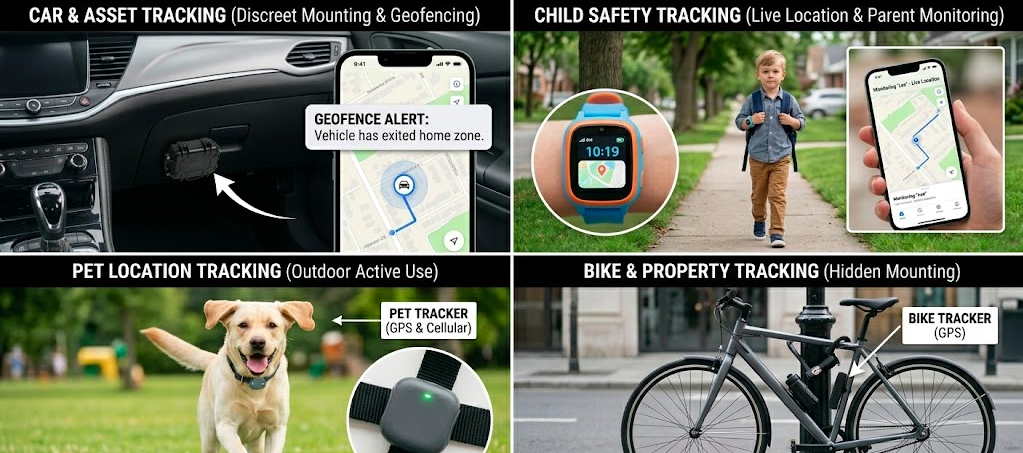
A vehicle is stolen every 32 seconds in the U.S., and most are never recovered not because GPS trackers fail, but because people either didn't have one or bought the wrong type. This guide helps you avoid both mistakes.
Choosing the best GPS tracker in 2026 isn't about picking the most expensive device or the longest spec sheet. It's about fit. Cars, kids, pets, and equipment all need fundamentally different tracking devices and this guide walks you through every decision point so you leave knowing exactly what to buy.
Quick Answer: Best GPS Tracker by Use Case
Not ready to read the full guide? Here's the fast decision framework:
|
What you're tracking |
Best tracker type |
|---|---|
|
Car theft protection |
Hardwired or OBD II tracker with geofencing + real-time alerts |
|
Kids and elderly |
Wearable GPS tracker with SOS button and two-way voice |
|
Dogs and cats |
Lightweight waterproof collar tracker with live location |
|
Bikes and e-bikes |
Discreet frame-hidden tracker with long battery life |
|
Trailers, boats, equipment |
Weatherproof portable tracker with movement alerts |
Your 3-step decision tree:
- Decide what you're tracking: vehicle, person, pet, or static asset
- Choose your power source: OBD II port, hardwired, battery-powered, or wearable
- Pick your connectivity: cellular 4G LTE, LPWAN, Bluetooth, or satellite
Who Actually Needs a GPS Tracker?
What you're tracking is the single most important decision before comparing brands or prices. Different targets demand fundamentally different GPS tracking devices.
Common use cases and what each needs:
- Parents monitoring children walking to school need real-time tracking with emergency alerts for immediate response
- Motorists protecting vehicles from theft need discreet placement with geofencing and movement alerts for theft recovery
- Cyclists in high-theft cities need hidden GPS trackers that don't advertise their presence and survive weeks without charging
- Pet owners tracking dogs and cats that roam need fast location updates for unpredictable escape situations
- Asset owners securing trailers, boats, or equipment prioritize location history after theft rather than live interception
The key distinction: personal safety needs children, elderly, pets require short update intervals and immediate notifications. Asset recovery needs vehicles, equipment can tolerate longer intervals and different connectivity types.
Types of GPS Trackers: Match Form Factor to Your Use Case
GPS trackers differ dramatically by form factor and power architecture. An OBD II plug that works perfectly for your teenager’s car would be useless for tracking a dog or hidden in a bike frame. Physical design determines where and how you can use a GPS device.
This section provides a high-level overview of each category. Later sections cover networks, accuracy, and legal aspects in more depth.
Main tracker categories:
- Portable battery-powered trackers for bags, bikes, and assets, compact design with rechargeable batteries lasting days to months
- Vehicle GPS trackers using OBD II plug-ins or hardwired connections with constant 12V power for cars, vans, and fleet vehicles
- Wearable trackers including watches, pendants, and clipped devices for kids and seniors with SOS functions
- Collar or clip-on pet trackers built small, bite-resistant, and waterproof for active animals
- Bluetooth “trackers” like AirTags and Tile for finding nearby personal belongings rather than true long-range GPS tracking
- Satellite messengers and trackers for boats, hikers, and remote areas without cellular signal
Vehicle GPS Trackers: OBD II vs Hardwired vs Battery
Cars, vans, and motorcycles remain the most tracked assets in 2026. Buyers typically choose among three architectures, each with different trade-offs between convenience, stealth, and flexibility.
OBD-II Plug-In Trackers
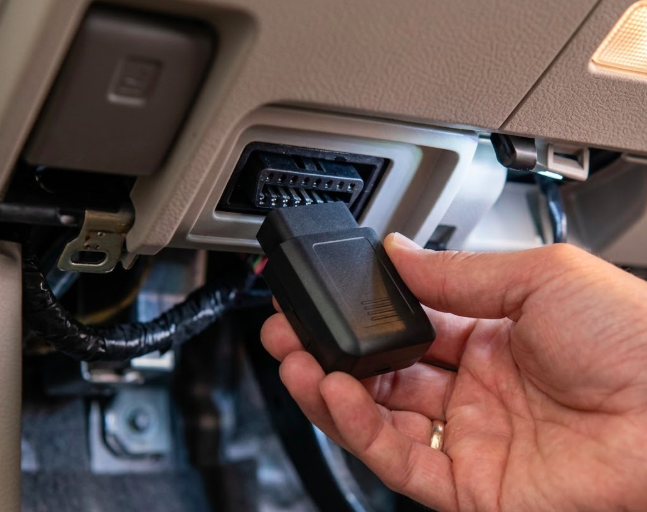
These plug-and-play GPS devices insert directly into the OBD II diagnostic port found in all vehicles manufactured from 1996 onward a standard mandated by the U.S. Environmental Protection Agency for all light-duty vehicles. They draw continuous power from the vehicle's electrical system and can access a rich set of vehicle data including real-time speed, engine fault codes, fuel consumption estimates, battery voltage, and harsh braking events.
Installation takes under 30 seconds with no tools or wiring required. Update speeds on modern 2026 devices can reach every 1-3 seconds, not the slower intervals many buyers assume.
One important 2026 caveat: while most EVs and hybrids include an OBD II port, some manufacturers like Tesla restrict third-party data access verify compatibility before buying. The trade-off is visibility. The OBD II port's standard location beneath the driver's dashboard makes these trackers relatively easy for a thief to spot and unplug. They're best suited for family vehicle monitoring, teen driver oversight, and fleet management where theft stealth isn't the priority.
Hardwired Trackers
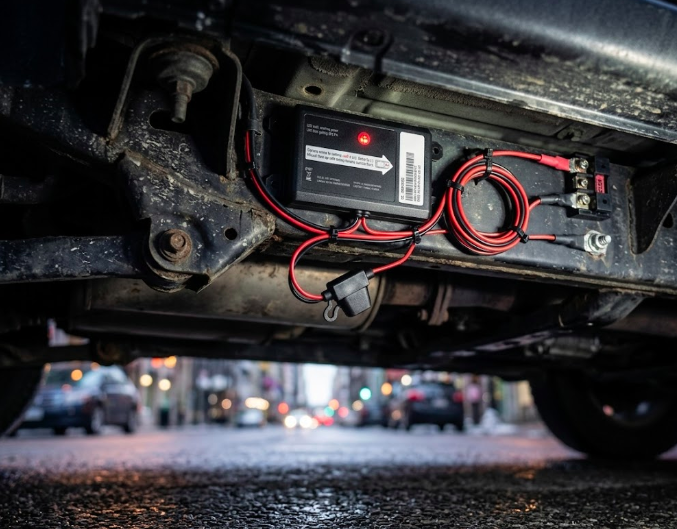
These type of trackers are Connected directly to the vehicle's electrical system typically behind the dashboard, fuse box, or in the engine bay hardwired GPS trackers offer stealth installation with constant power and ignition sensing.
These hidden GPS trackers are significantly harder for thieves to locate and disable, making them ideal for long-term theft protection and high-value vehicles. The trade-offs are professional installation requirements and difficulty moving between vehicles. Generally not recommended for leased vehicles unless you can remove them at lease end.
Battery-Powered Magnet-Mount Trackers
Portable GPS trackers with magnetic mounts can be placed almost anywhere under a car, inside a trailer, or moved between vehicles when needed. That flexibility makes them useful for temporary or shared tracking. They run on batteries, so you’ll need to recharge them based on how often the device updates location. Faster updates drain the battery quicker.
They work best for rental vehicles, trailers, or equipment that moves between locations and isn’t tied to a single power source.
Personal and Wearable GPS Trackers for Kids and Elderly
Parents and caregivers increasingly choose dedicated wearable GPS trackers over relying on smartphones. A child may forget or lose a phone; an elderly person with cognitive decline may not consistently carry a device. Dedicated hardware with a clear SOS button provides more reliable personal safety.
Wearable GPS tracker types:
- GPS watches for kids with SOS buttons, approved contact calling, and 1-3 day battery life
- Discreet pendants or belt-clip devices for elderly people with fall detection
- Pocket-size trackers for those who may remove wearables
Pet, Bike, and Asset Trackers
Moving “things” like dogs, e-bikes, and work tools need different designs than human wearables, particularly regarding durability, mounting options, and battery endurance.
Best GPS Tracker for Pets
Collar-mounted pet GPS trackers must be lightweight (typically 20-50 grams for smaller animals), waterproof to IP67 or higher, and impact-resistant. Battery life should cover a full day of active roaming with fast 15-30 second update intervals during an escape. Unlike predictable daily routines, pet escapes are emergencies the tracker needs to work the moment it's needed.
Best GPS Tracker for Bikes
Discreet placement is critical. The best bike GPS trackers hide inside frame tubes, under saddles, or integrate into lights where thieves won't look. Long battery life is essential since bikes park outside for extended periods with no power source available.
GPS Trackers for Trailers, Boats, and Equipment
Heavy-duty asset monitoring demands weatherproof trackers rated IP68 or higher with extremely long standby times. These assets often remain stationary for weeks or months a boat in a marina all winter, a generator on a construction site, trailers in a storage yard. Covert tracking with wide update intervals (hourly or daily when stationary) preserves battery while maintaining theft recovery capability. Route monitoring becomes relevant only when assets move unexpectedly.
Connectivity Options: Cellular, LPWAN, Bluetooth, Satellite, and RF
Most modern trackers don’t just use GPS satellites they also need a network to transmit location data to your phone or web app. Understanding connectivity options is essential for choosing the right device.
Critical distinction: GPS, GLONASS, and Galileo satellites tell the tracker where it is (position acquisition). Cellular, LPWAN, Bluetooth, or satellite networks send that position back to you (position transmission). A tracker can acquire position accurately but fail to deliver timely information if transmission networks are unavailable.
Cellular Networks (4G LTE)
The dominant choice for consumer GPS tracking in 2026. Cellular connectivity offers unlimited range (anywhere with network coverage), real-time or near-real-time transmission, and seamless international roaming through eSIM technology. Monthly fees typically range from $5-25 depending on update frequency.
LPWAN (Sigfox, LoRa)
Low-power wide-area networks excel at periodic status updates on static or slow-moving assets. They offer excellent battery efficiency but with trade-offs: message transmission may experience delays, most networks limit daily messages, and real-time tracking is impossible. Suitable for “where is my parked car” or “where is my trailer stored” scenarios, not for tracking children or pets.
Bluetooth Trackers (AirTag, Tile)
These rely on crowd-sourced location reporting from nearby smartphones. Excellent for finding misplaced items in cities with dense smartphone populations, but fundamentally unsuitable for continuous tracking or rural areas. A Bluetooth tracker in a wilderness area reports location only if another person with a compatible device happens to pass nearby.
Satellite-Based Systems
For off-grid areas oceans, remote hiking regions, dense forests satellite trackers like the SPOT Trace provide tracking where cellular networks don’t reach. Expect larger devices, higher costs ($15-30/month subscriptions), and longer transmission delays. Essential for marine use and remote adventures.
Subscription vs No-Subscription Trackers
“No monthly fee” sounds good, but it usually means limited tracking. Real-time tracking over long distances needs a network and that always comes with a cost.
Subscription-Based Cellular GPS Trackers
These offer genuine real time tracking with no range limit anywhere with cellular network coverage. Monthly plan costs typically run $5-25 depending on update interval, with some manufacturers bundling the first year of service. Annual plan options often provide modest savings over monthly fees.
Subscription trackers are mandatory for live tracking scenarios: children in emergencies, pets that have escaped, vehicles being actively stolen, or any situation requiring immediate location information.
Subscription-Free GPS Trackers
These typically use LPWAN, Bluetooth, or limited message plans. They’re adequate for periodic position checks confirming a parked vehicle’s location, verifying a trailer remains in storage, or finding misplaced keys around the house.
Match connectivity and subscription fees model to the safety level you need, not just to budget. Cut costs for tracking keys, not for a child or dog that regularly leaves the house.
Core Features to Compare When Choosing a GPS Tracker
Once you’ve selected your use case and connectivity type, compare essential features across short-listed devices: update rate, battery life, alerts, app quality, and data security. These practical criteria determine whether a tracker actually serves your needs.
Real-Time vs Passive Tracking and Update Interval
Real-time tracking means updates every few seconds to a minute while moving. Passive loggers store data internally and upload later. Real-time is essential for emergencies; passive suits after-the-fact route review.
Update interval trade-offs:
- 1-10 second intervals: maximum responsiveness, faster battery drain, may increase subscription cost
- 30-120 second intervals: good balance for most personal use cases
- Movement-triggered updates: conserve battery when stationary, ideal for asset trackers
Geofencing, Alerts, and Notifications
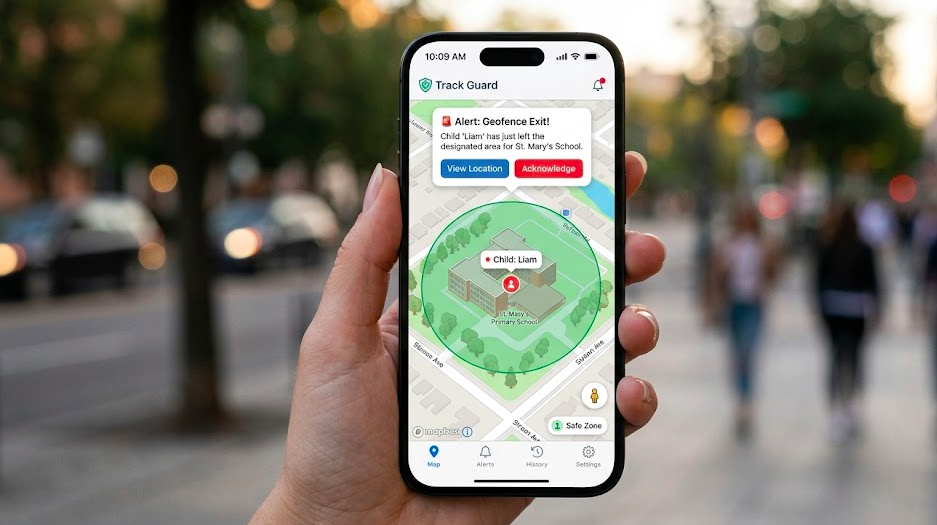
GPS trackers with geofencing let you draw virtual boundaries on a map home, school, city limits, storage yard and receive geofence alerts when a tracker enters or leaves these designated area boundaries.
Essential alert types to look for:
- Movement alerts when a parked vehicle starts moving
- Ignition on/off detection for vehicle tracking
- Speed alerts for monitoring teen drivers and harsh acceleration events
- Low battery warnings
- SOS button presses
- Emergency alerts for immediate safety situations
Good apps in 2026 offer multiple notification channels (push, SMS, email) and let you fine-tune alert sensitivity. Overly sensitive settings cause alert fatigue; you’ll eventually ignore legitimate warnings.
Example scenario: Set a geofence around your child’s school with alerts if their tracker leaves during school hours. Or create a boundary around a marina for a boat that should not move at night any vehicle enters or exits that zone triggers immediate notification.
Battery Life, Power Management, and Charging
Many buyers underestimate battery life importance. A long battery tracker can mean the difference between recovering a stolen bike and having the device die before you notice it’s missing.
Battery life expectations by category:
- Small wearables: 1-3 days at 15-30 second updates
- Compact asset trackers: several weeks at 5-15 minute intervals
- Low-power asset trackers: months at hourly or daily updates
Vehicle GPS trackers powered via OBD II or hardwire should support deep sleep mode when the ignition is off to prevent parasitic drain on the car battery.
Durability and Waterproofing
Outdoor use, pets, bikes, and external vehicle mounts demand much tougher hardware than indoor bag trackers. Don’t assume all devices handle harsh environments equally.
IP ratings explained simply:
- IP67: Dust-tight and can handle immersion to 1 meter for 30 minutes-suitable for rain, splashes, and brief accidental submersion
- IP68: Prolonged submersion to specified depths-necessary for marine use, water sports, or devices that may sit in puddles
If mounting a tracker under a vehicle, verify it can withstand pressure-washing standard IP ratings don't always cover high-pressure jet scenarios.

App Quality, Data Security, and Privacy
The app or web dashboard is what you interact with daily. Clunky software can ruin an otherwise excellent GPS device.
What to look for in a good app:
- Clear maps with Google Maps or similar integration
- Intuitive geofence creation without technical configuration
- Quick access to trip history and location information
- Fast alert delivery across multiple channels
- Multi-device support for families or fleet managers
Data security basics:
- Encrypted communication between device and servers
- Strong password requirements
- Optional two-factor authentication
Privacy considerations:
- Clear policies on how long location history is stored
- Options to delete your own history
- Easy account closure procedures
- Understanding of who can access live vehicle’s location data
Check app store ratings and update history before committing. Regular 2025-2026 updates indicate active maintenance and security patching. Avoid apps with years-old updates or poor reviews mentioning bugs and crashes.
Legal and Ethical Considerations When Using GPS Trackers
Laws vary significantly by country and state. Tracking someone without their knowledge or consent can be illegal and is almost always unethical even with the most valuable assets at stake.
General legal principles in 2026:
- Owners can track their own vehicles and assets
- Parents can generally track minor children
- Employers can track fleet vehicles with clear written policy and employee notification
- Tracking another adult's vehicle without consent is illegal in most countries and can constitute stalking
Always check local laws on electronic surveillance before installing a GPS tracking device on anything you don't personally own. This applies to tracking a spouse's vehicle or a teenager's car once they reach legal adulthood.
For businesses, document GPS tracking policies in employment contracts. Specify what is monitored, when monitoring occurs, and the purpose. Periodically audit dashboard access and remove former employees immediately.
Practical Buying Checklist: Questions to Ask Before You Order
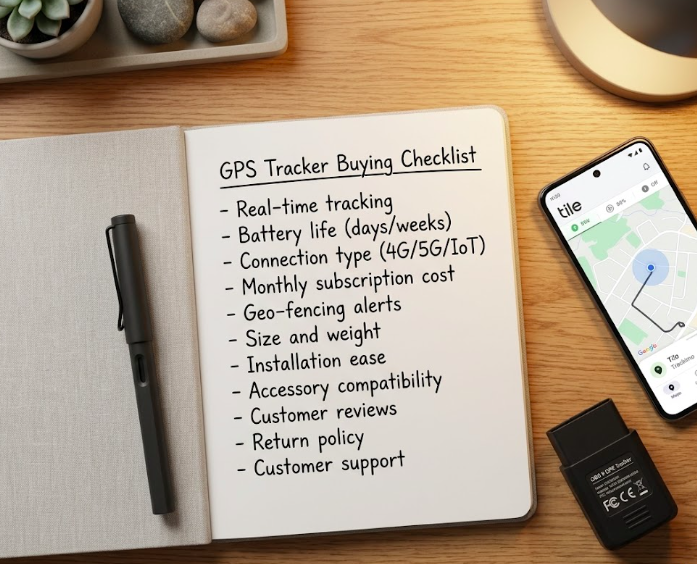
Before purchasing any GPS tracker, run through these targeted questions to ensure you’re selecting the right device for your needs.
Pre-purchase checklist:
- Who or what am I tracking? (Person, pet, vehicle, or asset)
- Do I need real-time tracking or is last-known location sufficient?
- Do I need unlimited range (cellular/satellite) or short-range finding?
- What battery life fits my charging routine?
- Is there a monthly plan or subscription fees, and what exactly does it include?
- Is the device waterproof and durable enough for my environment?
- Is the app well-rated and updated recently (2025-2026)?
- Does my intended use comply with local laws?
- Is consent clearly documented for anyone being tracked?
- Does the device support connectivity options in my region (4G LTE bands, eSIM)?
- What signal strength can I expect in my typical locations?
Start with a small pilot one or two devices before rolling out many trackers for fleets or families. This lets you verify the right tracker meets your real world use needs before larger investments.
Setting Up Your GPS Tracker After Purchase
Buying the right GPS tracking device is only the first step. Proper setup determines whether it actually protects what matters.
Basic setup:
- Register the device and activate the SIM or network plan
- Update firmware to the latest version immediately
- Install the app on all relevant family or team member phones
- Name devices clearly: "Emma School Watch" not "Tracker 1"
Configuration:
- Create geofences at home, school, workplace, and storage locations
- Set alert thresholds for speed, movement, and after-hours activity
- Test emergency alerts before relying on them in a real situation
Ongoing maintenance:
- Check battery levels weekly
- Test alerts after every app or OS update
- Revisit settings when routines change new school year, job change, seasonal storage
The right GPS tracker protects what matters to you while respecting the trust of everyone involved. Match the device to your actual situation not to the longest spec sheet or the lowest price.
Conclusion
The right GPS tracker isn't the one with the longest spec sheet or the lowest price it's the one that fits exactly what you're protecting and how fast you need to know about it.
A child walking home needs real-time cellular tracking and an SOS button. A parked trailer needs a long-battery asset tracker with movement alerts. A stolen car needs a hidden hardwired device a thief can't find and unplug in seconds. These are different problems that demand different solutions.
Use the buying checklist before you order, confirm 4G LTE support in your region, and always test your geofence alerts before relying on them in a real situation. The best GPS tracker runs silently in the background invisible until the moment it matters most. Make sure yours is ready before that moment arrives.
When you’re ready to choose a tracker that actually fits your needs, explore reliable options from Lightning GPS. Their devices are built for real-world use so you’re not guessing when it matters most.
FAQ
Can a GPS tracker work without a SIM card?
Most real-time GPS trackers need a SIM card or eSIM to send location data via cellular networks. Without it, they only store data internally until connected. Bluetooth trackers like AirTag don’t use SIM cards but depend on nearby devices, limiting their range.
How accurate is a GPS tracker?
Most GPS trackers in 2026 are accurate within 3 to 15 meters under open skies. Advanced models using multiple satellite systems can be accurate to 3 meters. Accuracy drops in underground or urban areas. Trackers on 4G LTE networks perform better than older 3G ones.
Will a GPS tracker drain my car battery?
A well-designed GPS tracker uses very little power, similar to a dashboard clock. Most OBD II and hardwired trackers sleep when the car is off and wake only when needed. Battery drain happens if the device is poorly made, the car battery is weak, or updates are too frequent. For cars left unused for weeks, a battery-powered magnetic tracker is a better choice.
How long does a GPS tracker battery last?
Battery life depends on the device and how often it updates. Small wearables last 1-3 days with frequent updates. Portable trackers can run for weeks with less frequent updates. Some low-power trackers last months with hourly or daily updates.
OBD II and hardwired trackers use the vehicle’s power, so battery isn’t an issue. To save battery, reduce update frequency when the tracker is not moving, most devices support this feature.
Is it legal to put a GPS tracker on someone else's car?
In most places, it's illegal to put a GPS tracker on a vehicle you don't own or without permission. You can track your own car legally. Employers can track company vehicles if employees are informed, and parents can usually track their minor kids. If you're unsure about the rules, check local laws first. Tracking an adult without their consent is risky and often illegal.
Posted by Kellie Kendall on Apr 3rd 2026