




GPS Trackers for Construction Equipment: 2026 Buyer’s Guide & Use Cases
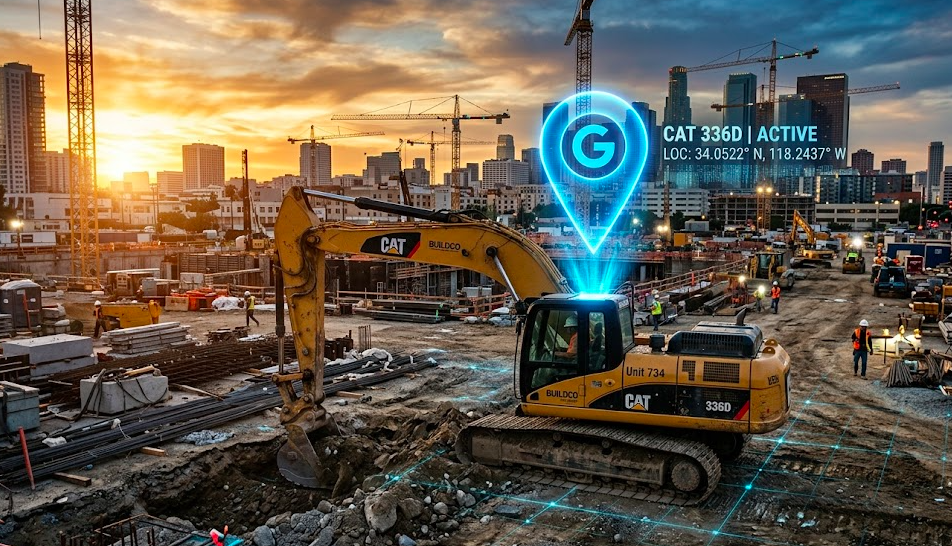
Construction equipment theft costs the North American industry an estimated $300 million to $1 billion every year, with more than 11,000 theft incidents reported annually, roughly 1,000 per month. Recovery rates sit at only 21-22% for untracked fleets, meaning nearly 4 in 5 stolen machines are never found. GPS trackers for construction equipment are no longer optional, they're now a basic part of protecting high-value assets on any jobsite.
This guide breaks down how GPS tracking works in real construction environments and how to choose the right system in 2026. It focuses on heavy equipment like excavators, dozers, loaders, trailers, generators, and high-value tools used across busy urban projects and remote sites. You’ll see how GPS tracking helps prevent theft, improve equipment usage, plan maintenance, and keep operations on track.
How GPS Trackers Work on Construction Equipment
GPS receivers in construction equipment tracking devices pick up signals from multiple satellite constellations; GPS, GLONASS, and Galileo, then transmit location data via 4G LTE or LTE-M networks to cloud-based platforms accessible through web dashboards and mobile apps.
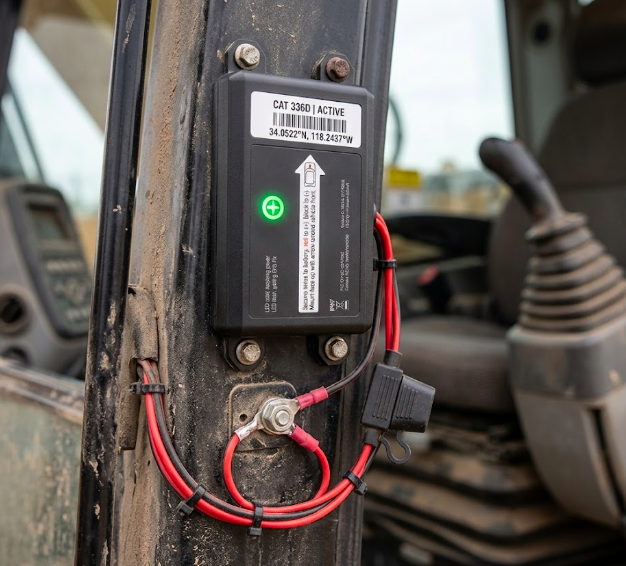
- Hard Wired GPS trackers connect directly to a machine's electrical system, drawing constant power from excavators, loaders, or dozers. These devices report positions every 30-60 seconds during motion and can monitor engine diagnostics through OBD ports or custom harnesses.
- Battery-powered GPS trackers suit non-powered assets like trailers and fuel tanks. They offer 6-12 months of battery life at frequent reporting intervals, or up to 3-5 years in low-power sleep modes with periodic check-ins.
- Solar-powered models use integrated panels to trickle-charge lithium batteries, enabling frequent pings indefinitely on exposed assets like parked generators.
Multi-constellation GPS tracking relies on signals from multiple satellite systems, providing accuracy within 2-5 meters in open conditions. This approach overcomes single-GPS limitations in obstructed areas common to construction sites, such as high-rise shadows or dense foliage.
Key Benefits of GPS Trackers for Construction Equipment
GPS tracking has evolved from a reactive anti-theft measure into a foundational operational tool. Security teams get instant alerts, finance teams receive ROI data showing 10-20% idle time reductions, and maintenance crews gain predictive scheduling that cuts unplanned breakdowns significantly.
- Theft prevention delivers immediate value. Geofence breaches trigger SMS or push notifications, allowing recovery of stolen equipment within hours rather than weeks. One Houston contractor located a stolen excavator via live coordinates shared with police, averting a $150,000 replacement cost.
- Recovery rates climb for tracked fleets. According to LoJack's Construction Equipment Theft Study, 69% of recovered equipment had GPS tracking systems installed, with recoveries often occurring within 24 hours compared to the industry baseline recovery rate of just 21-22% for untracked assets.
- Predictive maintenance uses engine-hour data to schedule service at the right time. This helps equipment last longer and reduces unexpected breakdowns. Poorly maintained fleets often face 20-30% unplanned downtime, which can cost thousands of dollars per asset each year.
- Insurance savings materialize through verified security, with premiums potentially dropping and claims processing accelerating via digital proof of security measures.
Real-Time Location & Geofencing for Security
Real-time location monitoring on construction equipment delivers updates every 30 to 120 seconds via LTE, pinpointing valuable assets across busy jobsites, highway hauls, or overnight yards. Platforms allow customizable dashboards for multi-site oversight.
Geofencing creates virtual perimeters around project boundaries or laydown yards. Alerts activate if equipment like an excavator moves outside specific time windows say, "7 p.m. to 5 a.m." supporting SMS, email, or app push notifications tailored to after-hours only.
Real-world example: A contractor receives a push notification at 2:13 a.m. when a generator moves from a construction site. Within 20 minutes, police intercept the vehicle using breadcrumb history to trace the exact route. That's enhanced security in action made possible through GPS tracking on construction equipment.
Geofences can also be adjusted as projects change. Boundaries can be tightened around completed areas or expanded for new work zones, giving better control over high-risk equipment without constant site checks.
Usage, Utilization & Maintenance Insights
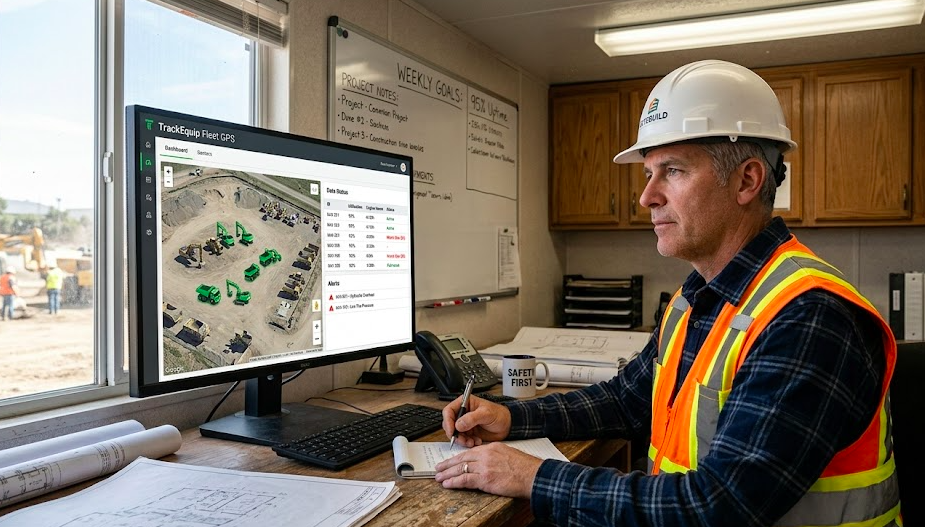
Engine-hour tracking pulls data directly from the machine, replacing inaccurate manual logs. This helps schedule maintenance at the right time like 250-hour service for loaders or 500-hour service for dozers without guesswork.
Utilization data also shows where equipment is underused. For example, a telehandler running at just 12% on one site, compared to a 70% fleet average, can be moved to a busier project. One contractor used this data to shift a rarely used skid steer to another site, saving $8,000 in rentals in one quarter and improving overall fleet efficiency.
These insights also help reduce idle time and fuel waste, keeping equipment running efficiently and projects on schedule.
Operational Efficiency, Labor & Compliance
GPS tracking helps track exactly how long equipment is used on each project. This makes job costing more accurate and reduces manual work, since the data can go directly into billing and ERP systems. It also connects equipment usage with worker hours. This helps confirm overtime based on actual site activity, which supports labor compliance and reduces errors.
Dispatch becomes faster and more efficient. Managers can see live locations and send the nearest machine like a mini excavator to the job, cutting response time by 20-30% compared to manual planning. GPS data also helps resolve disputes. For example, it can show if a dump truck was sitting idle after hours, reducing the risk of billing or audit issues.
Types of GPS Trackers for Construction Equipment
Different construction assets require different tracker form factors and power options. Dozers need wired units; trailers need battery or solar. Most construction companies end up using a mix across their fleet.
This section matches tracker type to actual assets on a 2026 job site, helping you streamline workflows for equipment management.
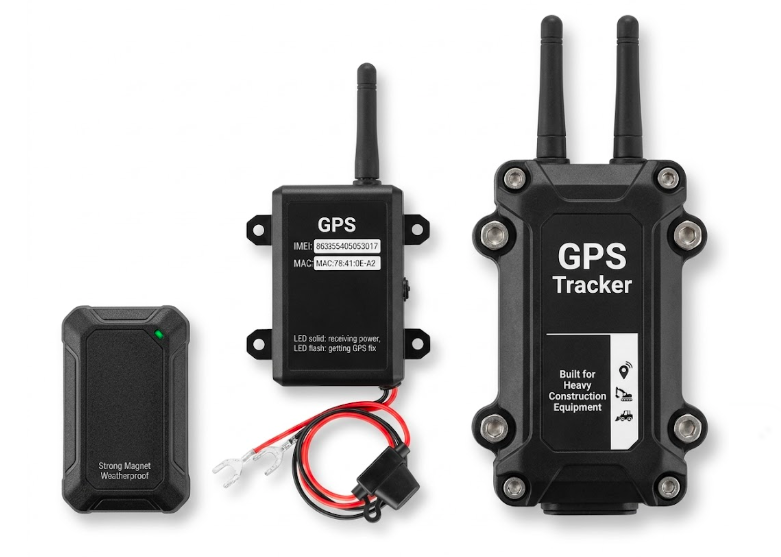
Wired GPS Trackers for Powered Heavy Equipment
Wired trackers are ideal for excavators, wheel loaders, dozers, pavers, cranes, and on-road vehicles because they draw power from the machine’s electrical system. Installation involves hidden placement and connection to constant and ignition power. Advantages include continuous reporting, no battery swaps, detailed engine-use and idle data, and harsh-environment ratings of IP67 or better. This rugged device design handles rough environments and harsh construction environments without issue.
Example: A fleet of 2023 Caterpillar 320 excavators using wired trackers cut fuel burn by 15% through idle monitoring real-time data driving real savings.
Installation typically takes 30-60 minutes per unit in the yard or shop, not on active digs. View Lightning GPS wired tracking solutions to find the right fit for your powered fleet.
Battery-Powered Trackers for Non-Powered Assets
Battery-powered trackers serve trailers, mobile light towers, storage containers, compressors, fuel tanks, and unpowered equipment where no permanent power exists. Battery life in 2026 ranges from 6-12 months for high-frequency reporting to 3-5 years for devices set to periodic check-ins. Long battery life makes these practical for remote areas.
Example: A Texas-Oklahoma contractor tracking a fleet of 20 flatbed trailers prevents lost or stolen equipment and stranded units with quick-setup magnetic devices hidden inside trailer frames.
Pros include quick installation and portability. Cons involve periodic battery replacement, especially in cold climates where capacity drops 20-30%.
Solar-Powered Trackers for Long-Term Deployments
Solar GPS trackers work well for assets stored outdoors for extended periods-trailers, containers, and large generators at remote sites.
Integrated solar panels trickle-charge internal batteries, enabling frequent location pings every 5-30 minutes with minimal maintenance. A civil contractor tracking 40 equipment trailers on highway projects across the Midwest relies on solar units to avoid on-site visits for battery changes.
Solar trackers require exposure to daylight and mount on roofs or upper surfaces to avoid damage. Reduced battery waste also supports ESG (Environmental, Social, and Governance) goals for construction businesses in 2026.
What Construction Equipment Can You Track with GPS?
Almost any asset with physical value can benefit from an equipment tracking device from million-dollar cranes to compactors and tool chests.
- Earthmoving equipment like excavators, dozers, backhoes, and skid steers represent high-theft targets needing wired real time tracking. Heavy machinery in this category demands robust equipment location monitoring.
- Road-building assets including graders, pavers, and scrapers require durable vibration-proof units for mobile construction operations.
- Trucks, dumpers, and mixers log routes for efficiency improvements. Trailers and enclosed cargo units use battery or solar options to prevent equipment theft during transit between multiple job sites.
- Non-mechanical assets like fuel tanks, storage containers, and landscape equipment also warrant tracking for asset location visibility across large infrastructure projects.
How to Choose the Right GPS Tracker for Your Construction Fleet
The right GPS tracking solution depends on your equipment mix, geography, job duration, and internal processes not just price.
Evaluate five main areas: hardware durability, power type, reporting features, software usability, and total cost of ownership. Think in terms of use cases security only, or security plus utilization and maintenance before shortlisting solutions.
Core Security & Tracking Features to Prioritize
Must-have features include real time tracking, geofences with instant alerts, movement and tamper alerts, and breadcrumb history for incident review. Configurable alert channels and schedules reduce notification fatigue.
Multi-carrier or roaming SIM support matters for rural or cross-border projects. Configure a “night watch” profile that alerts supervisors if any asset experiences unauthorized use between 8 p.m. and 5 a.m. from a specific yard.
Data, Reporting & Integration Requirements
These reports show key details like engine hours for each project, how much equipment is being used, idle time, and when maintenance is due.
The system can connect with existing construction software like fleet management, ERP, accounting, and maintenance tools. It automatically sends engine-hour data to trigger service tasks at set intervals, such as 250 or 500 hours.
You can also download reports in PDF format or receive them by email. This keeps project managers and finance teams updated without manual work.
Durability, Connectivity & Environmental Considerations
IP67 and IP68 ratings ensure resistance to vibration, dust, mud, and temperature extremes on concrete plants and road projects.
In 2026, GPS trackers run on 4G LTE and LTE-M networks. Legacy 2G and 3G networks have been fully retired, verify compatibility before purchasing any device. Trackers should also withstand extreme temperatures, from −30°C in Minnesota winters to +60°C in Arizona summers, while handling the power spikes typical of heavy equipment electrical systems.
Implementation: From First Device to Full-Fleet Rollout
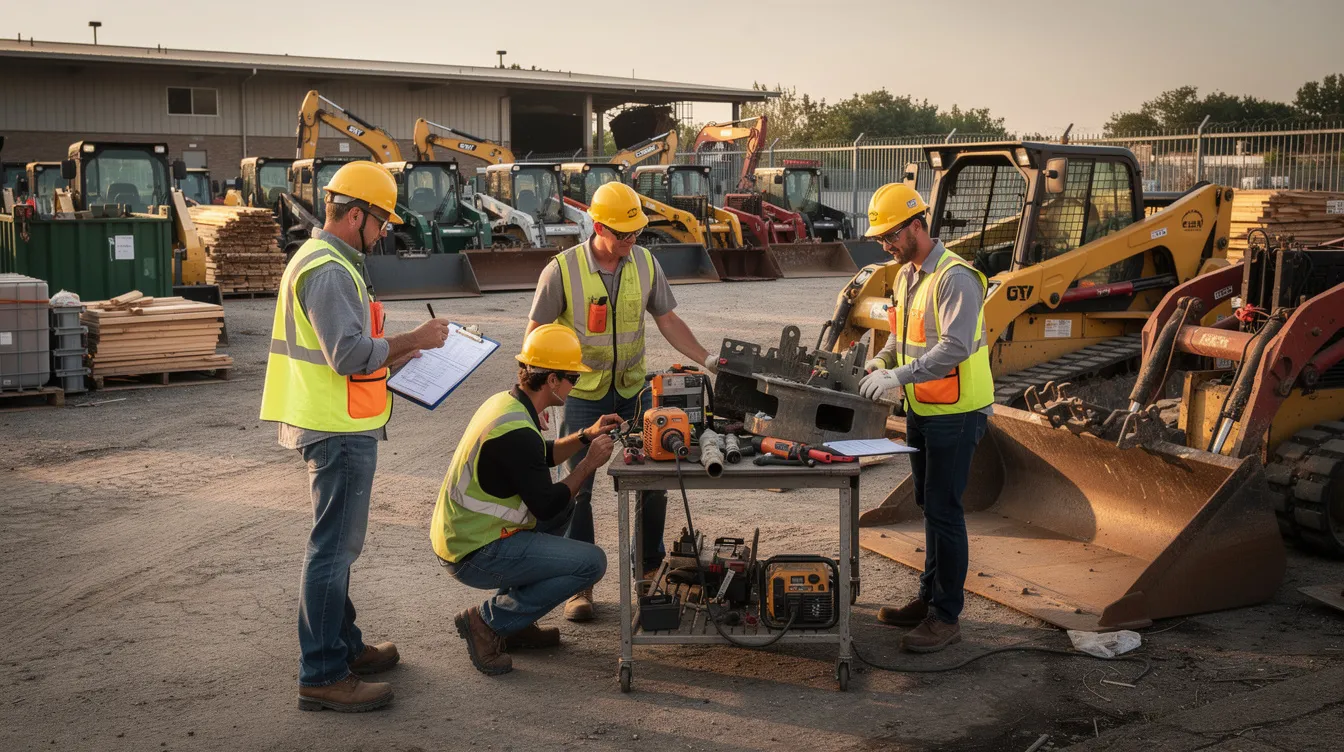
Most contractors start by testing GPS trackers on 10-20 important machines instead of the whole fleet.The process usually includes a few steps, planning, testing, training, full rollout, and improvements and takes about 60 to 90 days.
It’s important to involve all teams from the beginning, like operations, maintenance, finance, and IT. If they are not included early, problems can happen, such as wrong alert settings, untrained staff, or data that no one uses.
Installation & Setup on Jobsites
Choose mounting points that keep devices hidden, especially on theft-prone equipment. Install wired trackers during scheduled maintenance to avoid downtime. Always test signal strength before finalizing the location.
Battery-powered trackers are quick to install and usually take 15 to 30 minutes. Wired trackers on heavy equipment typically take 30 to 60 minutes.
After installation, activate each device in the web portal and group assets by jobsite for easier tracking and management. It’s also important to document installation locations with photos. This helps technicians quickly find devices later for maintenance or servicing.
Training Teams & Embedding GPS into Daily Operations
Successful deployments include 30-60 minute training sessions for foremen, project managers, and dispatch staff. Demonstrate live maps, theft alert response, and simple reports for weekly site meetings.
Assign an internal GPS champion responsible for system configuration and continuous improvement. After the first month, adjust geofences and alert thresholds to reduce false alarms based on real experience, this user friendly interface approach keeps teams engaged.
Conclusion
GPS trackers transform construction fleets by reducing theft losses, improving equipment allocation, and enabling predictable maintenance scheduling. The real value comes from acting on real time insights adjusting equipment assignments, fine-tuning maintenance plans with GPS data, and responding rapidly to alerts to recover stolen equipment.
Start with a pilot program focused on your top 10-20 most critical or theft-prone construction assets. Measure results over 60-90 days, then expand based on documented savings and improved asset tracking visibility.
In 2026 and beyond, GPS tracking for construction is becoming a basic requirement for keeping projects on track and running a profitable business. Construction businesses that save money through better real time visibility gain competitive advantages that compound season after season.
FAQ
What is a GPS tracker for construction equipment?
A GPS tracker is a device installed on construction equipment to monitor its real-time location using satellite signals. It works with cellular networks to send data to a web or mobile app, where users can track equipment like excavators, trailers, and generators.
In addition to location tracking, GPS systems help prevent theft through alerts, monitor equipment usage, and support maintenance planning. This makes them an essential tool for managing construction assets across multiple job sites.
How Long Does It Take to Install a GPS Tracker on Construction Equipment?
Simple magnetic or adhesive battery-powered devices install in about 10-20 minutes. Hardwired units on most machines take 30-60 minutes. Complex cranes or specialty equipment may require longer for routing wires and securing devices.
How do GPS trackers work on construction equipment?
GPS trackers use satellite signals to find the location of equipment. They send this data through cellular networks like 4G LTE to a web or mobile app.
Users can see live location, movement history, and get alerts, helping them track equipment and respond quickly if it moves unexpectedly.
How Accurate Is GPS Tracking for Construction Equipment in 2026?
Typical accuracy reaches 2-5 meters in open sky conditions, with slightly reduced precision in dense urban or heavily wooded areas. Multi-constellation receivers and advanced antennas improve reliability on high-rise projects.
This level of precise location accuracy identifies which corner of a site a machine occupies and supports theft recovery with law enforcement.
What Does GPS Tracking for Construction Equipment Typically Cost?
GPS trackers usually cost between $80 and $400 per device, depending on features. Monthly service fees range from $8 to $30 per asset, covering connectivity and software access.
Total cost also includes installation and basic management time. In most cases, contractors recover this cost within 6 to 12 months by preventing theft or reducing unnecessary rentals.
Posted by Kellie Kendall on Apr 6th 2026