




Solar GPS Tracker: The Complete Guide to Self-Charging Asset Protection
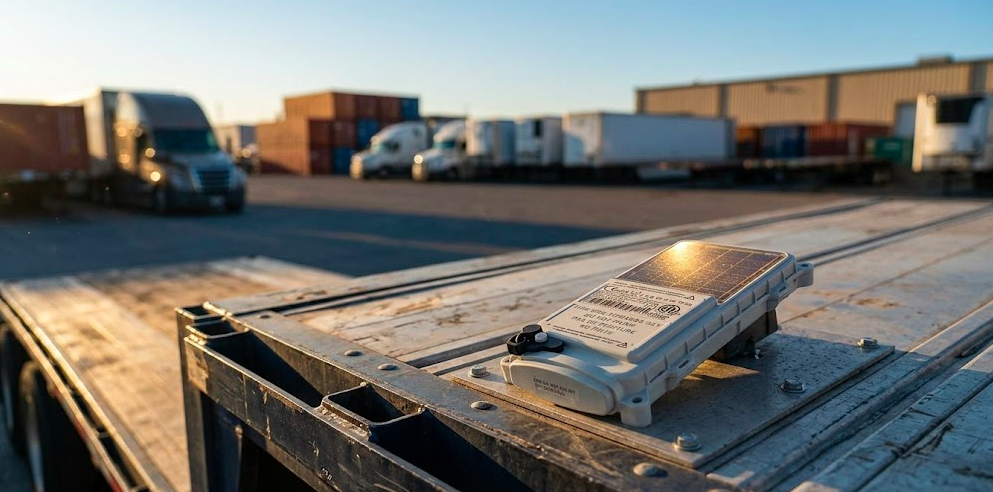
Every day, contractors lose thousands of dollars in equipment left untracked overnight. Fleet managers make unnecessary drives just to confirm a trailer is still there. Families worry about vehicles with dead tracker batteries and no way to start tracking again remotely. The common thread is always power.
You cannot wire everything, and you cannot recharge a GPS tracking device sitting at a remote job site for six months. A solar GPS tracker solves all of it. The best solar powered GPS tracker uses an integrated solar panel to keep its internal battery charged via direct sunlight, sends real-time alerts the moment something moves, and delivers continuous asset tracking without any wiring or manual charging. No technician needed. No subscription lapses from dead batteries. Just reliable location history and instant access, day after day.
What Is a Solar GPS Tracker?

How a Solar GPS Tracker Works
Understanding the technology behind solar powered GPS tracking helps you choose the right GPS unit and deploy it correctly. Three interconnected systems keep it running around the clock.
The Solar Charging System
A built-in photovoltaic panel, typically monocrystalline for efficiency in partial shade, captures sunlight and converts it into electrical energy. This trickle-charges an internal rechargeable lithium battery. Crucially, the integrated solar panel does not power the GPS tracking device directly. It replenishes the battery, which powers the tracker. This is why solar GPS trackers continue operating at night or on overcast days without interruption.
Most reliable solar GPS trackers need just 1 to 2 hours of sunlight daily to stay charged. Advanced models use smart power management and motion sensors to extend battery life during inactivity. In no-sun conditions, the internal battery supports continual operation for weeks to over 12 months, depending on usage and reporting frequency.
The GPS Location Engine
The tracker connects to GPS satellites, including GLONASS, BDS, and Galileo, to deliver accurate global location data for your asset. In open outdoor conditions, most solar GPS trackers are accurate to within 5 to 10 meters. Accuracy can drop slightly near tall buildings, dense trees, or in bad weather.
If the GPS signal is blocked, such as indoors or in a tight urban area, the device switches to cellular tower signals to keep tracking. This keeps your asset visible even when a clear GPS signal is not available. For most outdoor use cases like fleet management and trailer tracking, GPS signal is strong and reliable throughout the day.
The 4G LTE Cellular Transmission
The tracker sends location data over the 4G LTE network straight to your phone and web dashboard. You get instant alerts by SMS and email whenever the device detects movement, a geofence breach, low battery, or a tamper attempt. You can view the exact device location on Google Maps at any time, from any device.
Who Needs a Solar GPS Tracker?
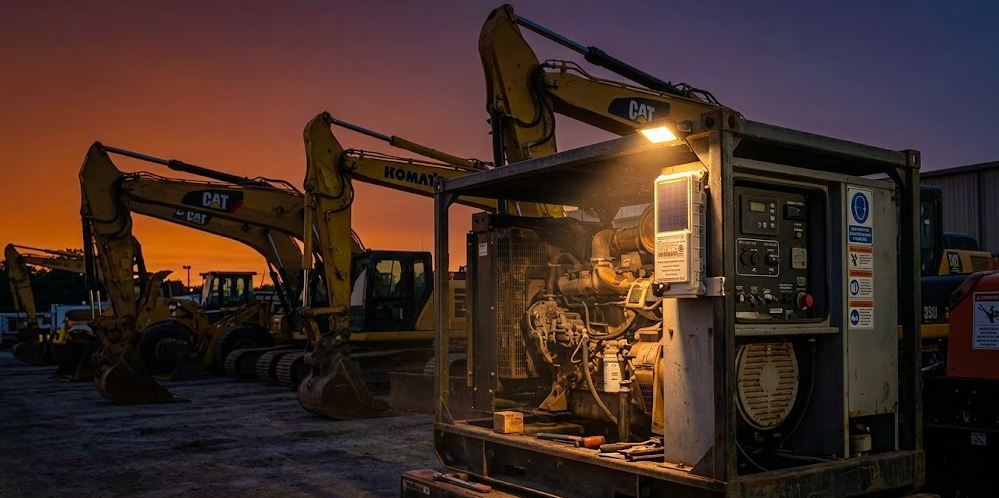
A solar GPS tracker is the right choice for anyone who needs to track an outdoor asset without access to wired power or the ability to recharge a battery regularly. That covers a wide range of people.
If you manage a fleet of trailers, you need it. If you leave expensive equipment at job sites overnight, you need it. If you store a vehicle or boat for months at a time, you need it. If your business runs heavy equipment across wide areas with no power source nearby, a solar GPS tracker keeps everything visible without any extra work from you.
In short, solar GPS tracking is built for anyone who values protection, visibility, and peace of mind, without the hassle of wiring or charging. Here are the six groups who benefit most.
- Fleet Managers and Logistics: If you manage trailers, containers, or drop trailers that sit unhitched for days or weeks, you need a solar GPS tracker. There is no vehicle power to tap into and no time to chase down battery-dead units across a yard.
- Contractors and Construction: If you leave generators, compressors, light towers, or heavy equipment at job sites overnight, you need one. Equipment theft happens most after hours, and a solar GPS tracker is always charged and always watching.
- Auto Dealerships: If you manage a vehicle lot with dozens or hundreds of units sitting outdoors between sales, you need solar GPS tracking. It stays charged on its own so every vehicle is covered without any daily maintenance from your team.
- Government and Municipal: If you oversee public works equipment or utility vehicles spread across a large area, you need solar GPS tracking. It keeps every unit visible on one dashboard without any wiring or charging infrastructure to set up.
- Security-Conscious Families: If you store a boat, motorcycle, or second vehicle outdoors for weeks or months at a time, you need one. A solar GPS tracker stays charged the whole time and sends you an instant alert if anything moves.
Solar GPS Tracker vs. Battery vs. Wired
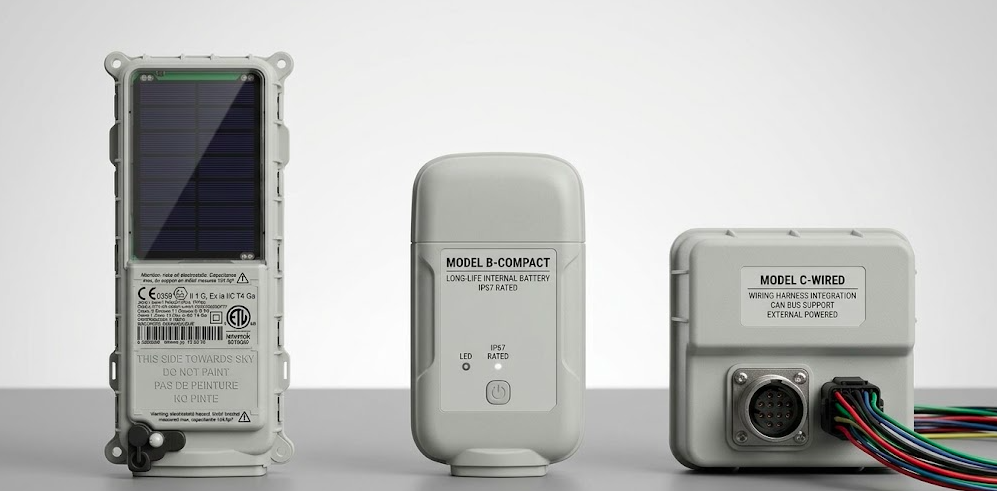
Not every GPS tracking device type suits every situation. Here is a complete side-by-side breakdown to help you choose the right solution for vehicle tracking and outdoor assets.
| Feature | Solar GPS Tracker | Battery GPS Tracker | Wired GPS Tracker |
|---|---|---|---|
| Power source | Solar panel + internal battery | Rechargeable battery | Vehicle 12V system |
| Runtime | Indefinite (outdoor, sunlight) | Weeks to months | Unlimited (wired) |
| Installation | 5 to 10 min, no tools | 5 min, magnetic mount | Professional install |
| Easy installation options | Adhesive, magnetic, screw mounts | Magnetic, adhesive | Hardwired only |
| Best for | Trailers, outdoor assets, equipment | Personal assets, indoor | Powered fleet vehicles |
| Location update frequency | Every 1 to 15 min (configurable) | Every 10 sec to 15 min | Every 10 to 60 sec |
| Wiring required | No | No | Yes |
| Works indoors | Limited (battery backup) | Yes | Yes |
| Weatherproof rating | IP67 / IP68 | IP65 to IP67 (varies) | IP65 to IP67 (varies) |
| Typical device cost | $50 to $200 | $30 to $150 | $50 to $150 plus install |
Key Features to Look for in a Solar GPS Tracker
Not every solar GPS tracker is worth buying. Some look good on paper but fall short in real outdoor conditions. These eight features are what you should check before choosing the most reliable GPS trackers.
Solar Panel Efficiency and Placement
Monocrystalline panels significantly outperform polycrystalline in low-light and partial-shade conditions. This matters for assets under tree cover, building overhangs, or in northern climates with limited direct sunlight.
The integrated solar panel must face upward and remain unobstructed. Verify your mounting location before committing to a screw mount or adhesive installation.
Long Battery Life and High Capacity Battery
The internal rechargeable battery is what keeps the GPS tracking device alive during extended cloudy stretches, winter months, or shaded storage. A quality solar GPS tracker provides 12 to 18 months of backup runtime at a daily reporting interval.
Solar-powered GPS trackers can operate for extended periods, often exceeding 12 months, depending on sunlight exposure and usage conditions. Do not accept anything less for long-term outdoor use in low-sunlight environments.
Cellular Network Coverage
4G LTE is the baseline for any reliable GPS tracking device. Prioritize dual-network fallback for consistent coverage when tracking vehicles in rural areas.
For business assets crossing international borders or operating in genuinely remote locations, look for satellite-capable models. The SIM card should be pre-installed, included in the purchase price, and ready for instant access after activation.
IP Rating for Outdoor Use
Many solar-powered GPS trackers are designed to be waterproof and durable for outdoor use in various weather conditions. IP67 is the minimum acceptable standard for any GPS unit deployed outdoors: dust-tight and water-resistant to 1 meter for 30 minutes.
IP68 offers deeper submersion protection for marine applications and severe weather environments. Always verify the IP rating directly rather than relying on marketing language alone.
Easy Installation Options
GPS trackers often come with easy installation options such as adhesive mounts or magnetic attachments, allowing for quick setup without complex wiring. The best solar GPS trackers offer three methods: heavy-duty rare-earth magnets with 90-pound-plus pull force for metal surfaces, screw mounts for permanent installation on trailers and equipment, and double-sided industrial tape for non-metal surfaces.
This flexibility is critical when tracking multiple units across assets of varying materials and shapes.
Real-Time Alert and Geofencing Capabilities
Many GPS trackers feature geofencing capabilities, allowing you to set virtual boundaries and receive real-time alerts when assets enter or exit defined areas. A quality solar GPS tracker should support all of the following:
- Geofence entry and exit alerts with customizable virtual boundaries per GPS unit
- Motion activation, so the device wakes from battery saver mode when movement is detected
- After-hours and time-based movement triggers for business assets
- Low battery and solar charge status notifications
- Tamper and removal detection alerts via text alerts and email
- Speed threshold and route deviation alerts for tracking vehicles
Platform, Dashboard, and App Quality
The hardware is only as dependable as the software behind it. A quality GPS tracking platform delivers real-time location updates, historical playback of up to 12 months of location history, multi-asset fleet dashboards, role-based access for teams, and API integration with TMS, ERP, or custom business systems. Web-based software should work on any cell phone, tablet, or desktop, giving you instant access to all units from anywhere.
Configurable Reporting Intervals and Smart Power Management
Reporting frequency directly affects battery life in solar GPS trackers. Look for devices that offer a full configurable range, from every 1 minute while the asset is in motion to once daily when stationary.
Advanced models of solar GPS trackers incorporate smart power management and motion sensors to enhance battery life automatically. Motion activation is the ideal default: the GPS unit sleeps when idle and activates the moment movement starts, conserving power intelligently for extended tracking deployments.
Real-World Use Cases
Knowing the features is one thing. Seeing how a solar GPS tracker performs in the real world is what makes the decision easy. Here are the most common situations where businesses and families rely on solar powered GPS tracking every day.
Fleet and Logistics
Trailer tracking is one of the most common uses for solar GPS trackers. Trailers often sit alone in yards, loading areas, or job sites without any power source connected. Because of that, wired GPS trackers usually do not work well. A solar GPS tracker fixes the problem by staying charged through sunlight and continuing to track the trailer at all times.
Fleet managers can check a trailer's location, see how long it has been sitting in one place, confirm deliveries, and get alerts if a trailer moves without permission. It also helps teams find missing or forgotten trailers faster, which saves driver time and improves how trailers are used across the fleet.
Construction and Contractors
U.S. contractors lose hundreds of millions yearly to stolen equipment left unmonitored at job sites, according to the National Equipment Register. Solar GPS trackers protect valuable gear like excavators and generators by creating invisible boundaries. When equipment moves after hours, the tracker sends instant alerts via text and email, helping recover stolen items quickly.
Solar GPS Tracker for Trailers
Trailer tracking is the most common reason to choose a solar GPS tracker. Trailers often sit unhitched for days without power, making battery or wired trackers ineffective. A solar GPS tracker mounts easily on the trailer, charges with sunlight, stays active at night, and sends real-time alerts if the trailer moves without permission. You get exact location and status updates on your phone or web dashboard.
For fleets, solar GPS tracking goes beyond theft protection. It helps locate idle trailers, verify drop-offs and pickups, and build records that can lower insurance premiums. For businesses with multiple trailers, it quickly pays for itself.
Families: Peace of Mind for Stored and Seasonal Vehicles
For families, a solar powered GPS tracker offers peace of mind by protecting important personal assets without any effort. Whether it's a teenager's car, an elderly parent's vehicle, a boat, or a camper in storage, the tracker works quietly in the background, keeping location history and sending alerts only when movement occurs.
The main benefit is no battery worries, solar charging keeps the device powered automatically. You don't need to recharge or check it until an alert arrives.
BrickHouse Security's family GPS products focus on simple, clear alerts, easy-to-use apps with Google Maps, privacy-respecting location sharing, and responsive customer support. Annual subscriptions provide reliable tracking at the best cost, with great service and easy returns.
How to Install a Solar GPS Tracker
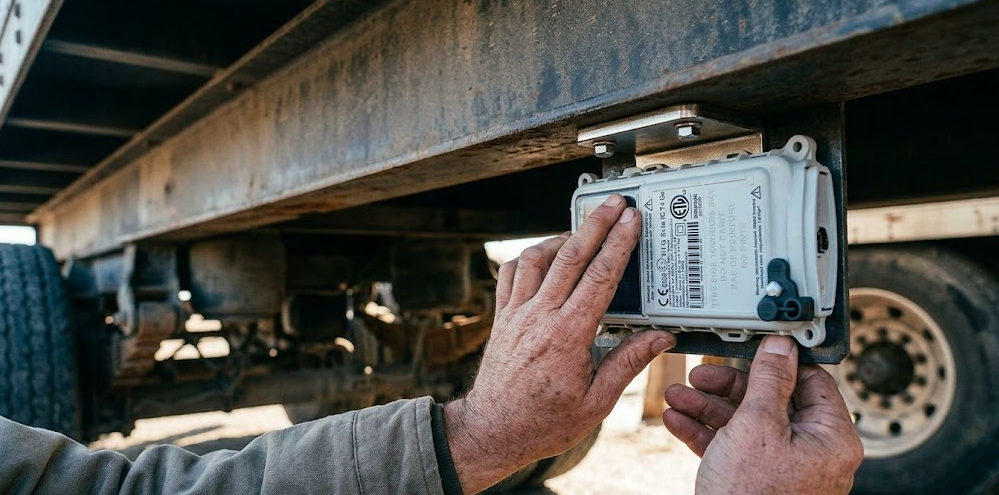
No electrician. No complex wiring. Most GPS tracker installations take under 10 minutes thanks to easy installation options including adhesive mounts, magnetic attachments, and screw mounts.
- Choose your mounting location: Select a surface facing skyward that receives direct sunlight for at least part of each day. On a trailer: roof or top rail. On heavy equipment: cab roof or frame top. Avoid mounting beneath overhangs, awnings, or inside covered areas where solar charging will be blocked.
- Clean the mounting surface: Wipe thoroughly with isopropyl alcohol to remove grease, oxidation, and debris. This step maximizes adhesion for magnetic mounts and double-sided tape and is critical for long-term outdoor use in variable weather conditions.
- Attach the GPS tracking device: Use the magnetic mount for metal surfaces, heavy-duty double-sided tape for non-metal surfaces, or screw mounts for a permanent installation on trailers or heavy equipment. Confirm the GPS unit is secure and the integrated solar panel faces directly upward.
- Activate your subscription plan: Log in to the web-based software portal, enter the device's IMEI number, and select a subscription plan. The GPS tracking device goes live immediately. Most providers include a free trial period so you can test the service before committing to a longer plan.
- Configure your alerts: Set geofences around your job site, storage yard, or property boundary. Enable motion activation and after-hours movement triggers. Run a short test with a cell phone to confirm location updates, battery life indicator, and solar charging status are all reporting correctly through the app.
ROI and Total Cost of Ownership
A solar GPS tracker is one of the lowest-cost, highest-return tools you can add to a fleet or outdoor asset operation. Here is what the numbers actually look like.
Think about it this way: preventing one $45,000 equipment theft covers over 6 years of a $600 annual subscription, not including insurance savings and downtime avoided.
Most businesses see full ROI in just 3 to 4 weeks through fewer thefts, less time searching for idle equipment, and no manual yard checks. Annual plans reduce monthly costs by 30-40% compared to month-to-month, and volume discounts are available for fleets of 10 or more. Plus, many providers offer free trials so you can test before committing.
Conclusion
A solar GPS tracker is one of the simplest, most reliable ways to protect outdoor assets. It charges itself, works around the clock, and sends you an alert the moment something moves. No wiring. No battery swaps. No maintenance.
For fleet tracking, it means fewer yard searches and faster theft recovery. For contractors, it means job site equipment that is always accounted for, even at 2 AM. For families, it means a stored RV, boat, or vehicle that quietly stays protected through an entire season without anyone checking on it.
The cost is low. The ROI is fast. One prevented theft event pays for years of coverage.
BrickHouse Security has been helping businesses and families protect what matters most since 2005. Our solar GPS trackers are built to run outdoors, survive any weather, and keep your assets visible every single day.
Frequently Asked Questions
What is a solar GPS tracker?
How long does a solar GPS tracker battery last without sunlight?
Do solar GPS trackers work in cloudy weather or winter?
Is a subscription required for a solar GPS tracker?
How accurate is a solar GPS tracker?
Posted by Todd Morris on May 13th 2026